Wheat purchase by the private players this rabi marketing season in Punjab may not cross last year’s number even as traders and processing units have bought 4% of the wheat that arrived in the mandis.
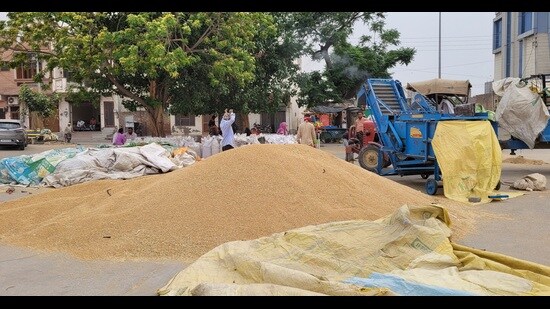
Punjab Mandi Board data says out of 111 lakh tonnes of wheat reaching mandis by April 30, the non-government entities have bought more than 4.13 lakh tonnes. Till 6 pm on Sunday, 2.61 lakh tonnes of wheat was purchased across the state and private players bought 5,782 tonnes.
Pathankot is the only district where no grain was sold to private players. In 2022, private players registered 6.35 lakh tonnes from the state.
Officials said this time the role of private players may have been lower than in 2022 but it was the second highest since 2007. Sources said farmers switched to private buyers as the market was offering a marginal premium than the minimum support price (MSP) of ₹2,125/quintal.
In 2021, 1.14 lakh tonnes were bought by the non-government sector and the private sector players had registered 9.18 lakh tonnes in 2007.
{{/usCountry}}In 2021, 1.14 lakh tonnes were bought by the non-government sector and the private sector players had registered 9.18 lakh tonnes in 2007.
{{/usCountry}}“Earlier the flour millers were mostly buying cheaper wheat from Uttar Pradesh and Bihar but owing to a surge in demand for wheat since 2022, it is no longer an economic preference for them,” said an official.
On the last day of April, 2.45 lakh tonne of wheat arrived in mandis across 22 districts and 2.61 lakh tonnes was purchased. As 4.64 lakh tonne wheat stock was lifted from purchase centres on Sunday, data says 50% of the total stock purchased or 55 lakh tonne was lifted till April 30.
Mandi officials said the wheat purchase at maximum centres is expected to continue for another 4-5 days as arrival is nearing the last phase with private buyers having little scope to buy sizeable amount.
Wheat growers in Sangrur have shown the maximum interest by selling 1.13 lakh tonne to private players followed by Ludhiana (67,000 tonne), Faridot (35,000) and Bathinda (34,000 tonnes).
Stakeholders attribute the higher interest of the private sector to the market sentiment that the centre government may not procure ample wheat stock and the non-availability of cheaper wheat from other states. They say the Russia-Ukraine war is also having a spillover effect on procurement in Punjab for the second year.
Anil Popli, a roller flour mill owner from Sangrur district, said sensing market speculation, he has stocked wheat for the next 8 months. “Earlier buying wheat from Bihar and UP was cheaper but now I had to switch over to the local market to meet my demands. There are also speculations over annual auctions of wheat by Food Corporation of India (FCI) under the Open Market Sale Scheme (OMSS). Wheat processors find it economical for bulk purchase to avoid the impact of higher rates,” said Popli.
A leading flour miller from Ludhiana, Dharminder Gill said unlike last rabi season, the yield per acre and overall production was bumper.
“Due to a prevalent market sentiment that the government may have limited stock to sell to the bulk consumers, farmers are holding back a part of their production hoping for the market may offer higher rates in the coming weeks. Private players are showing interest in direct purchases, but it is mainly the big players who are buying more to earn if wheat rates see a surge. After every 12-15 years, the private sector shows more interest in direct wheat purchase after an imbalance in procurement by the central agencies due to various factors,” he added.