Basmati prices in Punjab have touched ₹5,200 per quintal, bringing cheer to farmers but raising concerns among exporters amid uncertainty over vessel movements through the Strait of Hormuz, a key route for global trade, due to the conflict involving the US, Israel and Iran.
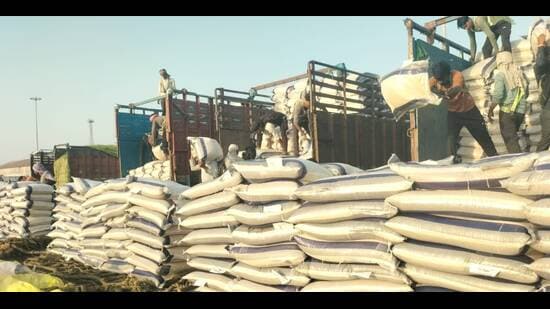
Exporters are also concerned about large sums in payments held up in the Middle East, especially Iran, which imports a large quantity of aromatic rice from India.
According to data from the Agricultural and Processed Food Products Export Development Authority (APEDA), India exports around 65 lakh tonnes of basmati rice annually, with countries in the Middle East accounting for a major share of the market. Annual trade is said to be worth ₹60,000 crore, with Punjab accounting for 40% of total exports. Haryana, another major producer of the aromatic rice, accounts for roughly 35% of exports.
“We are fetching good prices for basmati this season. It’s certainly beyond our expectations,” said Dalwinder Singh, a basmati grower in Ammonangal village, near Batala.
He said the 1509 variety he grew fetched ₹4,500 per quintal and prices of other varieties could touch ₹5,500. In the current kharif season, basmati was cultivated over 6.5 lakh hectares.
{{/usCountry}}He said the 1509 variety he grew fetched ₹4,500 per quintal and prices of other varieties could touch ₹5,500. In the current kharif season, basmati was cultivated over 6.5 lakh hectares.
{{/usCountry}}The 1401 variety is fetching ₹5,200 per quintal, while prices of aromatic, long-grain 1121 variety are expected to touch ₹5,500 per quintal as arrivals of the produce have begun.
According to state agriculture department officials, like the non-basmati parmal varieties, which are procured by the government at the minimum support price (MSP) for the public distribution system (PDS), basmati growers are also seeing a higher yield this season. According to their estimates, from an average of 42 to 45 quintals per hectare, the yield has jumped to nearly 50 quintals per hectare this season.
Rising costs, war fears
According to Ranjit Singh Jossan, Ferozepur-based vice-president of the All India Rice Exporters Association, growers of the premium crop may be fetching better prices, but exporters face a stiff challenge.
“Rising tensions in the Middle East, security concerns in Saudi Arabia, a shortage of US dollars in Iran, soaring ocean freight costs and competition from Pakistan pose major challenges for India’s basmati industry,” he said.
He added that basmati prices rising above ₹5,000 per quintal could make exports unviable.
Saudi Arabia is also among the major importers of Indian basmati rice and is currently facing regional security concerns amid repeated attacks by Iran-backed Houthi rebels in Yemen.
According to the APEDA data, annual basmati exports to Saudi Arabia stand at approximately 12 million tonnes. “The number speaks for itself when it comes to the strategic importance of the Saudi market for Indian exporters. However, rising tensions in the Middle East and security concerns linked to Yemen’s Houthi rebels have affected the regional trade,” said a basmati trader, who did not wish to be named.
Iran at the centre of payment crisis
Iran has been an important destination for Indian basmati since 2005 and accounts for 10% of the total exports. However, US sanctions, foreign currency shortages, inflation, and disruptions in payment systems and the ongoing conflict have affected the trade.
Jossan expressed concern that fears of US military action and the wider regional conflict may prompt Iranian importers to purchase essential commodities in advance. “Such buying could temporarily increase demand for Indian rice, but it cannot be assumed to represent sustained demand,” he said, adding that large sums in payments were already stuck in Iran, and if the prevailing circumstances continue, the situation could further weaken trade.