A detailed field survey by the Punjab agriculture department says early sowing of cotton in 2% of the total area under cotton in various districts is posing a threat of infestation of the deadly pink bollworm (PBW) on the provisional acreage of 1.75 lakh hectares this year.
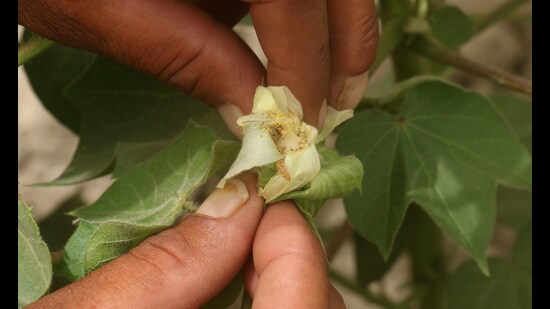
Experts said untimely rains with the onset of summer this year provided a suitable reproduction and feeding ground for the pest.
Next three weeks are crucial for farmers to detect the pest population and use recommended steps to check for any widespread infestation. PBW has surfaced at limited places, but it can spread rapidly and potentially threaten the crop in other areas of the pest control management is not executed effectively, they say.
This year, a section of Punjab farmers from the vulnerable regions started sowing the ‘white gold’ as early as March 28, well before the recommended sowing time of April 15 to May 15, said the farm officials. The pest attacks cotton plants in the flowering stage in mid-July and PBW started appearing earlier posing a threat of infestation in other fields.
State agriculture director Gurvinder Singh, who extensively toured the cotton-growing districts this week, said the current situation is not alarming and farmers have been advised to use recommended sprays to contain the pest population.
{{/usCountry}}State agriculture director Gurvinder Singh, who extensively toured the cotton-growing districts this week, said the current situation is not alarming and farmers have been advised to use recommended sprays to contain the pest population.
{{/usCountry}}Spot inspections revealed that the economic threshold level (ETL) of the pest is within permissible limits, but farmers have been advised to enhance surveillance, he added.
“After harvesting mustard, several farmers in Fazilka’s Abohar, Bathinda and Mansa districts, started sowing cotton very early. It should have been avoided in view of the pest attacks in the last two years. Later this year, spells of unseasonal rains and a humid environment gave opportune conditions to the pink bollworm that was already present in the fields where the residue of last year’s infested plants was still not disposed of,” he added.
The director said unlike last season, whitefly has not been traced this year and cotton growers have been advised to stay vigilant.
The field survey revealed the impressive health of plants. “In 2022, most plants had stunted growth but this time farmers are following an advisory to provide ample nutrients to the crop. The trend can help in negating the adverse impact of pests,” he said.
Punjab witnessed PBW’s first appearance in 2020 on about 100 acres at Bathinda’s Jodhpur Romana. In the following year, the pest severely affected other districts and in 2022, whitefly and PBW ravaged the cotton production in Punjab.
In the current kharif season, Punjab’s area under traditional crop nosedived to 1.75 lakh hectares and heavy losses to farmers due to pest attacks is blamed for an all-time low acreage.
Principal entomologist of Ludhiana-based Punjab Agriculture University (PAU), Vijay Kumar said early sowing of the cash crop in such areas was noticed for the first time and it is a cause of concern for pest attack.
“In the 2022-23 rabi season, farmers in the cotton-growing districts had shown more interest in the mustard crop. The winter oilseed crop is harvested earlier than the other rabi crop of wheat and mustard growers resorted to sowing cotton much early than the recommended window. Early sowing coincided with prolonged wet and humid conditions since April and when cotton plants reached the flowering stage earlier,” he said.
The expert said the bollworm is impacting only those fields from where last year’s residue was not cleared as per the advisory and making other areas vulnerable to pest infestation.
“Bollworm is a deadly pest that appears when the cotton plant is in the flowering stage after 65-70 days of sowing. It is monophagous or feeds only on cotton plants and affects a plant at the flowering stage. Now farmers have to work hard to contain the pest population by mid-July when the timely sown plants enter the flowering stage,” added the expert.
Head of Sirsa-based Central Institute of Cotton Research (CICR) SK Verma said uniformity in sowing helps in effective pest management and farmers should strictly follow recommended time for sowing. “Bollworm infestation can be easily identified with pheromone traps in fields that catch male insects and an advisory has been issued to Punjab farmers in this regard,” he added.