
 E-Paper



Punjab Police: Too many wings hamper policing, say experts
The formation of Anti-Gangster Task Force (AGTF) in Punjab Police raises question on whether such specialised units yield desired results or end up weakening the district police force

 Prefer HTon Google


Chief minister Bhagwant Mann’s announcement on setting up an Anti-Gangster Task Force (AGTF) to take on organised crime has not only added one more wing to the Punjab Police but has also raised questions on whether the formation of these specialised units brings the desired results or ends up weakening the district police force.
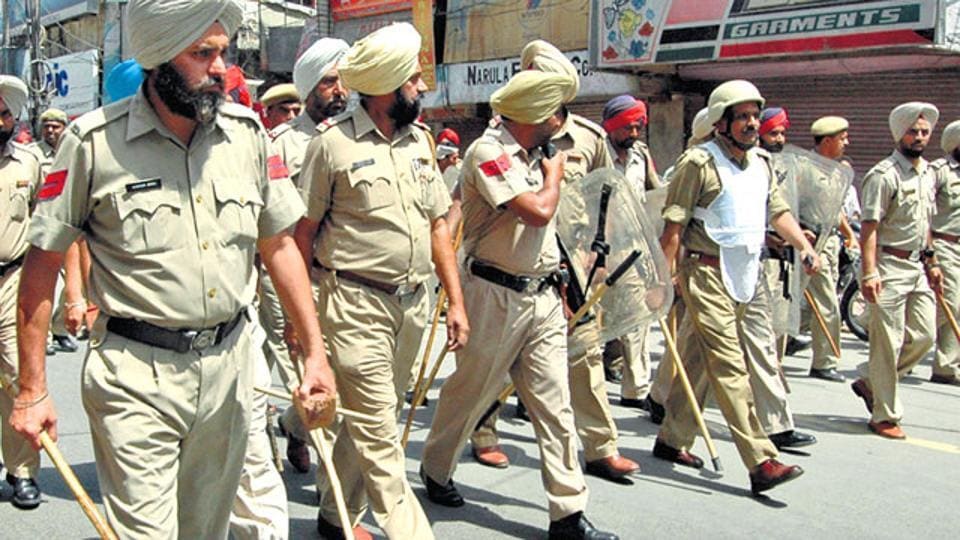
As the state police department already had an Organised Crime Control Unit (OCCU), carved out in 2016 to deal with crimes especially committed by gangsters, the need to have a new AGTF, even if with more powers, is being considered as “old wine in a new bottle” by the opposition parties as well.
Punjab Police now have more than a dozen different wings to deal with different types of crimes: NRI wing, OCCU, Economic Offence Wing, Cyber Crime, Counter Intelligence, Intelligence, Internal Security, STF, Bureau of Investigation, Narcotics, Community Police Resource Centre, Grievances and Law and Order, Financial Investigation Unit, women’s wing and Punjab Police Mahila Mitra.
According to senior police officers who talked to Hindustan Times, the formation of a particular wing for a special task gives the impression that only that wing will deal with the said crime, and the “thana” (police station) that is the backbone of policing gets overshadowed and loses its grip on the ground.
Failing to yield desired results
The fresh example of these wings failing to yield the desired results, according to experts, is the high-profile Special Task Force (STF) against drugs created by former chief minister Captain Amarinder Singh after the Congress came into power in 2017.
“At the start, district police started considering that dealing with drug trade is only the STF’s job. Because of internal politics of the police top brass as well, tussles emerged between the STF and rest of the department, which eventually hampered the war against drugs,” an ADGP-rank officer said on the condition of anonymity.
Headed by an ADGP-rank officer, the task force was supposed to have a sanctioned strength of around 1,500, but it actually worked for the initial two years with just around 550 people. The number has since come down to about 300, according to the insiders. Also, from four inspector generals (IGs) in the beginning, it is left with just one now, and is hardly conducting any major operation.
Confusion over jurisdiction
Apart from the STF officers posted at district levels, the post of DSP (narcotics) also exists in each district, but there is lack of co-ordination between the two setups.
There have been reports about overlapping of tasks in other wings as well. Too many wings end up giving criminals an escape route, say experts.
Former Uttar Pradesh DGP Parkash Singh, who is considered an authority on police affairs, said that compartmentalisation of the police department actually adds to confusion and weakens the “thana”.
“I agree with the idea of having specialised wings for dealing with terrorists or those involved in organised crimes. Rest all works should be with the district police, by fixing responsibilities at the police station level. Till the police station is not strengthened, nothing will work. Tomorrow, one will end up having special units for communal probes, inter-state issues, etc...” said the ex-DGP.
Means to adjust heavy top brass
Meanwhile an ex-DGP from Punjab, who has served the state during militancy, said the state has a history of dealing with insurgency without having too many special wings.
“No challenge can be bigger than dealing with terrorism. We did it because district police were well-coordinated and strengthened. Creating too much of division would not yield results,” said the retired officer.
A retired IAS officer, who has served as the home secretary of the state, said that since Punjab has a heavy top brass, the idea to create wings also gives the government a chance to adjust the senior officers by making them heads of these wings. “But when it comes to giving force and resources to these wings, the police department often falters as these resources are generally mobilised from other wings or the district force,” he said.
Punjab DGP VK Bhawra could not be contacted for comments.


