Do not make City Beautiful a concrete jungle
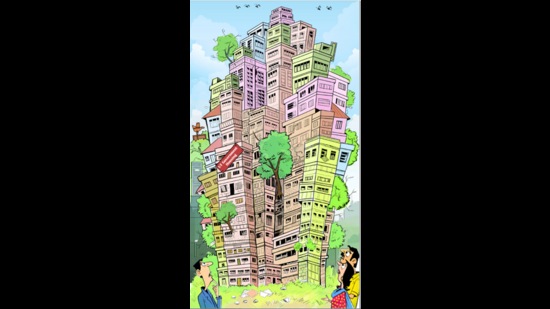
All cities have to evolve with time, while keeping their culture and ethos intact. Chandigarh is one such city, whose heritage should be preserved so that future generations can also feast their eyes on its beauty. The UT administration should avoid making the City Beautiful a concrete jungle. The design and layout of apartments designed by Le Corbusier should be retained as they add aesthetic value to the city. The accommodation for government employees should be arranged in satellite townships on the periphery of the city. High-rise apartments in the city for government employees should be avoided as they would blight the city’s aesthetics. Modern transport facilities should be enhanced so that the government employees can travel to work from the peripheries or government offices could be relocated to new township clusters. There are many ways of solving the problem than tarnishing an excellent piece of urban design.
Anil Kumar Yadav, Chandigarh
Move staff to Panchkula, Mohali
Earlier, providing accommodation to government employees was the responsibility of the government. However, it is difficult to continue with it due to fund crunch and infrastructure costs. Thus, Chandigarh should utilise unused open spaces, and build new apartments for government employees. Those who already have a house in the tricity, could consider vacating the house, and it could be allotted to someone else. Multi-storeyed apartments will also help resolve the crunch. Employees should be moved to Mohali and Panchkula to alleviate the stress on Chandigarh’s infrastructure.
Kundan Lal Sharma, Mohali
Renovate old houses
Chandigarh has several government accommodations, which were built long ago, but can no longer accommodate the burgeoning staffers working in Chandigarh. The administration should consider building flats for employees or renovate the old houses so as to accommodate more families. The UT should also ask the Punjab and Haryana governments to build societies for their employees in areas surrounding Chandigarh.
Avinash Goyal, Chandigarh
{{/usCountry}}Avinash Goyal, Chandigarh
{{/usCountry}}Replace single-storeyed houses
Providing accommodation to government employees has always been a headache for the administration as Chandigarh, apart from being a Union Territory, is also the capital of two states. The city cannot expand anymore, and therefore a solution should be found within the city limits, while keeping the heritage status of the city intact. The administration should consider replacing old single-storeyed government houses in Sectors 7,22,23, and 19 among others with four-storeyed apartments with ample parking space.
AK Sharma, Chandigarh
UT should grow vertically
At present, housing is Chandigarh is curtailed due to horizontal expansion. In view of the growing population, it is time to shift to multi-storeyed apartments with stilt parking on the ground floors and four storeys over it. The city’s northern sectors have palatial residential spaces due to single-storeyed government houses. This has created a shortage of residential accommodation in the city. The modern concept is to grow vertically with many more amenities. The space so saved can be used for other infrastructure. The planners need to be more intelligent and far-sighted. We must change with time.
Sateesh Dadwal, Chandigarh
Punjab, Haryana should augment housing
The Chandigarh administration should ask the Punjab and Haryana governments to construct dwelling units for their employees working in Chandigarh. To demolish and rebuild 600 houses will be a Herculean task, and even disposing of the waste will be a major problem for a small city like Chandigarh.
SK Khosla, Chandigarh
UT needs a well-laid plan
Proper planning can help augment housing without burdening resources. To increase the number of government houses when the city’s infrastructure is already under strain, the administration should consider building on barren lands.
Ishita Nara, via email
Build multi-storeyed buildings
The redensification of government housing by demolishing old, and single-storeyed houses, which 70 years on are in a shambles, as per the Smart City Plan will go a long way. First, multi-storeyed buildings should be built on vacant plots in Chandigarh or its surroundings areas, after which the government houses should be demolished and the land auctioned. Apart from it, the Punjab and Haryana governments should construct offices in Mohali and Panchkula for their officers.
Subhash Chugh, via email
Redensification, a temporary solution
The need of the hour is to augment government housing. Redensification will only be a temporary solution, and an enduring solution is needed. The rank of an officer should determine whether he is allocated an entire house or floor. New and junior officers should be allocated different floors, and senior officers should be given an entire house. This can be a long-lasting solution for the government housing problem in City Beautiful.
Saikrit Gulati, Chandigarh
Build trendy new houses
The majority of government houses in the Union Territory are in a state of negligence and need immediate attention as they have developed cracks and are too old. The government should demolish them and reconstruct new houses, bearing in mind that ample area was wasted in the older houses, which had verandas and parking areas. The new government accommodations should be multi-storeyed and in keeping with the latest trend.
Abhilasha Gupta, Mohali
Compact housing is the way forward
Urban environmental problems are often referred to as local problems. The high concentration of people and activities in cities is increasing the pressure on the environment, and our open spaces and green areas are under continuous threat due to competitive use of limited land resources. Chandigarh is small city with a large green cover, and the Chandigarh administration should provide housing to its employees, while also taking care of its natural resources. Thus, compact housing is the way forward. Open spaces and green belts, which add to the beauty of the city, should not be used for housing.
Vijay Malia, Chandigarh
Prepare a smart resettlement plan
Government houses in Chandigarh were made long ago, and need to be redensified to accommodate more people. Single-storeyed houses, particularly those in a bad shape should be pulled down, and replaced with multi-storeyed houses. In these single-storeyed units, the total plot area is generally three times the actual construction. The redensification process should not disturb the socio-economic structure of the city, and a resettlement plan should be prepared before replacing the existing units. The new units should be energy efficient, there should be adequate parking facilities, and should be made in such a way to retain the heritage tag of city beautiful.
Vineet Gandhi, Chandigarh
Multi-storeyed houses against city’s character
To expand government housing in Chandigarh, the UT administration is considering redensification of the existing structures by demolishing old single-storeyed houses, and constructing multi-storeyed apartments in their place, Thus, expanding the housing capacity by three times. However, this is against the basic character of the city. With the city eyeing the Unesco world heritage status, steps should be taken to protect its original character. Le Corbusier originally designed the houses for a single family, but with the sale of floors, the population will increase and will destroy the basic character, greenery and open space of the city.
Sanjay Chopra, Mohali
Apply singular policy for all accommodations
The government houses, which were built over seven decades ago, are in such a bad state that they are unlivable. However, government staff continues to live there, despite the lack of maintenance. Notwithstanding the heritage status of the city, the houses need to be razed, and new structures built. Most of the houses being targeted are the allotted Class 3 and 4 employees. Why does the administration not demolish palatial houses built in Sector 16 and 27 for senior officers, MLAs and ministers and construct multi-storeyed buildings to accommodate them all and others? The whole plan reflects hypocrisy and double standards of those managing the city. They will not touch those palatial houses under the cover of heritage, as they are renovated year after year as per the whims and fancies of the new occupants. Adopt the same policy for all government houses across the city and construct multi- storeyed houses to accommodate more employees.
Suresh Verma, Chandigarh
Get rid of the white elephants
Government houses in Chandigarh are increasingly becoming white elephants for the Chandigarh administration, and crores are spent on their maintenance. Most of these houses remain vacant for several months and years in many sectors. At present, the government is paying a handsome house rent to its employees. The government should take over prime lands in different sectors and build multi-storeyed freehold flats for all citizens. The requirement for government accommodation is reducing by the day as everyone wants affordable housing.
Avinash Mehta, Chandigarh
Panchkula and Mohali should share the burden
The administration is considering redensification of government housing. The plan is to demolish old single-storeyed accommodations and construct flats in their place. Government houses in Sectors 19,20,27,28 and 30 are being considered for redensification. With Chandigarh, being the capital of both Panjab and Haryana, a major part of the city’s area is allotted to government houses for the employees.Some of the houses built seven decades ago are not livable. The administration has surveyed 600 houses ,which will be demolished and reconstructed within five years to increase the housing capacity threefold. India’s Expert Heritage Committee had identified single and double-storeyed houses to be demolished in the first phase while keeping in mind the heritage conditions. The plan will impact the city’s infrastructure and resources. The proposal that Panchkula and Mohali should share the city’s burden by providing housing facility to their employees is justified. Relocating those whose houses are demolished should be the first priority. There are many ifs and buts to be resolved. Will the Herculean job be given to private builders or the architects and civil engineers would be assigned the job by the administration? The ambitious project needs to be completed on war-footing.
Usha Verma
Rope in top architects
While the plan to re-densify the existing government housing to expand the capacity of government housing in Chandigarh, is a good one, it will only become successful, if proper planning is done. The UT administration must compare the expenses for repair and reconstruction. If the repair expenses are higher than reconstruction, they should opt for reconstruction, which should be carried out in a phased manner so that the daily lives of residents is not affected. Top architects should be roped in to build the new buildings in a cost-effective manner with features like energy efficiency, adequate parking, and quality control. It is only through careful consideration that the UT administration can achieve the aim of expanding the compact government housing space without burdening the resources.
Prabhjot Nagpal, Zirakpur
Reconstruction is the way to go
It is a good idea to demolish older buildings and build new ones. Rather than looking for new space for construction demolition, reconstruction is the best option. It will save some trees and green parks from being built over. However, we are living in a beautiful city which is well maintained and this move will add a new star to its image. This city should look after the garbage problem as well in sectors, which are situated on the border of the UT.
Shubham Dhiman, Chandigarh
Reader of the Week
Encourage staff to live in own accommodations
To be able to provide housing to more government employees, the administration is planning to reconstruct multi-storeyed flat after demolishing old single and two-storeyed houses. However, to avoid burdening the infrastructure solar panels should be installed on all new buildings. Personal conveyance should be discouraged to reduce traffic congestion, and the government staff should be provided buses. Working hours of departments should be staggered to reduce rush on roads. Rainwater harvesting should be made mandatory and a mini water supply system should be set up to supplement the main supply. Besides, the Haryana and Punjab government should provide accommodation to their employees in Panchkula and Mohali.
Sqn Ldr Manjit Singh Johar (retd), Chandigarh
Experts
Account for more load on infra
For redensification, we need a redevelopment plan, which will take into account additional load on the local infrastructure, including water supply, and sewerage, due to increase in the population density and number of floors.
R Srinivas, town and country planner, ministry of housing and urban affairs
Houses need to be maintained
Maintenance of houses is an issue, particularly with occupants making changes to the houses, and when they leave the house, it requires major repairs. There is a long wait time for house allotment, and some staffers may not get a house as the demand exceeds the number of houses.
Ashwani Kumar, employee, UT engineering department
Keep heritage in mind
Redensification should not be done at the cost of the heritage and should not cause undue pressure on the civic infrastructure. Even if it is taken up, houses allotted to Punjab, Haryana, and Chandigarh employees should be demolished proportionally. Haryana and Punjab should also expand government housing in Mohali and Panchkula.
Surinder Bahga, principal architect, Saakaar Foundation
Densification is not allowed
Government houses can be re-built and refurbished, but densification is not allowed. Any change has to be made strictly in consonance with provisions of the Chandigarh Master Plan, 2031.
ML Sarin, senior advocate, Punjab and Haryana high court
Keep fabric of city intact
Whatever new construction or demolition is done, the fabric of the city must be kept intact. Studies must be carried out on what problems the new housing system may face. The number of housing units can be increased, but measures must also be taken to ensure adequate parking for all.
Sangeeta Bagga, principal, Chandigarh College Of Architecture