
 E-Paper



Wildbuzz | Lest we forget Jatayu, the cleanliness soldier
The death of an important avian guest of India underscored the grim warning that vulture scientists have been emitting via scientific research papers

 Prefer HTon Google


An official statement — Jatayu is the most efficient soldier of Swachh Bharat Abhiyaan, let’s save it from extinction and keep our environment clean — is emblazoned on the cover of the “Action Plan for Vulture Conservation in India 2020-2025”, authored by the Union ministry of environment, forest & climate change (MOEF & CC).
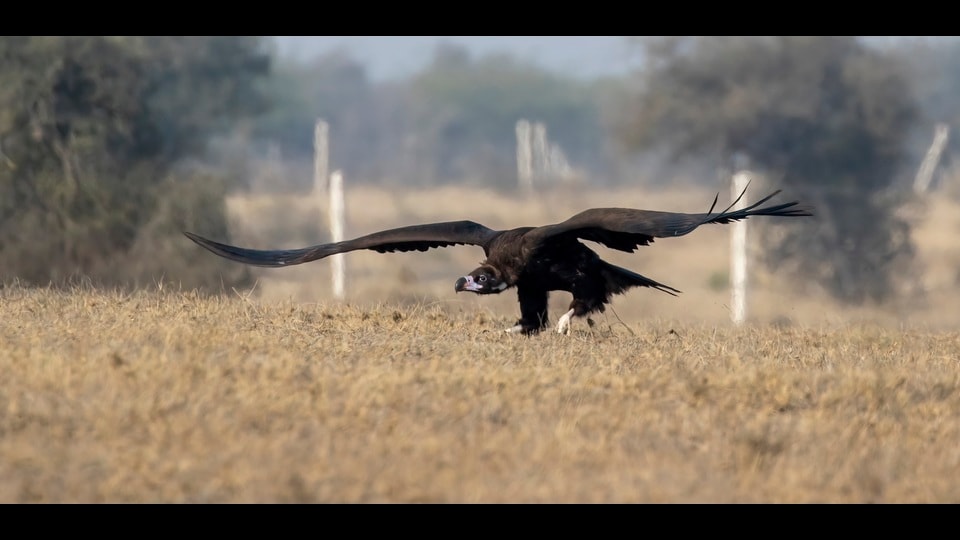
It is thus with a sense of elation that I received the news from Siswan check-dam in the end of February 2026 of the sighting of the critically-endangered red-headed vulture (RHV) along with at least two wintering, near-threatened cinereous vultures (CV). The RHV was last photographed in Siswan in the end of March 2013. Anyone who has seen CVs cannot but marvel at their ‘black knight’ looks and magnificent wingspans. When landing, they remind one of the IAF’s giant military transport aircraft like the Super Hercules and the Globemaster braving all odds to touch down on forward air bases at super-high altitudes!
However, at about the same time, a tragic scene was unfolding in the Judiya carcass dump of Jodhpur (Rajasthan). A juvenile CV tagged with a satellite transmitter and colour rings (code and name: KA5105, Asu) was transmitting signals from one spot for days. It had been tagged in Kazakhstan by scientists of the Biodiversity Research & Conservation Center (BRCC) in 2024 to track the migration of scavengers. An Indian field researcher — tipped off by worried BRCC scientists — located the tagged CV. It was dead due to suspected poisoning by ingestion of non-steroidal anti-inflammatory drug (NSAID) residues in cattle treated by veterinarians just before the ill cow/buffalo’s death.
The death of an important avian guest of India underscored the grim warning that vulture scientists have been emitting via scientific research papers. There are 14 NSAIDs available in the market. Veterinary drugs harmful to vultures are still available under the counter despite bans on veterinary applications of four NSAIDs: diclofenac, nimesulide, ketoprofen and aceclofenac. Apart from that, the simple problem is that when an NSAID is banned and its availability declines, veterinarians/livestock owners simply switch to another of the 14 NSAIDs that has not been tested for vulture sensitivity before release into the market and that could be harmful. Violators of bans have seldom been brought to task by law-enforcement agencies.
After more than a decade of undercover surveys of pharmacies across India, Nepal, Bangladesh and Pakistan to ascertain the availability of NSAIDs harmful to vultures, multinational scientists have recently published a revelatory paper titled, “The continued threat of toxic NSAIDs to critically-endangered Gyps vultures in South Asia”. The above assessments I have drawn are sourced from this research.
Despite the well-established vulture breeding centres in India and the widespread awareness of NSAIDs causing scavenger bird deaths, the Indian vulture population has not recovered to anywhere near the numbers (an estimated 4 crore) these avians enjoyed in the 1980s. The research paper pens a pessimistic assessment: “In India, although populations of white-rumped, Indian and slender-billed vultures have stabilised, there is no evidence that they are beginning to recover. Populations remain at very low levels compared with those before the decline.”
The need of the hour, as elucidated by committed scientists, is to firstly ensure that government enforces NSAID bans, and secondly that all the 14 NSAIDs currently available are tested for vulture sensitivity. Fact is, that only six NSAIDs (diclofenac, meloxicam, ketoprofen, tolfenamic acid, analgin and aceclofenac) have been safety-tested on vultures; others have unknown toxicity.
As a long-term strategic objective, the MOEF & CC must earnestly implement the international Convention for Migratory Species (CMS) Resolution, which calls for not licensing new (veterinary) drugs until they have been proven safe to vultures.
Spending crores of rupees on breeding vultures and releasing them in unsafe environments defeats all endeavours to save vultures from extinction, because these avians will die prematurely by consuming carcasses containing residues of NSAID poisons, like Asu. The MOEF & CC’s sincerity to the ‘soldiers of Swachh Bharat Abhiyaan’ is tested by its own stated objective under the action plan, lying unimplemented: “Carry out safety testing of available molecules of veterinary NSAIDs on vultures. The new molecules should be introduced in the market only after being proven safe following safety testing on vultures. The DCGI must institute a system that automatically removes a drug from veterinary use if found toxic to vultures.”
Regrettably, Indian pharma companies have not funded any safety testing of their NSAIDs for vultures under their much-touted corporate social responsibility. The burden has been left to governments and vulture conservation NGOs.
(vjswild2@gmail.com)


