
 E-Paper



Delhi to get 5K e-buses by March 2026
Delhi plans to procure 5,000 electric buses by March 2026, boosting its fleet to over 5,000 and enhancing its zero-emission transport network.

 Prefer HTon Google


New Delhi
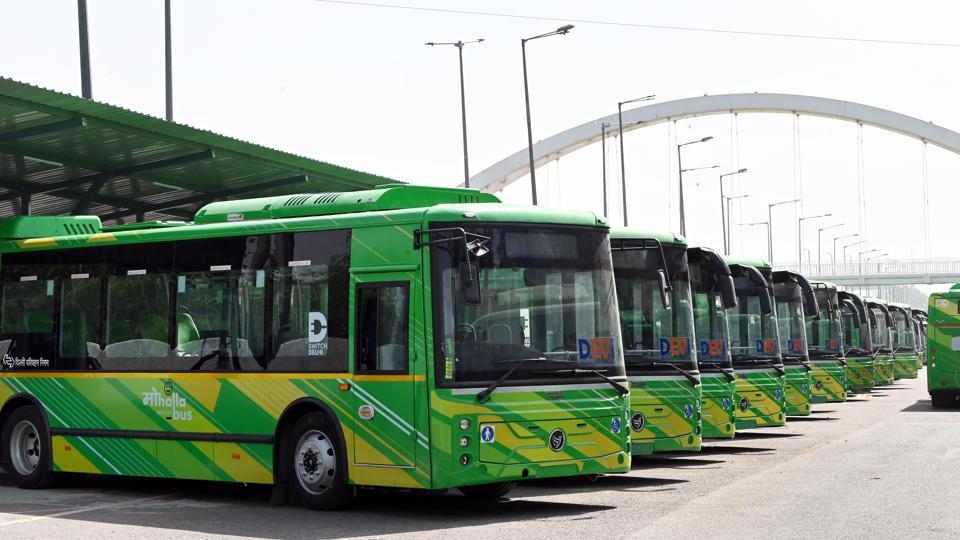
The Delhi government’s transport department has finalised the procurement of 5,000 electric buses, which will be delivered in multiple tranches by two producers by March 2026, marking one of the largest e-bus inductions in the country, officials familiar with the matter said.
The department said that 25 depots have been fully electrified so far and that all depots will be fully electrified within the next four months to accommodate the incoming fleet.
“Once the new batch is operational, the Capital’s e-bus fleet will cross 5,000, making it one of the largest zero-emission bus networks in India. While there are some delays, new batches of e-buses are being procured nearly every month,” a transport department official said.
Delhi currently operates around 3,400 electric busesunder the Delhi Transport Corporation (DTC) and Delhi Integrated Multi-Modal Transit System (DIMTS). There are 63 bus depots and 16 bus terminals, including 23 cluster bus depots and 40 DTC depots.
According to Electric Vehicles (EV) Policy 2020, which is currently in effect, the Delhi government aims to increase its bus fleet to 10,480 by 2026, with 80% (8,280) planned to be e-buses.
Officials said that while progress in electrifying depots has been steady, a shortfall in buses has led to reduced frequency on a few less-travelled routes, especially during the peak hours. “Some routes have seen minor adjustments, but overall, bus operations have remained active across the city, even during the festive season,” the official said.
The department has also launched a comprehensive rescheduling exercise based on an analysis by IIT Delhi, to align bus services with real-time commuter demand and minimise wait times. “The focus is on improving reliability and ensuring that passengers spend less time waiting at stops, particularly in residential and peripheral areas,” the official said.
A key component of this realignment is the deployment of 9-metre electric DEVi bus service on shorter routes; which were earlier served by 12-metre CNG buses that have been phased out. The smaller e-buses are being introduced to strengthen coverage in areas where road conditions or ridership patterns do not warrant larger buses. According to officials, this move has improved connectivity in colonies and neighbourhoods that previously faced irregular service.
At present, Delhi’s active bus fleet stands at around 5,000, comprising a mix of CNG, large electric and DEVi nine-metre electric buses. These collectively operate on 426 city routes, 12 NCR routes, and 70 DEVi-specific routes, each restructured under the new rationalisation plan prepared by IIT Delhi.
The transport minister’s office said the upcoming fleet expansion will further enhance reliability and comfort for daily commuters. “The department is working to reduce waiting times and ensure smooth, accessible and sustainable transport for every Delhiite,” minister Pankaj Singh said.
With the phased addition of 5,000 electric buses and full depot electrification by early 2026, the department is likely to add more 12-metre electric buses in the second half of 2026.


Stay updated with all top Cities including, Bengaluru, Delhi, Mumbai and more across India. Stay informed on the latest happenings in World News along with Delhi Election 2025 and Delhi Election Result 2025 Live, New Delhi Election Result Live, Kalkaji Election Result Live at Hindustan Times.


