
 E-Paper



Manish Sisodia moves SC for bail in Delhi liquor policy cases probed by ED, CBI
Sisodia appealed that the probe conducted so far has not traced any proceeds of crime to him and in the absence of any evidence, he deserves to be granted bail


Former Delhi deputy chief minister Manish Sisodia on Thursday moved the Supreme Court seeking bail in separate criminal cases filed against him by the Central Bureau of Investigation (CBI) and the Enforcement Directorate (ED) in connection with alleged irregularities in the now-scrapped Delhi liquor policy.
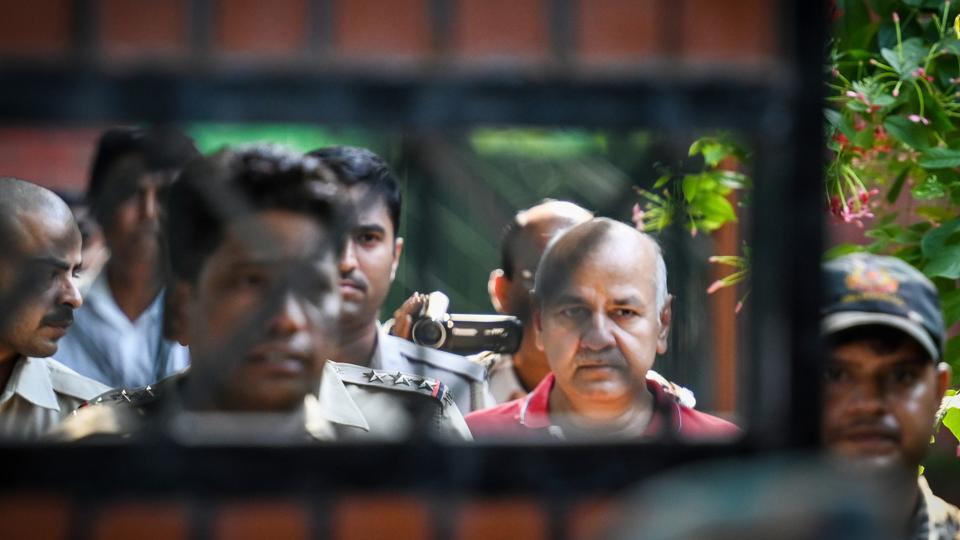
Challenging the two orders passed by the Delhi high court rejecting his bail – on July 3 in the ED case and on May 30 in the CBI case – Sisodia told the top court that the chargesheet has already been filed by the CBI where the charges against him are punishable with less than 7 years’ imprisonment.
Seeking bail in the ED case, he said that the probe conducted so far has not traced any proceeds of crime to him and in the absence of any evidence to link him with alleged money laundering, he deserves to be granted bail.
The petitions filed through advocate Vivek Jain also rely on the fact that other co-accused in the case have been granted bail.
In the latest Delhi HC order, a bench of justice Dinesh Kumar Sharma said that the case against Sisodia did not fulfill the triple test for the grant of bail, as also the twin bail conditions laid under Section 45 of the Prevention of Money Laundering Act (PMLA).
The triple test referred to by the high court allows an accused to be released on bail if he fulfills three parameters – accused is not a flight risk, does not influence witnesses and won’t tamper with evidence. In addition, for offences under PMLA, bail under Section 45 can be granted if the court forms a prima facie view that the accused is not guilty and that he is not likely to commit any offence while on bail.
Prior to the HC ruling, even the trial judge had refused him bail on April 28 via a detailed order, noting that based on the evidence collected so far, it could be clearly inferred that the applicant (Sisodia) was related to the generation of proceeds of crime of around ₹100 crores in the form of kickbacks which were paid by the ‘South lobby’ to the co-accused Vijay Nair, who is Aam Aadmi Party’s communication in-charge.
Also Read:Manish Sisodia doesn’t satisfy triple test, says Delhi HC; rejects his bail plea
Before the July 3 order, when the bail was declined on May 30 in the CBI case, the high court was of the view that due to the high political positions held by the accused and his position in the party in power in Delhi, the possibility of influencing the witnesses cannot be ruled out.
The CBI had arrested Sisodia on February 26 pursuant to a FIR registered in August 2022 under Section 120B (criminal conspiracy) of the Indian Penal Code, read with Section 477A (falsification of accounts) and Section 7 of the Prevention of Corruption Act (illegal gratification) in connection with irregularities in framing and implementation of the excise policy of Delhi for 2021-22. Of these offences, Section 477A of the IPC carries a maximum sentence of seven years. In the charge sheet, other sections under IPC and PC Act were also added.
The CBI probe into Delhi’s excise policy case was ordered based on a complaint by Lieutenant Governor Vinai Kumar Saxena in July, where he sought a detailed investigation into the rules being allegedly tweaked to benefit certain individuals and liquor barons. There were also suggestions that kickbacks were being paid to those in power, reaching up to Sisodia, who held the Excise portfolio.
It was under him that the 2021-22 excise policy was introduced in November 2021. The policy earned Delhi government ₹8,919.59 crore, estimated to be 27% higher than the base price bids at which the licences were awarded.


