
 E-Paper



Maha political crisis: ‘What kind of time limit should be there’, says SC
Hearing a clutch of petitions arising out of last year’s vertical split in the Shiv Sena into two factions -- led by Uddhav Thackeray and Eknath Shinde -- the bench added that a 2020 judgment by the top court did say that the Speaker should decide on decide on disqualification petitions within three months.


New Delhi Citing a legal conundrum, the Supreme Court on Wednesday expressed its concerns over prolonged pendency of disqualification petitions before the Speaker of a legislative assembly that prompts the parties to pursue legal recourse even as the court is yet to rule on whether the Speaker can be bound by a fixed timeline.
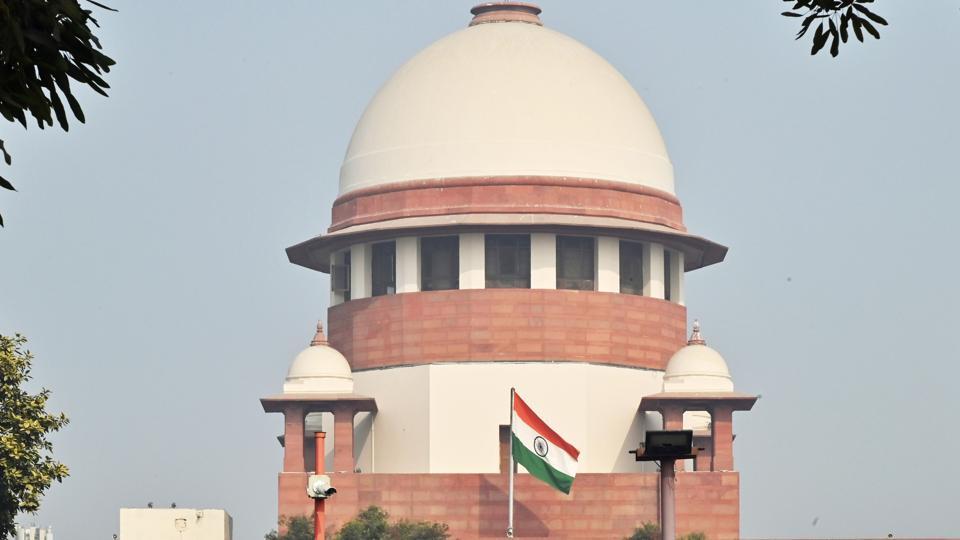
“How are we going to deal with a situation when disqualification petitions are filed but speakers don’t decide and the members continue in the House. What kind of time limit should be there? This problem has arisen in a number of cases before this court,” a constitution bench, headed by Chief Justice of India (CJI) Dhananjaya Y Chandrachud, observed.
ALSO READ: Shiv Sena crisis has serious consequences for polity: Supreme Court
Hearing a clutch of petitions arising out of last year’s vertical split in the Shiv Sena into two factions -- led by Uddhav Thackeray and Eknath Shinde -- the bench added that a 2020 judgment by the top court did say that the Speaker should decide on decide on disqualification petitions within three months.
“The issue whether this can be done or not has already been referred to a Constitution bench on the argument that this court cannot direct the Speaker. Now, such situations keep coming up; events take over or assembly is dissolved while the petitions remain pending. It is a conundrum,” remarked the bench, which also included justices MR Shah, Krishna Murari, Hima Kohli and PS Narasimha.
By an order in November 2016, a two-judge bench referred to a Constitution bench the issue as to whether the Supreme Court or a high court can direct the speaker to decide a disqualification petition within a fixed time frame. Some of the previous judgments, including a majority view in the five-judge bench in 1992 (Kihoto Hollohan) held that no such directive could be issued to the Speaker who is also a constitutional authority.
ALSO READ: Supreme Court ruling today on petitions for independent EC, CEC selection
The observations of the bench came as senior counsel Neeraj Kishan Kaul, appearing for Maharashtra chief minister Shinde and MLAs supporting him, argued that the Uddhav faction is asking the court to assume the role of the Speaker by turning the clock back on an assumption that 39 MLAs belonging to his camp stand disqualified.
Countering an argument made by the Uddhav faction last week that the conduct of Shinde and 38 other MLAs supporting him were sufficient to warrant their disqualification for the anti-party activities, Kaul said that any such presumption would amount to annulling the mandate of the people and depriving their constituencies of elected representatives, besides seriously impacting the electoral democracy.
Kaul said that the other side is wrong in law in making an argument that Uddhav can be reinstated as Maharashtra chief minister by nullifying all that happened after June 21, 2022 when 34 MLAs of the Shinde camp wrote to the deputy speaker (there was no Speaker at that time) expressing no confidence in him and in Uddhav’s leadership. He pointed out that the disqualification notices were issued against Shinde and others by the deputy speaker only after a motion of his own removal was moved.
“The very act of disqualification petition was a ruse to stifle dissent within the party. After we expressed no confidence in the deputy speaker, disqualification proceedings were instituted against us to stifle democracy within the party. Internal dissent cannot amount to voluntarily giving up membership of a party under the of Tenth Schedule (anti-defection law)...What better way to show majority for a leader can be than facing the trust vote, but the then CM resigned. In fact, after I was sworn in as the CM on June 30, they brought a motion against us on July 4 and we won because we have the majority ,” Kaul said.
At this point, the bench asked the senior counsel: “When they issued a whip on July 4 for the election of the new Speaker and the trust vote, can it not be argued that they have accepted the trust vote in principle?” Kaul responded in affirmative, adding that Shinde and the MLAs supporting him never left the party but maintained that they were the real Shiv Sena.
“Our lack of faith in the ministry was due to an unholy alliance entered into by the previous CM (Uddhav) leading to huge disappointment of party cadre at all levels. Can a dissent incur wrath of disqualification? I would humbly say no. The Symbols Order also recognises the splinter group and the rival faction. Following the same principle and the numbers that we had, we have now been recognised as the party even by the Election Commission of India,” Kaul said.
“Reversal of the doctrine on majority would be disastrous. It would lead to incentivising someone in minority to continue at the helm and use the weapon of Tenth Schedule to retain power. This cannot be permitted by a Constitution bench,” he argued.
The lawyer added that an artificial distinction is sought to be drawn between a political party and a legislative party by the other side but the reality is that legislators are also the members of the political party and all decisions of a party are communicated inside the House by the legislative party.
The arguments in the matter will continue on Thursday. In the present batch of petitions, the Constitution bench has been called upon to decide on legal issues surrounding the contours of disqualification proceedings and the powers of the governor and the speaker in their respective spheres.
The Constitution bench is seized of a batch of petitions filed by Shinde and Uddhav factions in relation to disqualification proceedings against the MLAs of both camps, election of Rahul Narwekar as new Speaker, recognition of a new party whip for Shiv Sena, and the governor’s directive to Uddhav for proving majority on the floor of the House and subsequently inviting Shinde to form the new government in the state.
While the first two petitions in the Supreme Court were filed by the Shinde faction to stop the deputy speaker from disqualifying them as MLAs, the Uddhav camp also approached the apex court later, challenging the actions of the governor in directing the former CM to prove the majority on the floor of the House as well as inviting Shinde to form the government in the state. The Uddhav camp further challenged Narwekar’s decision to recognise Shinde as the leader of Shiv Sena and the appointment of a new chief whip of the party.
Stay updated with all top Cities including, Bengaluru, Delhi, Mumbai and more across India. Stay informed on the latest happenings in World News along with Delhi Election 2025 and Delhi Election Result 2025 Live, New Delhi Election Result Live, Kalkaji Election Result Live at Hindustan Times.


