
 E-Paper



Town halls, symbols of civic pride, see revival
Built between the early 19th to the early 20th centuries, most of these colonial mansions built in Greco-Roman style, have been restored over the past few years

 Prefer HTon Google


In February this year, the Shimla Municipal Corporation entered into an agreement with a Delhi-based firm to set up a high-end cafe on the ground floor in the historical Town Hall building on Mall Road. The corporation announced it would get monthly rent of ₹13 lakh per month. Many citizens were immediately up in arms against the decision. “This historical building cannot be used for a café; it should be used to promote the hill city’s art, culture, and crafts,” says Sumit Raj Vashisht, a writer who runs Shimla Walks.
Designed by Scottish architect James Ransone and built in 1908, Town Hall in Shimla is a half-timbered Tudor-style mansion with wooden frames and shingles eaves. It presently houses the offices of the mayor and the deputy mayor.
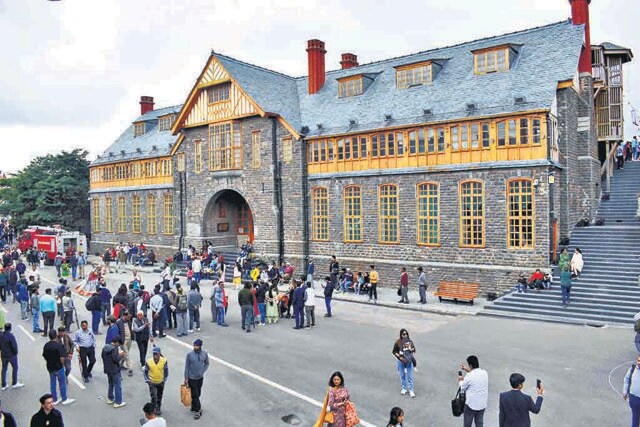
For many years, there was a fight between the state government’s tourism department and the municipal corporation as to who should take possession of the heritage building and how it should be used. But after its renovation in 2018, the high court of Shimla remarked it would be a complete waste of the Town Hall if it is left to the staff of government offices. In 2019, it ordered that a high-end cafe, a reading centre, and a handicraft boutique may be set up in the building. It allowed only the offices of the mayor and deputy mayor in the renovated building, which earlier had the entire municipal administration, including the commissioner’s office.
Surinder Singh Chauhan, who was elected the new mayor in May, says, “The deal for the cafe was signed during the tenure of the previous mayor. We will look into what kind of cafe it is going to be and what else can be done with the ground floor space.”
Not just Shimla, cities such as Kolkata, Mumbai, Chennai, Delhi, Bengaluru, Mysore, and Meerut, among others have grand town halls, the people’s places that once hosted civic, cultural, social, and political gatherings. Built between the early 19th to the early 20th centuries — most of these colonial mansions built in Greco-Roman architectural style with pillars, pediments, cornices, and grand stairs — have been restored over the past few years. Some others, including the town halls in Delhi and Meerut, have remained neglected. While municipal corporations control most of these town halls, very few now have their offices there.
SK Aruni, deputy director, of research, southern regional centre, Indian Council of Historical Research ( ICHR), says these buildings, a symbol of civic pride, adopted progressive building technologies and architectural styles of their times.
“The British first built the town halls in Presidency cities such as Calcutta, Bombay, and Madras. Incidentally, Bengaluru was one of the last cities to have a dedicated town hall. Before the town halls were built, congregations took place at religious places. Town halls were also a way for the British to instill democratic ideas, ” says Aruni.
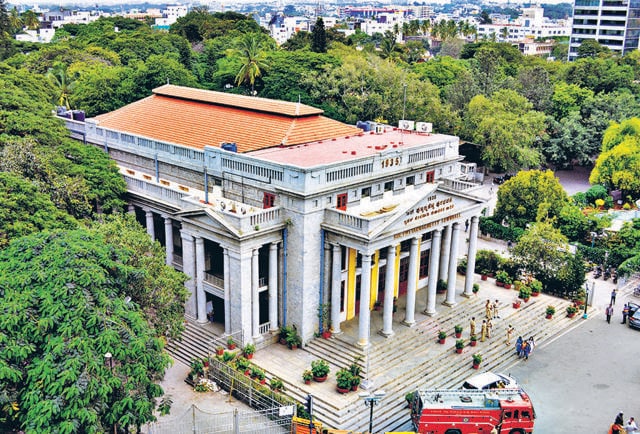
Built in 1935, the town hall in Bengaluru was renovated in 2014 by the Bruhat Bengaluru Mahanagara Palike (BBMP), the building’s custodian, which spent ₹5 crore on modern acoustics, centralised air-conditioning, and other amenities. The town hall is officially called Sir KP Puttanna Chetty Town Hall. Chetty was a philanthropist and a former president of the Bangalore Municipal Council who contributed a princely sum of ₹75,000 towards the construction of the building.
The majestic neo-classical building, which features a flight of steps leading to the entrance porch resting on Tuscan columns, stands as a piece of Athens in the heart of Bengaluru. The renovated building holds conferences, seminars, cultural , and political programmes. Many protests are also held outside it.
Last year, West Bengal chief minister Mamata Banerjee inaugurated the renovated town hall in Kolkata — a massive Roman-Doric building at Esplanade Road. Built in 1813 — before Queen Victoria was born — it was the first town hall in colonial India and was opened to the public on March 22, 1814. During the 19th century, it hosted all kinds of social gatherings, ceremonies, breakfast meetings, dinners, balls, and farewell parties. A condolence meeting of Warren Hastings, Governor-General of the Presidency of Fort William was held here in 1819.
Initially run by a management committee known as the Town Hall Committee, in 1867, the building came under the control of the municipal government.
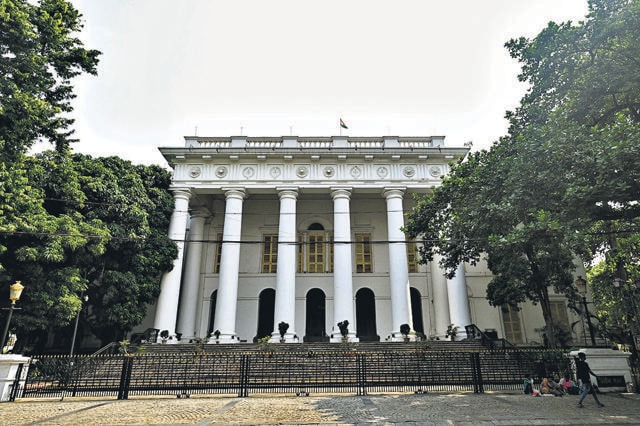
In 1886, it served as the venue for the last two days of the second session of the Indian National Congress; in 1893 locals gathered here to celebrate Swami Vivekananda’s address in Chicago, and in November 1895, scientist Jagadish Chandra Bose made a public demonstration, where he sent an electromagnetic wave across 75 feet, passing through walls to ring a bell remotely and to explode gunpowder.
It was here that Rabindra Nath Tagore’s 50th birth anniversary was celebrated in 1912. But after Independence, it fell into oblivion.
In 1995, restoration was first undertaken with ₹1.35 crore raised from the auction of some paintings of artist Bikash Bhattacharjee, and the Town Hall once again became a venue of several social, cultural, and political events.
The latest round of restoration and renovation was carried out between 2017 and 2022 by the Public Works Department in consultation with IIT Roorkee, and the central hall, library, and archives were renovated and retrofitted with the help of IIT Kharagpur.
“We are currently in the process of setting up a resource centre and a city museum called Kolkata Museum, which will tell the story of Kolkata and the story of the Kolkata Municipal Corporation, the oldest in the country,” says Sasanka Sekhar Bandyopadhyay, assistant director, Town Hall, Kolkata. Currently, the town halls hold seminars, music soirees, literary festivals, and many government programmes here. “Besides a lot of scholars visit our renovated library and the archives,” says Bandopadhyay.
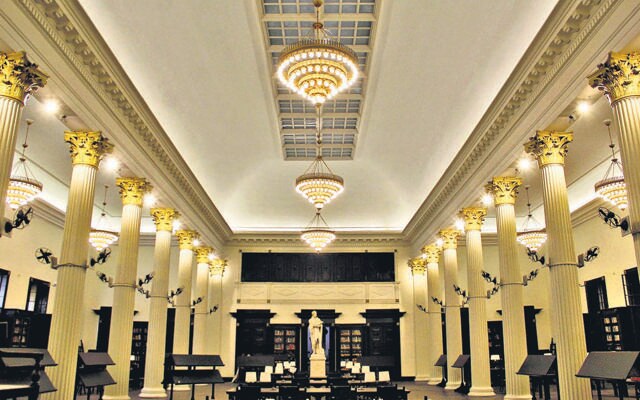
Similarly, in 2017, the Maharashtra government undertook the renovation of the Town Hall, Mumbai, one of the city’s earliest public buildings. Designed by Colonel Thomas Cowper of the Bombay Engineers and built in 1833 in the heart of the fortified Bombay, the neo-classical building that once served as a town hall, court, and university hall, today houses the Asiatic Society and State Central Library today, visited by hundreds every day. The town hall’s renovated Durbar Hall hosts a variety of events such as public lectures and book launches, among others.
The building’s famous wide staircase — popularly known as Asiatic steps — has been featured in many films and hosted hundreds of music aficionados during the concerts held at Horniman Circle Gardens.
The entire building, including the stairs, carvings, sculptors, ornamental pillars inside the hall, and period furniture were all restored in 2017. “We also did structural consolidation. The restoration of the town hall was quite a challenge. The cast iron pillars in the building had been originally imported from England, and we had to ensure that their original look was not lost and so the materials used were as close to the original as possible,” says Srinivas Sulge, managing director, Laxmi Hericon, a structural engineering and heritage conservation company that executed the restoration work.
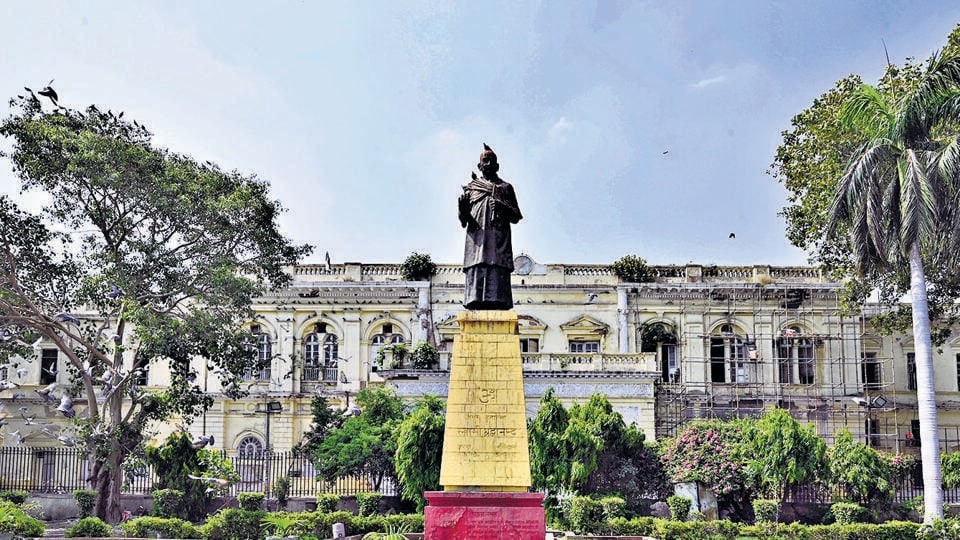
Among prominent town halls that await renovation are those in Meerut and Delhi. The Town Hall in Chandni Chowk, a yellow brick-and-stone building with carved white trims, was built in 1863 and bought by the municipality in 1866.
“It was one of the grandest buildings in Delhi and home to Lawrence Institute – a sort of cultural and intellectual centre and club, which also had a library and a reading room. It was visited by many Europeans and Indians,” says Swapna Liddle, a historian, and the author of Chandni Chowk: The Mughal City of Old Delhi. Later, this Lawrence Institute Library became what is today known as Hardayal Municipal Public Library. Since the MCD shifted its office to the new 28-storey Civic Centre, many plans for the Town Hall’s renovation and use — as a heritage hotel, a cultural centre, and a city museum were made but nothing materialised.
“The best use of the building is to convert it into a city museum so that people can come here and know more about the rich culture of Delhi. The point is the building should remain accessible to common people,” adds Liddle.
Delhi’s newly elected Mayor could not be contacted for her comment despite repeated phone calls.
Abha Narain Lamba, a well-known Mumbai-based conservation architect, who has restored many historical buildings, including Town Hall, in Mumbai, and Bikaner House in Delhi, agrees, “Town halls were built as assembly spaces, centres for engagement with people, civic debates, and discussions. I believe that the Town Hall in Delhi can be developed as a cultural hub, its location in the walled city, especially suits that purpose.”


