The Haryana government has proposed a stricter legal framework to protect trees outside forest areas, making prior permission mandatory for felling green trees and requiring plantation of 10 trees for every tree cut. The proposed Haryana Preservation of Trees Act, 2026, also provides for a penalty of ₹10,000 per tree, environmental compensation and a minimum three-month imprisonment for failure to pay the prescribed dues.
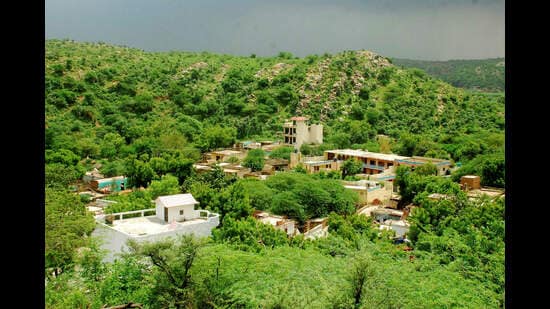
The legislation is aimed at maintaining green cover, combating pollution and conserving soil across the state. It will apply to all non-forest areas of Haryana, including areas notified under Section 4 of the Punjab Land Preservation Act, 1900, where tree felling is regulated. Forest and wildlife areas recorded with the Forest and Wildlife Department will remain governed by existing forest and wildlife laws.
Forest and Wildlife Minister Rao Narbir Singh said the legislation reflects the government’s commitment to protecting Haryana’s green cover, particularly in ecologically sensitive areas such as the Aravallis. “Trees are essential for maintaining ecological balance and improving air quality. Through this legislation, we want to ensure that development does not come at the cost of our green cover. The requirement of 10 compensatory trees for every tree felled will help strengthen the state’s efforts towards environmental conservation,” Singh said.
Under the proposed law, no person will be allowed to fell a green tree on non-forest land without permission from a designated Tree Officer, except in specified cases. The restriction will also cover cutting, removing or disposing of fallen green trees. In municipal areas, pruning or pollarding branches exceeding 30 cm in girth will also require permission, while pruning in agricultural fields will be exempt.
{{/usCountry}}Under the proposed law, no person will be allowed to fell a green tree on non-forest land without permission from a designated Tree Officer, except in specified cases. The restriction will also cover cutting, removing or disposing of fallen green trees. In municipal areas, pruning or pollarding branches exceeding 30 cm in girth will also require permission, while pruning in agricultural fields will be exempt.
{{/usCountry}}The Act defines a tree as a woody plant with a trunk girth of at least 30 cm, measured at breast height in the plains. In ecologically sensitive areas of the Shivalik and Aravalli hills, where trees grow slowly, the measurement will be taken at the collar at ground level.
According to the proposed draft, seen by HT, applications for tree-felling permission will have to be submitted through the Forest and Wildlife Department’s online portal on the Haryana e-Seva platform. The Tree Officer will be required to decide applications within 30 days. Applications relating to fallen green trees will have to be decided within three days. If no decision is taken within the stipulated period, the application will automatically be forwarded to the appellate authority, saidprincipal chief conservator of forests (HoFF), Haryana
Anyone granted permission to fell a green tree will be required to arrange 10 compensatory trees through the Forest Department, preferably in the same district. The applicant will have to deposit the prescribed amount in the Compensatory Tree Plantation Fund, covering plantation and maintenance for five years. This requirement will not apply to permissions for pruning specified branches.
The proposed legislation provides for a penalty of ₹10,000 for every tree felled or irreparably damaged in violation of the law, along with environmental compensation equivalent to 20 times the cost of compensatory plantation and five-year maintenance. Failure to deposit the penalty and compensation will attract a minimum imprisonment of three months.
Tree Officers will also have the power to seize tools, vehicles and other equipment used in illegal felling. Forest, revenue and police officers will be authorised to intervene to prevent offences.
The government will also have the power to prohibit the felling of a particular tree or class of trees for a specified period in the public interest, the draft suggests.
According to Forest Survey of India 2021, Haryana’s tree cover was reduced by 140 sq km. Tree cover is defined as all tree patches of a size less than one hectare occurring outside the recorded forest area. In Haryana, the tree cover for the 2021 assessment was 1,425 sq km, which was 1,565 sq km in 2019.
Stay updated with all the Breaking News and Latest News from Mumbai. Click here for comprehensive coverage of top Cities including Bengaluru, Delhi, Hyderabad, and more across India along with Stay informed on the latest happenings in World News.
Stay updated with all the Breaking News and Latest News from Mumbai. Click here for comprehensive coverage of top Cities including Bengaluru, Delhi, Hyderabad, and more across India along with Stay informed on the latest happenings in World News.