...
...
Next Story

Survey finds 28% garbage vehicle shortfall across Haryana

The rickshaw shortfall has hit door-to-door collection in narrow and densely populated areas, forcing residents to dump waste at open points.

Published on: Feb 23, 2026, 07:14:00 IST
Advertisement

The Haryana government’s claims of improving urban cleanliness face sharp scrutiny after a rapid feedback survey, ordered by chief minister Nayab Singh Saini, revealed a severe shortage of garbage collection vehicles in the state.
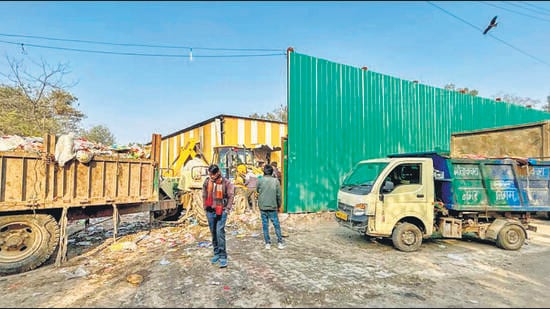
The report highlights that inadequate fleet strength has impacted the efficiency of municipal sanitation services. (Representational image)

Compiled by the Chief Minister’s Governance Associates (CMGGA), the survey points to systemic gaps in urban sanitation infrastructure, raising concerns over the effectiveness of municipal functioning in 22 districts.

Haryana is facing an average shortfall of 28% garbage collection vehicles, resulting in delays in door-to-door waste pickup and mounting garbage at residential areas and public spaces, it said. The report highlights that inadequate fleet strength has impacted the efficiency of municipal sanitation services.

Faridabad has emerged as the worst performer, with only 154 of the required 907 garbage vehicles in operation, an 83% deficit. In Gurugram, projected as the state’s most developed city, 744 vehicles are deployed against 1,001 required, marking a 26% shortfall.

Nuh (Mewat) is short of 46% of its required vehicles, while Rewari is grappling with a 45% deficit. Palwal is the only district showing relative adequacy, with only 4% shortfall.

The report identifies three key reasons for worsening sanitation, led by a severe vehicle shortage, particularly tipper trucks (32% deficit) and garbage collection rickshaws (34% deficit). The rickshaw shortfall has hit door-to-door collection in narrow and densely populated areas, forcing residents to dump waste at open points.

The second concern is the poor functioning of ward committees. While 1,689 ward committees were mandated across the state, only 524 are operational, limiting citizen participation and oversight of sanitation-related issues, the report showed.

The third issue relates to grievance redressal. The report revealed weak coordination between the Swachh City app and municipal helplines, resulting in complaints either being ignored or not acted upon effectively.

Data and tracking gaps

The survey also flagged gaps in the Solid Waste Management (SWM) portal, noting lack of standardised data reporting. GPS data showed garbage vehicles running an average of 10 minutes late, while poor coordination between municipal bodies and the public health department led to sewerage-related complaints being passed between departments or rejected.

Officials warned that unless these gaps are addressed urgently, the problem could turn into a public health crisis.

Gurugram municipal commissioner Pradeep Dahiya said corrective steps were being initiated. “Zone-wise sanitation monitoring cells have been constituted to conduct rapid surveys to assess the sanitation status. They will monitor the attendance and performance of sanitation staff, track deployment and functioning of sanitation vehicles, and oversee the work of assistant sanitation inspectors,” Dahiya said.

The state government is expected to review the CMGGA report and issue further directions to urban local bodies to bridge the gaps, officials added.

 
ABOUT THE AUTHOR
Leena Dhankhar

Leena Dhankhar is Senior Editor and Bureau Chief, Gurugram, at Hindustan Times, where she has spent over 17 years chronicling the transformation of one of India's fastest-growing urban regions. From starting her career as a crime reporter to leading the Gurugram bureau, her journalism has been defined by investigative reporting, in-depth storytelling and an unwavering focus on public interest. Over nearly two decades, she has reported extensively across crime, politics, civic governance, elections, real estate, environment, courts, sports, education and entertainment, covering Gurugram, Faridabad, Nuh and Palwal. Her reporting has exposed several major scams and systemic failures, including insurance frauds, waste management irregularities, illegal arms manufacturing units in Nuh, illegal mining in the Aravallis, organised crime networks and governance lapses affecting millions of residents. Known for her investigative work and exclusive stories, Leena has reported on high-impact national issues, including the Nicaragua charter flight carrying Indian migrants that was turned back amid allegations of human trafficking, exposing the growing network of illegal immigration rackets. Her work has also focused on gang wars, prison administration, juvenile crime, women and child protection systems, the functioning of the Juvenile Justice Board and Child Welfare Committee, and environmental challenges such as pollution, waterlogging and deteriorating civic infrastructure. Beyond hard news, Leena has extensively documented Haryana's rich heritage, forests and wildlife, bringing attention to the state's historical landmarks, biodiversity, conservation efforts and ecological challenges through immersive reportage and feature writing. Her journalism has consistently gone beyond breaking news. She has documented Gurugram's rapid urbanisation through long-form narratives and enterprise reporting on issues ranging from pothole-ridden roads, flooding and waste management to the changing social fabric of India's Millennium City. She also writes widely read feature columns, including The Outsider, Changemaker, and Concern for Gurugram, profiling people, places and ideas shaping the city's identity. Leena is the author of Gurugram School Murder, published by Juggernaut Books, a deeply reported account of one of India's most high-profile school murder investigations. She is currently working on her second book, an investigative work exploring some of India's most significant scams and fraud investigations. Beyond print journalism, she has expanded her storytelling through public speaking and digital media. She is a TEDx speaker and has produced podcasts exploring Gurugram's transformation, civic challenges and untold stories. Her work reflects a commitment to narrative journalism that combines rigorous reporting with compelling storytelling. A law graduate with an MBA in Human Resources, Leena brings a multidisciplinary perspective to her reporting, particularly on governance, public policy and legal affairs. She has travelled extensively across India to pursue investigative assignments, often reporting from remote locations and conflict-prone areas in search of stories that matter.

Catch every big hit, every wicket with Crickit, a one stop destination for Live Scores, Match Stats, Infographics & much more. Explore now!.

Stay updated with all the Breaking News and Latest News from Mumbai. Click here for comprehensive coverage of top Cities including Bengaluru, Delhi, Hyderabad, and more across India along with Stay informed on the latest happenings in World News.
Catch every big hit, every wicket with Crickit, a one stop destination for Live Scores, Match Stats, Infographics & much more. Explore now!.

Stay updated with all the Breaking News and Latest News from Mumbai. Click here for comprehensive coverage of top Cities including Bengaluru, Delhi, Hyderabad, and more across India along with Stay informed on the latest happenings in World News.
SHARE THIS ARTICLE ON
Notifications

Get breaking alerts directly from the newsroom

Notifications are on!You'll be notified when news breaks