
 E-Paper



Do not arrest Shekhawat or file charge sheet without approval: Raj HC tells SOG
The Sanjivani scam is currently under investigation by the SOG, a state agency that initiated the case with a first information report (FIR) against the Sanjivani Credit Society in 2019. It has been accused of defrauding thousands of investors for over a tune of ₹900 crore

 Prefer HTon Google


The Rajasthan high court, while maintaining the stay on the arrest of Union Jal Shakti minister Gajendra Singh Shekhawat in the alleged Rs.900 crore Sanjivani Multistate Credit Cooperative Society scam, on Friday directed the state’s Special Operations Group (SOG) that no charge sheet shall be filed against him without the prior approval of this court.
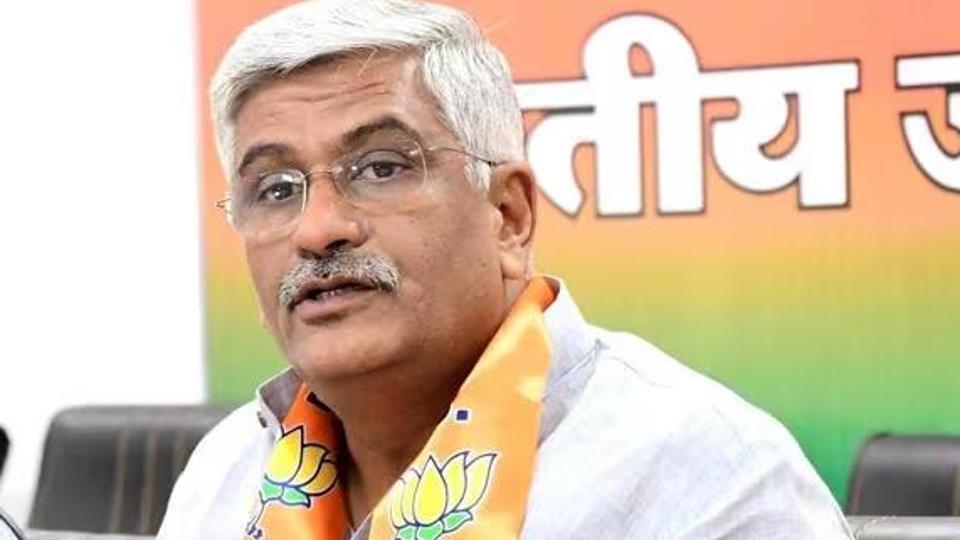
The court clarified that there shall be no other restrictions on the investigation, and it may continue unencumbered.
“The Special Operation Group of Rajasthan Police is free to conduct an investigation and may collect evidence, oral or documentary, from witnesses as well as suspects. For the purpose of seeking presence for interrogation or aiding in the investigation, the agency may issue notices to the witnesses and the suspects, specifying any particular date and time for the same,” justice Farjand Ali stated in his order.
“Considering that the petitioner– Gajendra Singh Shekhawat, is a sitting Member of Parliament and a public figure with several professional commitments, if he is to be called or summoned, he shall be given notice at least 20 days prior to the date on which his presence is sought,” the order further stated.
The Sanjivani scam is currently under investigation by the SOG, a state agency that initiated the case with a first information report (FIR) against the Sanjivani Credit Society in 2019. It has been accused of defrauding thousands of investors for over a tune of ₹900 crore.
Union minister Shekhawat’s name was brought up after chief minister Ashok Gehlot alleged his involvement, along with his family, in the Sanjivani Credit Society scam in February. Gehlot claimed to have evidence of their financial transactions. However, on April 13, the high court granted Shekhawat relief from arrest.
Shekhawat had previously filed a petition requesting that the Central Bureau of Investigation (CBI) handle the investigation into the alleged scam under the Banning of Unregulated Deposit Schemes Act 2019 (BUDS Act) instead of the SOG. Recently, Shekhawat filed a second application to prevent the SOG from filing charges against him.
During the hearing on Shekhawat’s application on Friday, senior counsel for the petitioner, VR Bajwa, argued that the matter pertains to one falling under the purview of the Banning of Unregulated Deposits Act, 2019, which is a Special Act, and the state police lack jurisdiction to investigate, emphasizing the non-obstante clause under Section 34 of the BUDS Act.
“The petitioner has been roped in the present matter on the basis of political malice. He has neither been summoned by the investigating officer in this case nor has he been named as an accused in any of the charge sheets filed in respect of the said FIR,” he said.
Senior counsel for the state, Harin Rawal, opposed the submissions made on behalf of the petitioner with fervour and submitted that looking at the enormity of the crime, the influential status of the petitioner, and the web of intricately woven allegations, the stay petition filed on behalf of the petitioner should not be allowed, and no relief should be granted to the petitioner in this regard.
“In the instant stay petition, several grounds have been raised in various regards, including the ground of maintainability of the present FIR and the authority of the agency to investigate the matter as it relates to a special Act. Prima facie, it seems that there are submissions to be made on behalf of both the parties which are required to be heard at length. Looking at the paucity of time and a heavy board today, the same is not a possible fate for the present matter today. Due to the scarcity of time, it won’t be possible for the Court to conclude the hearing by today itself; thus, the same requires to be deferred,” the bench ordered as it observed that neither the petitioner has ever been summoned in the period spanning over more than four years from filing of the FIR nor has any notice been served on him in this period.


