The All India Muslim Personal Law Board (AIMPLB) has decided to challenge the recent Supreme Court ruling mandating the payment of maintenance to Muslim divorcee women beyond the period of “Iddat” ( a period of waiting for Muslim women after divorce) before a larger bench.
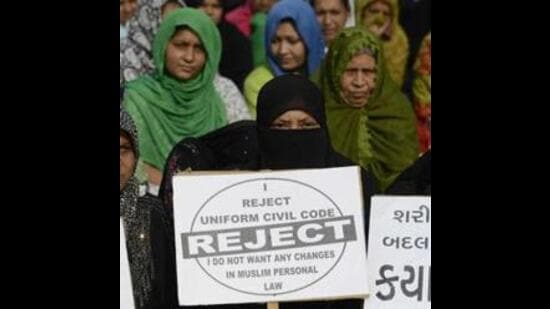
The board will also contest implementation of Uniform Civil Code in Uttarakhand.
These decisions were taken during a AIMPLB meeting held on Sunday. The board’s legal committee, after going through the Supreme Court order, has resolved to explore all possible legal avenues to defend Muslim personal laws.
AIMPLB member Maulana Khalid Rashid Farangi Mahali stated, “Our legal committee reviewed the order thoroughly and decided to go ahead with the defence of Muslim personal laws. According to the Constitution, every citizen has the right to live according to the customs of their religion. For communities with personal laws, like Muslims, these laws guide their daily lives, including matters of marriage and divorce.”
The board will challenge the ruling before a larger bench, he said.
According to the AIMPLB members, the Indian Constitution grants individuals the liberty to follow their personal laws, which for Muslims, include guidelines on marriage, divorce, and maintenance.
{{/usCountry}}According to the AIMPLB members, the Indian Constitution grants individuals the liberty to follow their personal laws, which for Muslims, include guidelines on marriage, divorce, and maintenance.
{{/usCountry}}As for implementation of the Uniform Civil Code in Uttarakhand, the board perceives the UCC as a direct violation of personal laws.
The potential challenge to the Waqf Act in various courts was also discussed. The board expressed concerns that any changes to the Waqf Act could jeopardise the security of Waqf properties. AIMPLB members resolved to fight “vigorously” to protect the Waqf Act.
During the meeting, the AIMPLB members emphasised that marriage in Islam is intended to be a lifelong commitment. However, provisions for divorce exist if irreconcilable differences arise. In such cases, Shariat law requires a man to pay maintenance only during the period of Iddat, which lasts three months and ten days.
The board questioned the logic behind extending maintenance payments beyond the “Iddat” period, arguing that once the marital relationship is dissolved, there should be no further financial obligations.
Regarding implementation of the UCC in Uttarakhand, Maulana Khalid Rashid Farangi Mahali remarked, “No government has the power to challenge Muslim personal laws. The UCC is perceived as a violation of Shariat law and the constitutional protections afforded by the Shariat Application Act and Article 25, which guarantees the freedom to practise religion.”