
BJP leader and Uttar Pradesh State Women’s Commission vice-chairperson Aparna Yadav on Monday referred to senior Samajwadi Party leader Azam Khan as a “demon” and a “terrible person” without taking his name, drawing a sharp response from the Opposition party.
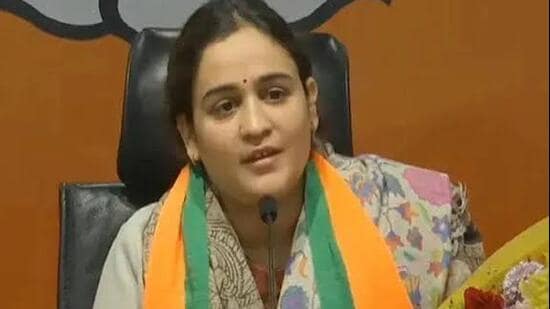
Aparna, the younger daughter-in-law of SP founder Mulayam Singh Yadav, made the remarks while responding to a journalist’s query after attending a religious discourse (katha) at the ashram of Sadhvi Niranjan Jyoti, chairperson of the National Commission for Backward Classes. Sadhvi Niranjan Jyoti was also present at the event in Kanpur Dehat.
When asked about Azam Khan, who came out of Dasna jail in Ghaziabad on bail on November 18, Aparna said, “Look, we believe one should listen to religious discourses. One should not talk about such demons and terrible people.”
She also spoke about the 2027 Uttar Pradesh assembly elections, expressing confidence that the BJP would return to power. “Kamal khilega… Lotus will bloom, and the BJP will win the elections,” she said.
Without naming the Samajwadi Party, Aparna also criticised its dynastic politics, alleging that its leaders had opposed the Women’s Reservation Bill while promoting women only from their own families.
{{/usCountry}}Without naming the Samajwadi Party, Aparna also criticised its dynastic politics, alleging that its leaders had opposed the Women’s Reservation Bill while promoting women only from their own families.
{{/usCountry}}Aparna, who is married to Prateek Yadav, the younger son of Mulayam Singh Yadav, joined the BJP in January 2022 ahead of the state assembly elections. She was earlier with the Samajwadi Party and had contested the Lucknow Cantonment Assembly seat on its ticket.
Reacting to her remarks, Samajwadi Party national spokesperson Abbas Haider said calling someone a “demon” is not political criticism, it reflects the language being used. Such personal insults have no place in public discourse.
“The Samajwadi Party never opposed women’s reservation. Our position was clear: reservation must also ensure representation for women from backward and marginalised communities. Deliberately misrepresenting that position is political dishonesty. Instead of personal attacks and divisive rhetoric, let us discuss public issues, performance and accountability. Politics demands arguments, not abuses,” he added.