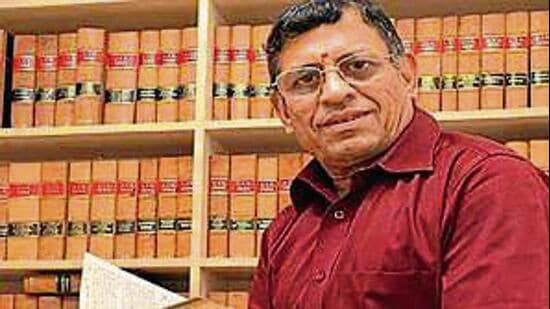
The Bharatiya Janata Party (BJP) has lost the narrative war over the recent Gen Z protests at Jantar Mantar, said S Gurumurthy, editor of Thuglak (a Tamil political weekly), chairman of the Vivekanand International Foundation and Rashtriya Swayamsevak Sangh (RSS) ideologue, in Kanpur on Monday.
He called the portrayal of the generation emerging from the protests “purely false” and not supported by facts.
Referring to the abuse and sloganeering during the demonstration, he said the episode had been used to create a misleading picture of an entire generation.
He made the remarks on the sidelines of a meeting in Kanpur related to preparations for the Hindu Spiritual and Service Mela scheduled to be held in November.
Gurumurthy said the wider Gen Z was far more diverse than its recent political portrayal suggested. He pointed to its continued engagement with religion and traditional practices as well as a rise in entrepreneurship, saying research showed that only about 3% of the corresponding age group in the previous generation were entrepreneurs, compared with around 15% among the present generation.
Young people who were earlier associated with agricultural work, he said, were increasingly becoming agricultural entrepreneurs. He also cited the participation of young people in religious journeys and events such as the Kumbh to argue that the generation could not be understood through the lens of a single protest.
{{/usCountry}}Young people who were earlier associated with agricultural work, he said, were increasingly becoming agricultural entrepreneurs. He also cited the participation of young people in religious journeys and events such as the Kumbh to argue that the generation could not be understood through the lens of a single protest.
{{/usCountry}}On self-reliance and manufacturing, he blamed the weakening of domestic manufacturing during the UPA years for increasing India’s dependence on China.
India, he said, created demand for technology without developing adequate domestic manufacturing and technological capabilities, leaving the country dependent on external suppliers. Rebuilding those capabilities, he argued, was essential to greater economic self-reliance.
Speaking about the growing discussion around anxiety and stress, Gurumurthy said these were largely phenomena of prosperous urban societies and cautioned against importing solutions from the US into India.
“This is an urban phenomenon. India is not an urban country,” he said.
The Hindu Spiritual and Service Mela, founded by Gurumurthy in 2009, is built around showcasing the social and service activities of Hindu spiritual organisations and promoting social cohesion. The organisers held the preparatory meeting at a venue in civil lines on Monday.
Gurumurthy said the mela had grown into a large public platform over the years, with previous editions featuring programmes involving thousands of participants. The organisation behind the mela, Hindu Spiritual and Service Foundation, has also used the event to highlight initiatives relating to education, family values, social service and environmental concerns.
Gurumurthy said the mela was intended not merely to unify Hindu society but to harmonise its different sections.
The objective, he said, should not be limited to bringing together people who already agreed with its ideas. Those who opposed them should also be brought into dialogue, he said.