Jhansi district is emerging as a formidable force in solar energy landscape in the heart of Bundelkhand region. Last year, ahead of the Global Investors Summit in Lucknow, Jhansi had received 17 proposals for solar power plants with total proposed investment of around ₹77,821 crore. Currently, work is in progress for five plants.
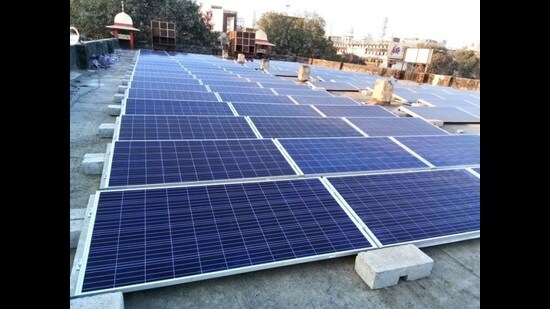
Now, another company has set sights on the region adding to momentum of ongoing projects surrounding in and around Jhansi. “Greenko Energies Private Limited has submitted a letter of intent to the Uttar Pradesh government for setting up a solar park in Jhansi with an investment of ₹70,000 crore,” said deputy director, industries, Jhansi, Mukesh Chowdhary.
“The memorandum of understanding is yet to be signed but it will be done shortly and the work will begin,” he added. The company would not buy land from farmers. Instead, it would take the land from them on lease.
“Bundelkhand region is already generating 550 mw of solar energy for two reasons. First the suitable environment and major push of the government,” said the expert.
The environment in Jhansi is extremely conducive for solar power production. “The companies do their research and for this reason Jhansi is getting the highest investment and proposals in this sector,” Chowdhary said.
{{/usCountry}}The environment in Jhansi is extremely conducive for solar power production. “The companies do their research and for this reason Jhansi is getting the highest investment and proposals in this sector,” Chowdhary said.
{{/usCountry}}Jhansi, according to government studies, receives second highest radiation in the country after Rajasthan, ranging from 4-7 kWh per square metre per day, making it an ideal location for harnessing solar energy.
This explains the amount of solar energy that can be captured in the area and puts Jhansi in extreme category of sun exposure. The sunniest months in Jhansi are April, May, June when the sun shines for an average of 11 hours 39 minutes.
While the ultra-violet (UV) radiation in May, July and August ranges between 11 and 13 on UV index, in other months it ranges between 8 and 9.
“In Rajasthan, heavy dust storms occur very frequently, causing solar panels to quickly accumulate dirt. It leads to high maintenance costs but such a problem does not exist in Jhansi,” said an official, adding that this makes the district special from the point of sustainable and renewable energy source.
In the last year’s budget, the state government had allocated ₹1,554 crore for establishing a grid network with the central government and a German company KfW. The KfW with subsidiaries forms the KfW Bankengruppe, a Frankfurt-based German investment and development bank.