E-Paper



Faizabad Lok Sabha constituency: Sangam of Kamandal, Mandal politics in the land of Ram
Past results in the Faizabad Lok Sabha constituency showcase the importance of the caste factor here. Dalits and Kurmis comprise core voters in the constituency totalling 26% of the electorate

 Prefer HTon Google


The Faizabad Lok Sabha constituency, the geographical centre of Kamandal or temple politics, has always seen an undercurrent of the caste factor, or Mandal politics, in play especially since the late 1980s.
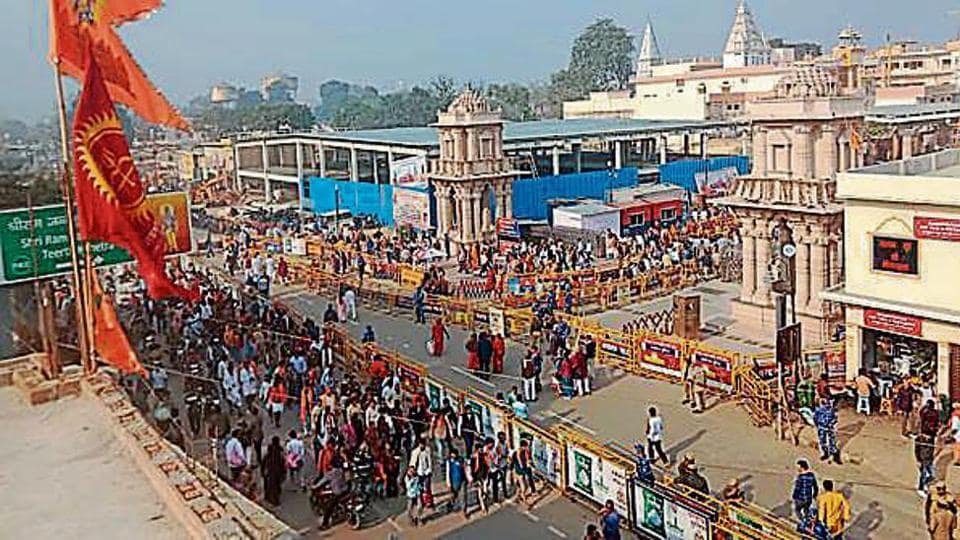
The 2024 election is unlikely to be any different even as the Bharatiya Janata Party seeks a hat-trick of wins from the constituency, months after the grand inauguration of the Ram temple in Ayodhya, the cradle of saffron politics, which is situated in the Faizabad Lok Sabha constituency.
To win the seat, it is essential to mobile all caste groups. The ruling Bharatiya Janata Party has retained sitting MP Lallu Singh, a Thakur by caste, for the poll battle in the land of Lord Ram. He is pitted against Awadhesh Prasad of the Samajwadi Party.
Past results in the Faizabad Lok Sabha constituency showcase the importance of the caste factor here. For instance, the CPI candidate Mitra Sen Yadav, an OBC leader, won the seat in 1989. At the height of the Ram temple movement in 1991, the BJP’s Vinay Katiyar, another OBC leader, wrested the seat. Katiyar retained it in 1996 but lost to Mitra Sen Yadav in 1998, who was then the Samajwadi Party candidate. Katiyar won it back in 1999. In 2004, Mitra Sen Yadav was the victor again for the SP. And in 2009, Nirmal Khatri of the Congress won. Powered by the Modi wave in 2014 and 2019, Lallu Singh won the seat twice.
“The success of Vinay Katiyar was not only due to the saffron factor. Katiyar’s Kurmi caste and the image of a firebrand leader helped him in the temple town,” said a political observer in Ayodhya not willing to be named.
“Ayodhya turned saffron from red only after the Ram Mandir movement in the 1990s,” he added.
Dalits and Kurmis comprise core voters in the constituency totalling 26% of the electorate. The constituency also has 14% Muslims and 12% Yadavs, a voter base traditionally said to be inclined to the Samajwadi Party, before the BJP’s phenomenal wins in the last two polls.
Brahmins constitute 12% of the voters, Rajputs 6% and the Vaishes 4%.
“Our main concern is to carry along all castes, especially Kurmis and Yadavs, who constitute a sizable voter base in Ayodhya,” said a senior Rashtriya Swayamsewak Sangh leader based at Karsevakpuram in Ayodhya.
Already, veteran Samajwadi Party leader and INDIA bloc candidate Awadesh Prasad has hit the ground running and started bringing old Samajwadi Party loyalists back into the party fold, especially those who had left the party in the 2022 Uttar Pradesh assembly polls.
Those who have returned include Abbas Ali Zaidi “Rushdi Mia”, the two-time former SP MLA from Rudauli in Ayodhya district. He had joined the BSP in the 2022 assembly polls.
“Abbas Ali has considerable influence among Muslim constituents of Rudauli ,” said a political commentator in Ayodhya.
Also, Ritesh Singh, son of Raja Rajeev Singh, a six-time former MLA from Dariyabad, has returned to the Samajwadi Party.
Rajeev Singh was a minister in the Samajwadi Party governments led by Mulayam Singh Yadav and Akhilesh Yadav.
“Ritesh Singh’s return will no doubt help the Samajwadi Party in this Lok Sabha poll,” said Tej Narain Pandey aka Pawan Pandey, former SP MLA from Ayodhya (Sadar) assembly seat. Pandey was also a minister in the Akhilesh Yadav government.
It is not as if the BJP is not aware of challenges before it.
After the BJP state leadership’s efforts, Samajwadi Party MLA from Gosaiganj in Ayodhya Abhay Singh had voted for the BJP candidate in the recently concluded Rajya Sabha poll.
“With Abhay Singh voting for the BJP candidate, it is clear that he would lobby for Lallu Singh in this Lok Sabha poll,” said a local BJP leader of Ayodhya.