A severe fly menace in Hardoi’s Atrauli area has sparked weeks of protests and two FIRs against villagers, with residents of around 15 villages alleging that waste from a poultry farm has made their lives miserable and created a potential public health risk.
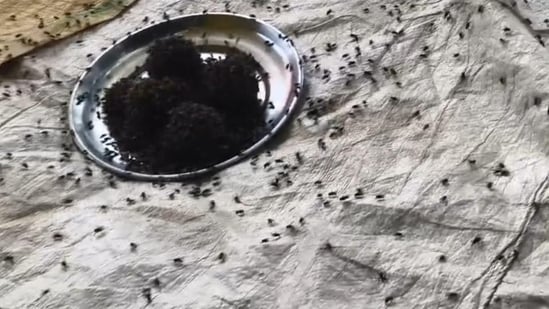
The controversy centres around a 2.5-acre poultry farm located around 800 metres from Hayatganj-Hannkheda village in Atrauli police station limits, about 65 km from Hardoi district headquarters. The farm has been operating there for around two years, according to district magistrate Anunaya Jha.
Residents allege that poultry waste is fuelling the infestation, with flies entering homes and settling on food and utensils. “We have to take meals inside mosquito nets. Forget sitting outside our homes, we can’t even take a walk,” said a local, Kuldeep Pandey, 27.
Villagers claim the problem has persisted for nearly a year, affecting cooking, children’s studies and everyday life. They fear the infestation could increase the risk of infectious diseases. The administration, however, says no direct link between the poultry farm and the fly menace has been established so far.
The issue came to the administration’s attention after villagers met Jha and the Hardoi SP Ashok Kumar Meena on Monday and alleged that poultry farm waste was responsible for the infestation.
{{/usCountry}}The issue came to the administration’s attention after villagers met Jha and the Hardoi SP Ashok Kumar Meena on Monday and alleged that poultry farm waste was responsible for the infestation.
{{/usCountry}}Jha said an inspection team subsequently visited the farm. The UP Pollution Control Board and veterinary department issued notices to the management to improve its infrastructure. The farm owner sought a month’s time to carry out the upgrades, he said. Meanwhile, the administration ordered a sanitation and cleanliness drive in the affected area until August 15. Jha said the fly problem generally worsens during the monsoon.
He also said there was no protest underway in the area as of Wednesday.
Political leaders flag epidemic risk
Vikas Rawat, founder and national president of the Rashtriya Vikas Manch, claimed that around 25 villages have been affected and sought a permanent solution and withdrawal of cases registered during the protests.
Rawat said an indefinite protest began on July 7 but was suspended for 10 days after the additional district magistrate and additional SP assured protesters that the problem would be resolved.
Congress Legislature Party leader Aradhana Mishra also wrote to environment minister Arun Saxena seeking action, citing the alleged risk of infectious diseases and an epidemic.
Congress spokesperson Anshu Awasthi, who met Saxena, claimed that pollution caused by poultry waste had led to fly menace across a 10-km radius, affecting more than 15 villages.
Villagers sought health department intervention to assess the extent of the problem and determine whether the infestation contributed to an increase in illnesses.
Protesters face police cases
The agitation took a law and order turn on August 6, when Atrauli police registered two FIRs on complaints by sub-inspectors.
The first FIR alleged that eight named villagers gathered near the egg factory turning at Hannikheda on August 5, raised slogans demanding closure of the facility and refused to disperse despite police intervention.
The second FIR related to another gathering the following morning and named nine people. Police alleged that protesters continued raising slogans and encouraged others to join despite directions to disperse.
Both cases invoked provisions of the Bharatiya Nyaya Sanhita relating to unlawful assembly, obstruction of public servants and use of criminal force or threats against public servants.
Villagers alleged that the cases were meant to discourage them from protesting over the sanitation and health concerns.
With the farm now under official scrutiny and a sanitation drive underway, the central question remains unresolved: whether the poultry farm is contributing to the fly infestation or whether the problem is primarily seasonal and sanitation-related.