The U.P. Power Corporation Ltd (UPPCL) is confronted with the daunting challenge of maintaining electricity supply, especially amidst the upcoming Lok Sabha polls in the state, while it braces for a surge in heat and an anticipated heatwave from April to June.
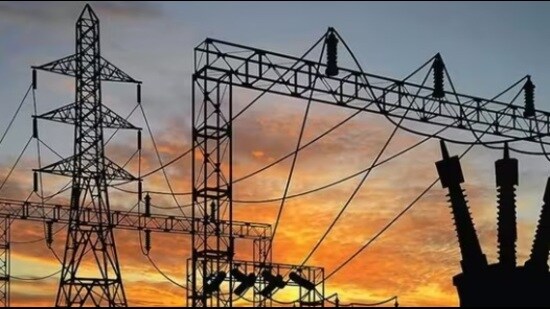
The Central Electricity Authority (CEA) has already forecast the maximum power demand in UP to be close to 32,000 MW in August-September, the period that witnesses air-conditioning load go up significantly due to increased humidity.
Taking a lesson from last year, when the power scene in the state was grim, including in Lucknow, the UPPCL has planned to keep power supply on track this summer.
According to officials, the corporation has not only tried to strengthen its distribution network to avoid power crisis, but also arranged availability of more power to deal with a possible demand-supply gap. Often crisis is triggered due to the failure of overloaded transformers and bursting of cables
“A lot of work has been done throughout the year under the Revamped Distribution Sector Scheme (RDSS), installing new transformers and enhancing the capacity of many others, besides removing other similar distribution bottlenecks,” UPPCL director, distribution, GD Dwivedi said.
He said that the transmission network had also been upgraded in keeping with the requirement of power that needed to be carried from the power plants to the sub-stations.
{{/usCountry}}He said that the transmission network had also been upgraded in keeping with the requirement of power that needed to be carried from the power plants to the sub-stations.
{{/usCountry}}The UPPCL is also believed to have tied up with 11 states to procure from them 5,500 million units of electricity to meet the peak demand in summer under the banking arrangement. The UPPCL had provided electricity to these states in winter under the same arrangement.
“We hope we will be able to provide electricity to all consumers as per the roster with least interruptions,” Dwivedi said.
UPPCL’s claims notwithstanding, maintaining smooth power supply between April and September may not be an easy task.
“Extreme heat invariably leads to an increased number of local faults, largely due to a deficit between the infrastructure and the increased load, a large portion of which is due to power theft,” pointed out another UPPCL official.
Apart from that the demand for power goes up especially in August and September, especially when rains are not adequate. While demand goes up during these two months, power generation dips due to coal shortage, with the monsoon hindering mining work.
The CEA has anticipated the peak demand to be 31,917 MW in August-September in UP and meeting this kind of demand may be a big challenge.
UP Rajya Vidyut Upbhokta Parishad chairman Avdhesh Kumar Verma said, “This is commendable that the UPPCL is working on a war footing to ensure better power supply this summer. But the peak demand may touch 32,000 MW, as it has already crossed 20,000 MW after Holi. And this may need some extra effort in terms of tapping additional sources of power procurement,” he suggested.
The UPPCL’s claims about its advance planning, preparations and network upgrade will all be tested in the weeks to come.