The availability of banned polythene in the markets even after more than a year of repeated drives and penalties sparked criticism in the Lucknow Municipal Corporation (LMC) House conducted recently, with mayor Sushma Kharkwal questioning why enforcement action has failed to reach manufacturers and wholesalers.
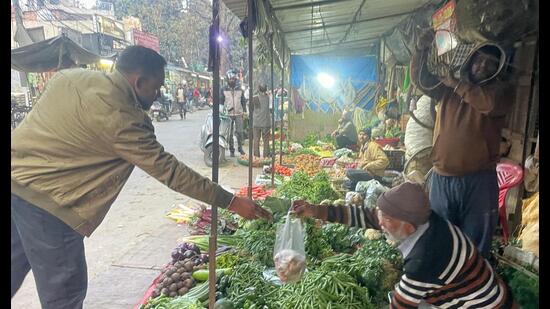
The mayor took cognisance of the matter, issuing directives to all zonal officials and departments concerned. She noted that despite multiple enforcement exercises, no major action has been taken against the alleged kingpins involved in the manufacturing and wholesale supply of banned polythene.
LMC environmental engineer Sanjeev Pradhan said enforcement cannot be carried out by the civic body alone and requires coordinated action involving the district administration, police and the Uttar Pradesh Pollution Control Board (UPPCB).
Following the mayor’s directions, the LMC environment department initiated steps to escalate the matter. Officials sent a written request to the UPPCB office in Lucknow seeking coordinated action and a large-scale enforcement drive targeting wholesalers and major suppliers.
Pradhan said that during routine drives, teams seize polythene below 75 microns, which is banned and easily identifiable. He added that vendors have been instructed to use only plastic carry bags of 75 microns thickness, as permitted under existing norms.
According to LMC records, the civic body has imposed fines amounting to nearly ₹52.27 lakh across all eight zones during enforcement drives. These fines were levied on street vendors, shopkeepers and individuals found using banned polythene during inspections carried out by LMC teams. Pradhan said around 1.5 tonnes of banned polythene have also been seized and nearly 3,000 challans issued so far.
{{/usCountry}}According to LMC records, the civic body has imposed fines amounting to nearly ₹52.27 lakh across all eight zones during enforcement drives. These fines were levied on street vendors, shopkeepers and individuals found using banned polythene during inspections carried out by LMC teams. Pradhan said around 1.5 tonnes of banned polythene have also been seized and nearly 3,000 challans issued so far.
{{/usCountry}}However, the enforcement measures have failed to create a visible impact on the ground.
A shopkeeper from the Udaiganj area highlighted the economic pressure faced by small traders, saying that even when shopkeepers attempt to switch to alternative bags, customers are often unwilling to pay extra and insist on free carry bags. Due to the low cost of banned polythene, many vendors continue to use it to avoid losing customers.
Raising concerns in the House, the mayor questioned zonal officials on why enforcement efforts consistently target street vendors while manufacturers, wholesalers and transporters of banned polythene remain largely untouched. She said penalising vendors alone defeats the purpose of the ban and fails to disrupt the supply chain.
Pradhan said a major drive was conducted around a year ago in Zone-5, including Alambagh and surrounding areas, against wholesalers dealing in banned polythene. However, he acknowledged that the department lacks a robust mechanism to sustain such action.