
 E-Paper



Quick border access for forces, integration of locals must: Ex-IRS officer
China’s expansionist moves can be tackled by a twin approach of quick access to the North and North-Eastern border for the Indian armed forces, and by an effort to integrate the people there with the nation, says author and wildlife-travel photographer Mahendra Singh

 Prefer HTon Google


China’s expansionist moves can be tackled by a twin approach of quick access to the North and North-Eastern border for the Indian armed forces, and by an effort to integrate the people there with the nation, says author and wildlife-travel photographer Mahendra Singh.
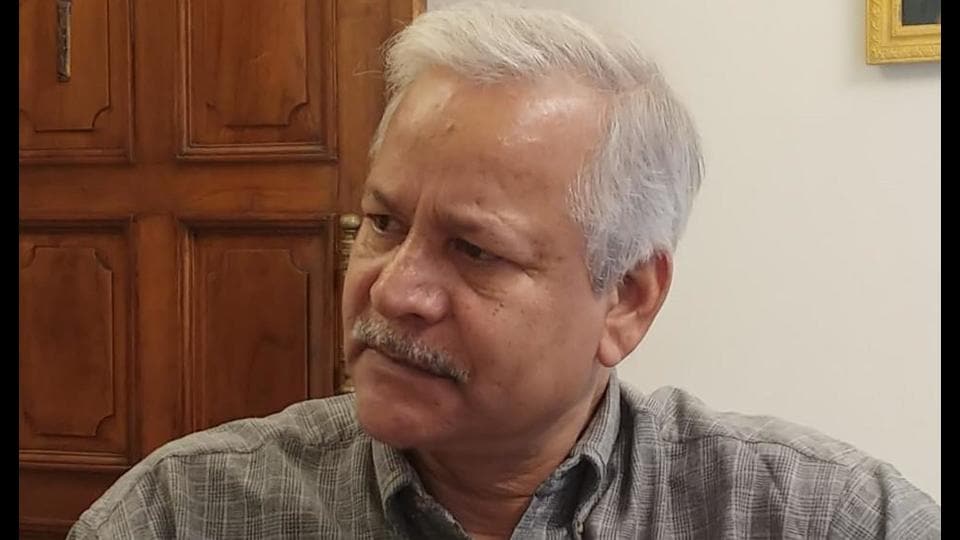
A true blue Lucknowite and the former La Martiniere College student’s recently released book Finding Shangri La – Visions of Ladakh and Spiti delves deep into myriad physical and cultural aspects of this unique corner of our country and provides a comprehensive picture of the land and its people. That he was able to document the region through photographs and well-researched text is not the interesting part, but that he was able to do it as a top serving Indian Revenue Service official. He retired from service a couple of months ago.
“Of late, Chinese aggression has revived our border disputes with China and has thrust Ladakh and Spiti (also called the Little Tibet) into national focus. Like the Atal Tunnel at Rohtang that now permits all-weather movement, similar works are underway on the Srinagar-Leh segment to enable rapid access of the armed forces into Ladakh to face potential threats to our borders,” says Singh.
Certain segments of the vast Tibetan Plateau fall within our national borders. Rudely forced into national consciousness on account of the Chinese aggression, the areas of Ladakh and Spiti remain strategically important.
“With the adjoining areas turning volatile, the resident population of these border lands have become important collaborators in the defence of the territorial integrity of the nation. Better integration of the local people with the nation is, without a doubt, the need of the hour. Efforts at integrating the tradition-bound Ladakhi people with the general population must start with a thorough understanding of their existing environment and lifestyle,” says Singh, who has made numerous presentations for college students on Little Tibet.
“These folk are mostly of the Tibetan genetic stock and adherents of the Tibetan culture in their lifestyle, social organisation, religion and culture. These are a hardy, warm and welcoming people, given to easy laughter,” he adds.
Singh also said that to try and artificially preserve native cultures as some kind of laboratory specimens, deprived of the benefits of modern science and technology would be inappropriate.
Giving credence to Singh’s line of thinking, a recent news agency reported (ANI, Oct 18) that the Indian army officers were studying Tibetan history, culture and language in a bid to counter Chinese influence, and to deepen the existing bond between the local population and the rest of the nation.
The first batch of the two-month course on Tibetology involving culture, geopolitics, politics, demography and Buddhist philosophy began in March this year with 15 Indian army officers. The second batch began in November with 20 officers, and for the third course, there were more than 22 names received when that report was filed.


