LUCKNOW Heavy rains may have subsided, but for Lucknow’s ageing and dilapidated buildings, the danger could be far from over. The Lucknow Municipal Corporation (LMC) has decided to undertake an immediate inspection of the city’s 214 identified dangerous buildings and check whether fresh cracks, water seepage or structural damage have emerged.
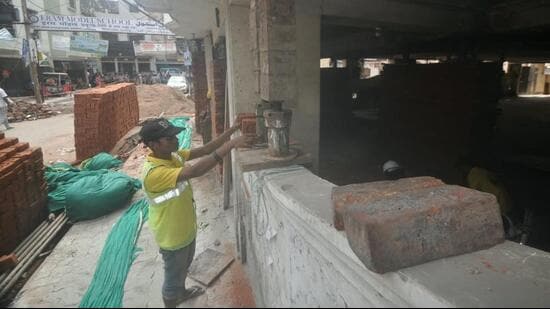
The urgency is underscored by a series of rain-related structural failures reported across Lucknow over the past few days. Wall collapse incidents were reported from Saadatganj, Beheri and Daliganj. UP-112 received nearly 40 rain-related distress calls during the recent spell of prolonged rain.
A portion of the Chhota Imambada gate reportedly fell during the rain on September 27, although no one was injured and the damaged portion was subsequently repaired.
Additional municipal commissioner Pankaj Srivastava said: “Just as the city was dealing with rain-related collapses, another incident on September 28 highlighted the danger posed by structurally compromised buildings even without an immediate collapse. This prompted the LMC to check the condition of dilapidated buildings.”
A pillar of SA Apartment in Wazirganj’s Char Barood Khana area developed major cracks, forcing the evacuation of around 25 families.
Mayor Sushma Kharkwal said: “The LMC has been identifying vulnerable structures ahead of and during the monsoon. In July, the civic body had issued notices to owners and occupants of 199 unsafe buildings, asking them to repair the structures or vacate them. Zone 1, covering areas such as Hazratganj, Aminabad, Kaiserbagh and Latouche Road, accounted for 99 of these buildings.”
{{/usCountry}}Mayor Sushma Kharkwal said: “The LMC has been identifying vulnerable structures ahead of and during the monsoon. In July, the civic body had issued notices to owners and occupants of 199 unsafe buildings, asking them to repair the structures or vacate them. Zone 1, covering areas such as Hazratganj, Aminabad, Kaiserbagh and Latouche Road, accounted for 99 of these buildings.”
{{/usCountry}}A subsequent civic survey put the number at 208, while the latest survey reported 192 dilapidated buildings, with 93 in Zone 1, 51 in Zone 2 and 30 in Zone 6. The varying numbers themselves underline the need for a fresh, consolidated survey.
The period immediately after heavy rain is particularly important for such an exercise. Water seepage can aggravate existing weaknesses, while the drying process can make cracks and other signs of structural distress more apparent. Buildings that have survived the rain cannot automatically be assumed to be safe.
“I have already directed municipal engineers to issue notices, arrange barricading, restrict access where required and ensure evacuation of dangerous structures,” said municipal commissioner Gaurav Kumar.