Several power feeders across Madhyanchal Vidyut Vitran Nigam Ltd (MVVNL) circles recorded repeated trippings in September, with one in Bhinga registering 80 disconnections in a month, according to an internal review that has identified the network’s most frequently tripping feeders but offers little detail on the causes or corrective action taken.
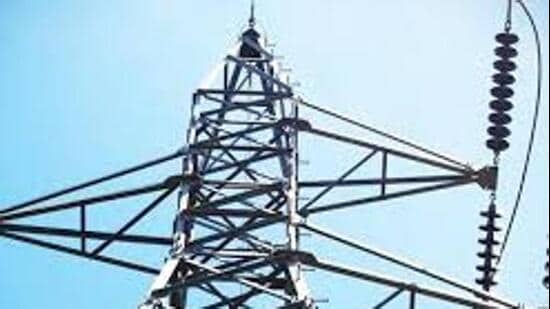
An internal review of MVVNL for September 2026 identifies the five feeders with the highest tripping counts in each circle.
The 33-kV Urlehwa feeder connected to the 132/33-kV substation at Bhinga in the ETC-Gonda circle topped the list with 80 trippings. Another Urlehwa feeder, supplied by the Bahraich substation, recorded 70. The Tulsipur Tehsil and Utraula Town IPDS feeders registered 69 and 67 trippings, respectively, while the Nawabganj feeder recorded 66.
The high counts were not confined to the Bahraich-Shravasti belt. In the ETC-I Lucknow circle, the 33-kV UPSIDC feeder tripped 41 times and Chinhat-I 36 times. The Bani feeder recorded 30 trippings at the Bijnaur substation and 29 at the Kanpur Road substation.
In the ETC-II Lucknow circle, the Unchahar Tehsil feeder recorded 48 trippings, followed by Lalganj Tehsil with 47. Ganjmuradabad in Unnao registered 42.
The ETC-Sultanpur circle reported 51 trippings on the KNI feeder at the Sultanpur substation, while Kharbharya and Chathia recorded 50 each. In the ETC-Bareilly circle, Faridpur registered 44 trippings, followed by Parsakhera with 39.
{{/usCountry}}The ETC-Sultanpur circle reported 51 trippings on the KNI feeder at the Sultanpur substation, while Kharbharya and Chathia recorded 50 each. In the ETC-Bareilly circle, Faridpur registered 44 trippings, followed by Parsakhera with 39.
{{/usCountry}}Sanjay Gupta, chief engineer (transmission), said the figures were released to examine the reasons behind recurring faults. The counts indicate that some feeders were disconnected repeatedly during the month, making it important to establish whether the interruptions arose from recurring faults, equipment problems or other causes.
Repeated tripping points to a problem beyond restoration
Feeder protection systems are designed to disconnect electricity supply when faults or abnormal conditions threaten equipment or public safety. A trip, therefore, does not automatically indicate poor maintenance; in many cases, it is the protection system doing its job.
The more pertinent question is why the same feeder keeps tripping and whether the underlying problem is being addressed. Possible causes include recurring faults on overhead lines, damaged equipment, vegetation interference, overloading or problems with protection settings. The actual causes, however, can only be established through feeder-level investigation.
The spread of high tripping counts across multiple circles makes the September review a useful starting point for identifying vulnerable sections of the network. But the figures alone do not establish whether the causes are similar across locations, whether the interruptions were brief or prolonged, or whether maintenance interventions have reduced their recurrence.
Shailendra Dubey, chairman of the All India Power Engineers Federation, said the immediate requirement was a feeder-wise audit of the lines recording the highest number of trippings. Each interruption should be classified by cause and linked to the corrective action taken, he said.
MVVNL would also need to track repeat faults, restoration times and subsequent monthly tripping counts to determine whether interventions were working, Dubey added.