
 E-Paper



Sarnath inscribed on UNESCO World Heritage List
The Buddhist site becomes India’s 45th and UP’s 4th World Heritage Site; PM Modi says a proud moment for every Indian

 Prefer HTon Google


Twenty-eight years after entering UNESCO’s Tentative List, Sarnath, where Lord Buddha delivered his first sermon after attaining enlightenment, has been inscribed on the UNESCO World Heritage List. With this, Sarnath has become India’s 45th World Heritage Site and Uttar Pradesh’s fourth.
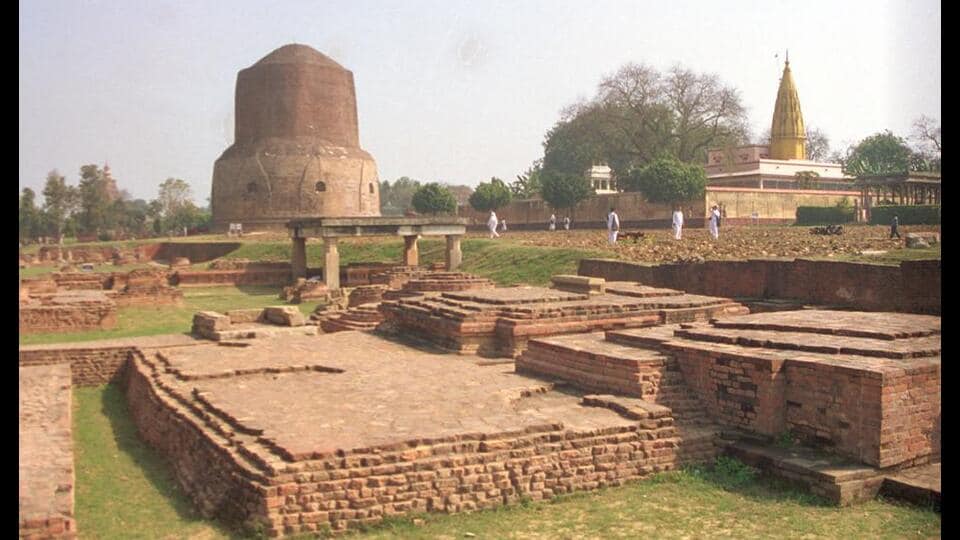
Prime Minister Narendra Modi posted on X, “A proud moment for every Indian! Delighted that Sarnath in Uttar Pradesh has been inscribed on the UNESCO World Heritage List.”
“Sarnath has a close association with Lord Buddha, whose timeless message of wisdom, compassion and harmony inspires the world. This recognition celebrates India’s profound civilisational and spiritual heritage. It will also inspire more people across the world to come to Sarnath and connect with the ideals of Lord Buddha,” the PM wrote in his post.
The recognition announced during the 48th Session of the World Heritage Committee puts one of Buddhism’s holiest places on the world’s highest heritage platform and gives a major boost to UP’s Buddhist Circuit, said a communique from the government.
Union culture minister Gajendra Singh Shekhawat posted on X, “A defining moment for India’s cultural heritage. The ancient Buddhist site of Sarnath has been inscribed on the UNESCO World Heritage List.”
“A timeless beacon of peace, wisdom and compassion, Sarnath reflects the profound spiritual and philosophical contributions of Indian civilisation to humanity. Its inscription reaffirms India’s enduring role as a cradle of ideas that continue to inspire the world across generations,” he added.
State culture minister Jaiveer Singh said the achievement reflected Uttar Pradesh’s larger effort to bring the many strands of its civilisational heritage into national and international focus.
“From the land of Lord Buddha and the Ramayana to Jain, Sufi and other spiritual traditions, Uttar Pradesh carries an extraordinary civilisational legacy. Under PM Modi and CM Yogi, the government has worked to preserve and develop heritage associated with different faiths and traditions with equal commitment,” he added.
“Sarnath’s recognition after a 28-year wait is a historic achievement and will give our Buddhist Circuit a major global push, while taking Uttar Pradesh’s message of peace, spirituality and cultural inclusivity to a much wider international audience,” Singh said.
Sarnath had remained on UNESCO’s Tentative List since July 3, 1998. Its inscription is also significant for Uttar Pradesh because its three existing World Heritage Sites—the Taj Mahal, Agra Fort and Fatehpur Sikri—are concentrated in the Agra region. Sarnath now extends the state’s World Heritage footprint to eastern UP while bringing its Buddhist legacy into the fold.
Conservation architect Abha Narain Lambah, who prepared Sarnath’s nomination, said the site’s case rested on something larger than the importance of its individual monuments. “Sarnath brings together the place of the First Sermon, the beginnings of the Buddhist Sangha, some of the earliest Buddhist architectural forms and a pilgrimage tradition spanning nearly 2,500 years. That combination gives the site an exceptional place in world heritage,” she said.
Amrit Abhijat, additional chief secretary, tourism, culture and religious affairs, said the recognition also builds on efforts to take UP’s destinations to wider international audiences.
“Sarnath has been central to our positioning of Uttar Pradesh as the heartland of Buddhist pilgrimage. The Buddhist Circuit has been showcased at international platforms, complemented by familiarisation visits, travel-trade engagement, Buddhist celebrations and improvements in visitor infrastructure and experiences,” he said.
“Lucknow’s recognition as a UNESCO Creative City of Gastronomy in October 2025 demonstrated the global potential of another distinct aspect of Uttar Pradesh’s heritage. Sarnath now gives us an even stronger platform to increase international footfall, encourage longer stays and draw travellers deeper into the state’s Buddhist Circuit,” the ACS added.


