
 E-Paper



Sonbhadra’s Salkhan Fossils Park to be beautified
DFO Kaimur range Tapas Mihir said that for the beautification of fossils park, the tourism department had approved an amount of ₹1.5 crore through which necessary arrangements would be made for tourists, along with nature trail, nature painting centre and security system.

 Prefer HTon Google


VARANASI The Salkhan Fossils Park in Sonbhadra will be beautified and equipped with facilities for tourists. A nature portrayal centre and a nature trail will also be set up .
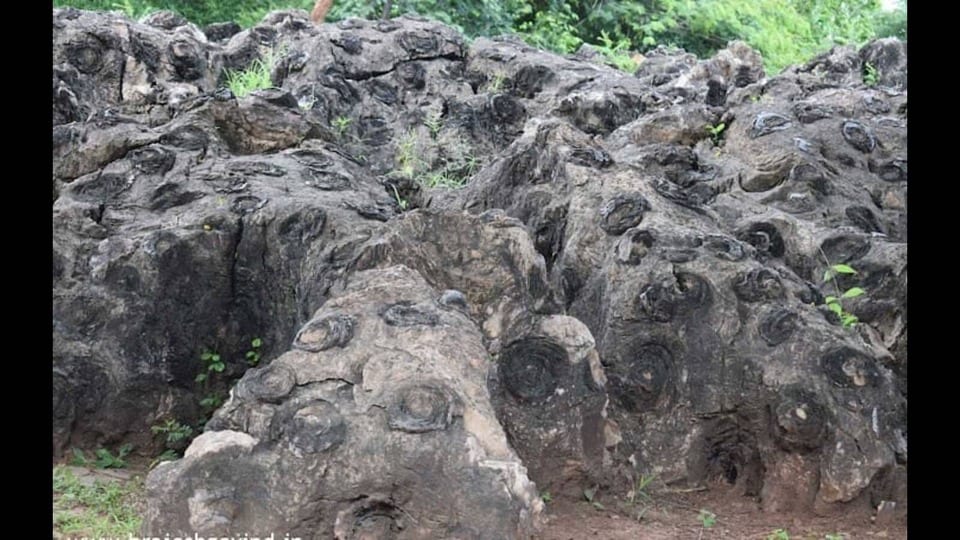
The Salkhan Fossils Park is spread over 25 hectares of hilly land. These fossils are in focus as the Uttar Pradesh Government is making efforts to get the park included in the UNESCO world heritage sites.
The revelation that the hilly pocket houses the oldest fossils on earth, dating back to more than 3.5 billion years and evidence of the beginning of life on earth, left many locals surprised. The hill is dotted with fossils in several patches. One patch has maximum fossils. All the patches with fossils are now fenced.
DFO Kaimur range Tapas Mihir said that for the beautification of fossils park, the tourism department had approved an amount of ₹1.5 crore through which necessary arrangements would be made for tourists, along with nature trail, nature painting centre and security system.
District magistrate BN Singh made a surprise inspection of Salkhan Fossils Park in Robertsganj development block on Wednesday. He instructed the DFO Kaimur to ensure the cleanliness around the park along with proper fencing .
The DM also instructed that the road leading to the park from Robertsganj-Shaktinagar highway should be repaired. Arrangement of pure drinking water should be made for the people in the park. Sulabh toilets should also be constructed.
To spread the information about Salkhan Fossils Park, small video clips should be made and played in the nature portrayal centre so that maximum number of people could know the history of the fossils park and come to the district to see it, he said.
Renowned geologist and former officiating director BSIP, Prof Mukund Sharma worked extensively on these peculiar structures known as stromatolites. Detailed studies yielded extensive cyanobacterial fossils. He said that these stromatolites were first discovered by J B Auden of the Geological Survey of India in 1933.
“The discovery of akinetes in the stromatolites help us understand the mechanism evolved by these fossils in adverse environments,” said Prof Sharma.


