LUCKNOW More than 100 years after Mahatma Gandhi visited Farangi Mahal, his memories have been preserved like a treasure at this iconic building in Lucknow. Gandhi’s letters and telegrams to freedom fighter Abdul Bari Farangi Mahali and his other things including a pair of ‘khadau’ (wooden slippers) are with the family of Adnan Abdul Wali, the great grandson of Bari.
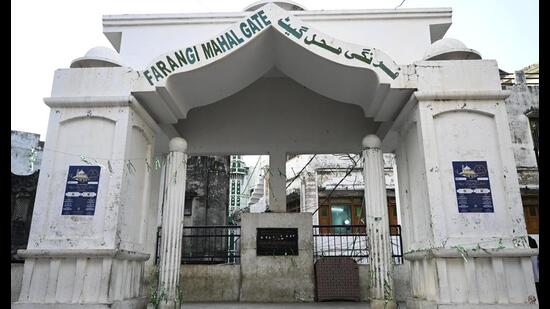
“Mahatma Gandhi visited the Farangi Mahal thrice during the Khilafat movement. He stayed here as a guest of Maulana Abdul Bari Farangi Mahali, a nationalist Muslim leader of that time,” said Adnan Abdul Wali.
He said, “Our family is the true torchbearer of the Maulana Abdul Bari legacy and we have documented proof of our relationship with him. I am in touch with Mahatma Gandhi’s great grandson Tushar Gandhi. I met him in November 2016 and exchanged copies of Mahatma Gandhi’s Urdu letters to Maulana Abdul Bari between 1916 and 1924. Gandhiji used to sign off those letters by writing ‘Apka Khadim Gandhi’, which showed his humbleness.”
He said this building was once occupied by French traders, from where the name Farangi Mahal was derived. “When they failed to pay off taxes, Mughal emperor Aurangzeb confiscated the mansion and handed it over to our ancestors in 1695, and since then, our family is living here,” said Wali.
“Gandhiji was a very simple person and used to have simple vegetarian food. During his visit to Farangi Mahal, non-vegetarian dishes were not prepared and a Brahmin cook was called to prepare food for him. Gandhiji said he was not averse to preparation of non-veg food in the same kitchen,” he added.
{{/usCountry}}“Gandhiji was a very simple person and used to have simple vegetarian food. During his visit to Farangi Mahal, non-vegetarian dishes were not prepared and a Brahmin cook was called to prepare food for him. Gandhiji said he was not averse to preparation of non-veg food in the same kitchen,” he added.
{{/usCountry}}“Mahatma Gandhi’s ‘khadau’ are still with us and kept locked in a room, which is undergoing a maintenance,” said Adnan Abdul Bari.