Mayors of Uttar Pradesh’s 17 municipal corporations on Wednesday discussed ways to strengthen city finances, improve revenue collection and make urban development more inclusive.
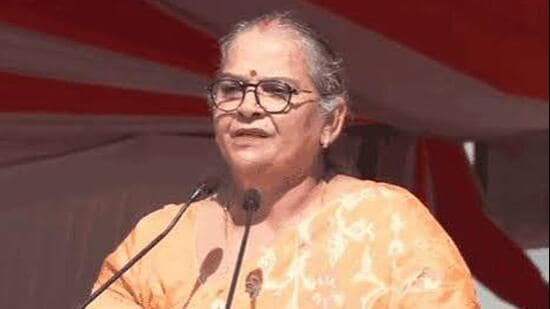
At a conference titled ‘Listening to Cities, Solving Urban Challenges’ in Lucknow, they discussed widening property tax coverage, improving collection efficiency, introducing appropriate user charges and exploring tourism-related levies to generate additional revenue. Sewerage and septage management, sanitation, solid waste disposal, drainage and water supply were also discussed.
The conference was jointly organised by the Sixth State Finance Commission, UNICEF and Dr Ram Manohar Lohiya National Law University (RMLNLU), focusing on municipal finances, governance and service delivery in the context of the 16th Finance Commission.
Finance minister Suresh Kumar Khanna, who was the chief guest, highlighted sewerage and septage management, cleanliness and municipal bonds as key areas for strengthening urban infrastructure. He also pointed to the additional pressure on civic services from floating populations, including daily commuters, tourists and pilgrims, whose needs require additional spending on water supply, sanitation and waste management.
Deepak Kumar, chairman of the Sixth State Finance Commission and additional chief secretary (finance), delivered the inaugural address, while Sidharth Srivastava, secretary of the commission, welcomed the participants.
The deliberations examined ways to improve municipal corporations’ own-source revenue through better property tax administration, appropriate user charges and more effective use of municipal assets. Tourism-related fees and municipal bonds were discussed as possible sources of funds, subject to the applicable legal framework and the financial preparedness of individual urban local bodies.
{{/usCountry}}The deliberations examined ways to improve municipal corporations’ own-source revenue through better property tax administration, appropriate user charges and more effective use of municipal assets. Tourism-related fees and municipal bonds were discussed as possible sources of funds, subject to the applicable legal framework and the financial preparedness of individual urban local bodies.
{{/usCountry}}Other issues included financial management, urban planning and climate resilience. The programme also featured an orientation on the Child Friendly City initiative, focusing on integrating children’s needs into municipal finances and urban governance.
Participants discussed the implications of the 16th Finance Commission for urban local governments, while recognising its distinct constitutional mandate from that of the Sixth State Finance Commission. The discussions emphasised institutional capacity, transparency and accountability to improve civic services.
LMC seeks ₹7,603 crore from state finance panel
Meanwhile, with its municipal area expanding by over 83% to 568 sq km, Lucknow has sought ₹7,603 crore from the Sixth Uttar Pradesh State Finance Commission to develop newly added areas, restore flood-damaged infrastructure and strengthen civic services.
At the Uttar Pradesh Mayors’ Forum, mayor Sushma Kharkwal urged the commission to factor in the city’s expanded boundaries, infrastructure gaps and growing civic responsibilities while allocating funds.
She said the Lucknow Municipal Corporation’s jurisdiction had increased from around 310 sq km to 568 sq km, raising demand for roads, drainage, streetlights, sanitation, parks, drinking water and sewerage facilities.
Kharkwal placed five demands before the commission, including doubling the municipal financial allocation, providing ₹2,184 crore for development and street lighting, and allocating ₹5,825.85 crore for drinking water and sewerage.
She also sought the full 2% stamp duty allocation and compensation for revenue losses arising from tax exemptions and concessions, including those affecting UPSIDA properties.
Kharkwal also sought funds to rebuild infrastructure damaged in flood-affected areas along the Gomti river. She highlighted Lucknow’s additional expenditure on VIP movements, state-level events, traffic management and special sanitation arrangements as the state capital.
The mayor said stronger financial support would help LMC deliver essential services across established neighbourhoods, newly expanded areas and flood-affected localities.