Lucknow: Uttar Pradesh would create a 2,600 km long transmission network worth more than ₹5,000 crore to evacuate the upcoming solar power from the ultra-mega solar parks in Bundelkhand and other regions and inject the same into the grid, officials dealing with the issue said.
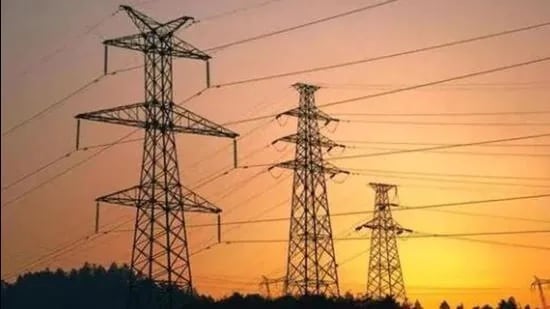
Green energy corridors are being set up in the county in two phases, with the second phase of the transmission corridor to supply 20 gigawatt (GW) renewable energy to the national grid. This would be supplied from Gujarat, Himachal Pradesh, Karnataka, Kerala, Rajasthan, Tamil Nadu and Uttar Pradesh. UP had no projects under the Green Energy Corridor-I.
“We will set up 27 substations of total 15280 MVA capacity connected to 2632 km-long transmission circuit (Lines) in two phases. The execution period of the first and the major phase will be the financial year 2022-2023 to 2024-2025 while the second phase will begin in 2023-24 and end in 2025-26,” UP Transmission Corporation Ltd (UPPTCL) managing director P Guru Prasad said.
The detailed project report (DPR) cost of the scheme, according to him, is ₹5011.47 crore and the Centre approved the DPR in January this year.
“The scheme has central financial assistance as capital grant (33%) and 20% is from the state government while the rest of the amount (47%) will be borrowed from the KFW, a German bank under Indo-German Cooperation,” Guruprasad said, adding “A loan agreement with the KFW was already signed in December, 2021.”
{{/usCountry}}“The scheme has central financial assistance as capital grant (33%) and 20% is from the state government while the rest of the amount (47%) will be borrowed from the KFW, a German bank under Indo-German Cooperation,” Guruprasad said, adding “A loan agreement with the KFW was already signed in December, 2021.”
{{/usCountry}}The central government had given UP an ambitious target of generating 10700 MW of green energy by 2022—a deadline that is expected to be revised soon. The work on setting up solar parks of 4000 MW on the barren land in the Bundelkhand region is said to be in full swing with the UPNEDA functioning as a nodal body for the purpose of inviting bids etc.
Ultra-mega plants are also being set up in Allahabad, Mirzapur and Kanpur districts.
“While Bundelkhabd is all set to emerge as a solar power hub in the time to come, we do not have adequate transmission network there to evacuate power that will be generated by the solar parks and the green energy corridor that we are creating will be used to transmit the solar power from ultra-mega solar parks to grid and distribution substations,” UPPTCL director, planning, Anil Jain explained.
He said that the land for setting up 24 of the 27 transmission substations (from 132 KV to 765 KV) had already been identified and the work to locate site for the remaining 3 substations was in progress.
In January this year, the committee on economic affairs, chaired by Prime Minister Narendra Modi, cleared the proposal for the Green Energy Corridor Phase-II programme for intra-state evacuation and integration of renewable power.