UPPTCL to lease out its transmission lines to telecom companies
Officials say the move will not only benefit end power consumers (with asset monetisation benefits to be passed on to them in the tariff), but also help in the fast spread and percolation of the 5G network in the state
LUCKNOW The Uttar Pradesh Power Transmission Corporation Ltd (UPPTCL), a state government entity, will lease out its hi-tech transmission lines with optical fibre ground wire (OPGW) to telecom companies to monetise its assets as an additional source of revenue, officials dealing with the issue said.
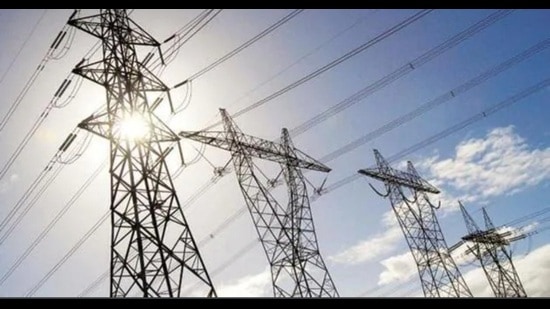
The UPPTCL, with a network 50,000 km of transmission lines across the state, is responsible for transmission/transfer of bulk power from generating stations and ensuring its adequate availability at transmission-distribution interface for distribution of energy for public consumption. (Pic for representation)
{{^htLoading}} {{/htLoading}}
The move, according to them, will not only benefit end power consumers (with asset monetisation benefits to be passed on to them in the tariff) but also help in the fast spread and percolation of the 5G network in the state.
{{^usCountry}}{{/usCountry}}
“We have decided to lease out spare pairs of 9,550 km of transmission lines of optical fibre ground wire to enterprises engaged in telecom business to monetise our own under-utilised assets,” UPPTCL managing director Guru Prasad said. “Telecom companies can use our rented network for fast data transmission and laying the 5G network in the state,” he added.
This new activity, according to him, would fetch additional revenue of at least ₹20 crore annually to the UPPTCL. “This will fulfill the objective of asset monetisation by utilising the hitherto underutilizsed assets as a fresh revenue generating source, which will finally lead to reduction in the transmission charges,” Prasad pointed out.
{{^htLoading}} {{/htLoading}}
{{^usCountry}}
A typical transmission line has an optical fibre ground wire along with power conducting wires. The UPPTCL uses these fibres to transmit internal data.
{{/usCountry}}
{{#usCountry}}
A typical transmission line has an optical fibre ground wire along with power conducting wires. The UPPTCL uses these fibres to transmit internal data.
{{/usCountry}}
“Due the fact that creation of transmission assets in terms of sub-stations, lines etc requires huge capital investment, return on income (RoI) is a very significant index for ensuring sound financial health of the transmission utility,” said another official.
The UPPTCL, with a network 50,000 km of transmission lines across the state, is responsible for transmission/transfer of bulk power from generating stations and ensuring its adequate availability at transmission-distribution interface for distribution of energy for public consumption.
Brajendra K Parashar is a Senior Journalist with the Hindustan Times, based in Lucknow, with nearly three decades of experience covering governance, public policy, politics and development in Uttar Pradesh. Over the years, he has reported extensively on key sectors, including energy and renewable power, mobility and transport, road safety, agriculture and allied sectors and issues related to farmers, rural development, taxation under the Goods and Services Tax (GST) and public administration. A seasoned political correspondent, Parashar closely tracks the Bharatiya Janata Party (BJP) and has covered every major election in Uttar Pradesh right from three-tier panchayat elections and urban local body polls to Assembly and Lok Sabha elections. He also reports regularly on the proceedings of the Uttar Pradesh Legislature, bureaucracy, governance, policy decisions and administrative developments with focus on their impact on public life. His reporting is known for its strong analytical approach, extensive use of official data. His areas of interests include investigative journalism, long-form political and policy analysis, data-driven reporting, elections and institutional reforms. Parashar holds a postgraduate degree in Political Science with First Division from Aligarh Muslim University (AMU), followed by a Diploma in Journalism and Mass Communication from the same university. His inclination towards journalism began during his student days, when he regularly contributed letters to editors and articles to newspapers and magazines. In the mid-1990S, his essay, “Should India Switch Over to the Presidential Form Of Government?”, published in Politics India magazine edited by noted constitutional expert Subhash C Kashyap, was adjudged the best entry in a national competition. His work has received professional recognition, including the Hindustan Times Journalist of the Month Award for an impactful series on drinking water issues during the 2010 Lok Sabha election campaign. Originally from Kasganj in western Uttar Pradesh, Parashar is currently based in Lucknow where continues to report on politics, governance and public policy.