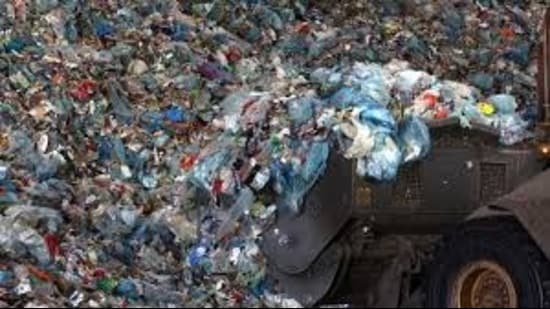
Uttar Pradesh has achieved a “major breakthrough” in eco-friendly rural road construction by recycling 1,400 metric tonnes of plastic waste, saving over 90 lakh tonnes of stone aggregates and reducing diesel consumption by seven lakh litres under the Pradhan Mantri Gramin Sadak Yojana (PMGSY)-3 (2019-2025)
These measures had not only lowered construction costs by around 15%, but also significantly cut down the state’s carbon footprint, UP Rural Road Road Development Agency (UPRRDA) chief executive officer Akhand Pratap Singh claimed.
So far, 690 tonnes of single-use plastic waste have been used in the renovation of 605.79 km roads, improving durability and contributing to a significant reduction in greenhouse gas emissions.
The Uttar Pradesh Rural Roads Development Agency (UPRRDA) is implementing this initiative across 35 districts, covering 171 routes with a total length of over 1121 km. Four advanced eco-friendly technologies are being employed to enhance road quality and lifespan.
Deputy chief minister Keshav Prasad Maurya, who heads the rural development department, has held several meetings with officials recently to assess the impact of technology and plan further innovations.
“Marking a first in the state, we have adopted Full Depth Reclamation (FDR) technology to build roads by reusing old road layers without the need for new stones. Instead of excavating fresh materials, roads are reconstructed by pulverizing existing layers and stabilizing them using commercial chemical additives, resulting in faster construction and an impermeable base with an estimated life of 15 to 20 years,” Singh explained.
{{/usCountry}}“Marking a first in the state, we have adopted Full Depth Reclamation (FDR) technology to build roads by reusing old road layers without the need for new stones. Instead of excavating fresh materials, roads are reconstructed by pulverizing existing layers and stabilizing them using commercial chemical additives, resulting in faster construction and an impermeable base with an estimated life of 15 to 20 years,” Singh explained.
{{/usCountry}}In addition to FDR, UPRRDA has deployed four new green technologies for road construction and maintenance that enhance durability while being environmentally responsible. Among the most impactful is the use of shredded waste plastic in bituminous concrete, which has been implemented across 1,121 kilometers in 30 districts.
“This method blends about 8% plastic waste with heated aggregates before mixing with bitumen, providing stronger roads and effectively recycling plastic that would otherwise pollute the environment,” Singh explained.
The state has also introduced cold mix technology, now used in 306 kilometres across 9 districts. This technique enables road laying without heating bitumen, drastically reducing fuel use and emissions while delivering higher pavement strength compared to traditional hot mixes.
Another innovation is the Cement Grouted Bituminous Mix (CGBM), which has been applied to 282 kilometers in 12 districts. “This approach involves injecting a special cement-based grout into low-percentage bitumen mixes to create a water-resistant, long-lasting surface that doesn’t deform under load or moisture, helping conserve both bitumen and aggregate,” he said.
FDR involves reusing the existing road structure (old bituminous layers and aggregates) instead of excavating and transporting fresh materials from quarries.
“Since no new stone aggregate needs to be mined, transported, or processed, there is a drastic reduction in fuel consumption, particularly diesel, which is otherwise used extensively in heavy machinery and trucks for loading, hauling, and laying fresh materials,” another senior UPRRDA official DD Pathak said.
“Conventional road construction requires heating bitumen and aggregates, which consumes large amounts of diesel in hot mix plants,” he added.
The cold mix technologies used by UPRRDA—such as Cold Mix BC and MSS+ with Cold Bitumen—eliminate the need for heating bitumen. As a result, there is a direct saving of diesel that would have been burned in heating units or boilers.
“Together, these changes led to the saving of about 7 lakh litres of diesel during the construction of over 6,000 km of rural roads in Uttar Pradesh under PMGSY-3,” Pathak claimed.