A day after veteran cricket umpire Manik Gupta died following a bee swarm attack at the Rahul Sapru ground in Shuklaganj, Unnao, more details have emerged on Thursday about how the tragedy unfolded. A swarm had attacked at 8 am, stung a few people and retreated, yet the cricket matches went ahead as planned. By afternoon, 65-year-old Gupta, a three-decade veteran of junior cricket in Kanpur, was on the ground, engulfed by the same swarm with more than 150 stings on his body. He died at the hospital later that day.
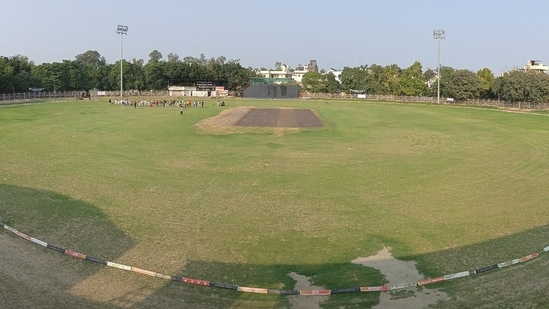
Gupta had just finished officiating an under-13 match between YMCA and Paramount when the bees erupted from a hive in a banyan tree at the boundary wall and descended on the ground. Younger players and staff ran to safety. Gupta stumbled and fell near the sidelines. He lay on the ground for seven to eight minutes as the swarm continued to attack.
“The swarm didn’t let him up,” recalled RVS Cricket Academy in-charge Ajeet Singh. “He was on the ground and the bees kept attacking. We could not reach him immediately. It was too dense.”
Also Read: 46-year-old man, wife and associate held for trafficking heroin from UP to Delhi
Witnesses said Gupta and fellow umpire Jagdish Sharma were both targeted by the swarm. Around 10 to 15 others, including players and ground staff, were also stung in the attack.
{{/usCountry}}Witnesses said Gupta and fellow umpire Jagdish Sharma were both targeted by the swarm. Around 10 to 15 others, including players and ground staff, were also stung in the attack.
{{/usCountry}}Former Ranji player Rahul Sapru, who was present, helped carry Gupta to a car. He was taken to private hospitals in Shuklaganj before being referred to LLR Hospital in Kanpur. However, the car was stuck in a traffic jam on the New Ganga Bridge for a crucial 45 minutes. Gupta, who had a heart condition, was declared dead upon reaching the hospital.
Doctors said bee venom contains toxins that can trigger severe allergic reactions, spike blood pressure and heart rate and cause cardiac arrest. Dr BP Priyadarshi, head of medicine at GSVM Medical College, said the venom spreads through the blood and the risk of death rises with the number of stings and the time of exposure. For Gupta, both were fatal.
Singh acknowledged the morning swarm had stung one or two people before retreating, but said no one anticipated a second, larger attack. Some locals alleged the hive had been disturbed in the days before the incident, possibly struck, though this could not be independently verified.
Wednesday’s death is the third major bee attack in the region this month. Around 50 people were injured in Jalaun on February 5. Nearly 30, including children, were stung at a wedding in Hamirpur on February 8.
Also Read: Will invoke hate crime offences in 2021 case: UP govt tells SC
Kamod Pandey, a local resident and social activist, said the beehive should have been removed by those running the academy. “Children come for practice and play matches, and this hive clearly poses a risk. It could have been removed,” he said, adding that he would complain to the municipal body and Ganga Ghat police for its removal.
Police said Gupta’s family declined a post-mortem examination.
Gupta, a resident of Pheelkhana, had been associated with the Kanpur Cricket Association for three decades. Colleagues described him as punctual, soft-spoken and committed to junior cricket. He is survived by his wife and four daughters, Priyanka, Shweta, Deepika and Samriddhi, the youngest, who is an Intermediate student.
On Thursday morning at Bhagwat Das Ghat, Samriddhi performed her father’s last rites as her mother and sisters stood beside her. Neighbours and cricket colleagues gathered in silence.
KCA chairman Dr Sanjay Kapoor said Gupta’s absence will be felt each time a junior match begins.