
 E-Paper



Will Gomti cleanup be a reality before Chhath?
Last year, the Dissolved Oxygen (DO) levels — a key indicator of water health, were dangerously low on November 5 (around the time of the Chhath Puja, which was celebrated from November 6-9, 2024). This year, Chhath Puja will be celebrated from October 25 to 28.

 Prefer HTon Google


Even as chief minister Yogi Adityanath has issued clear directives to expedite the rejuvenation of the Gomti at a time when the festival of Chhath Puja is approaching, the key question is how quickly will the departments and agencies concerned act to remove roadblocks.
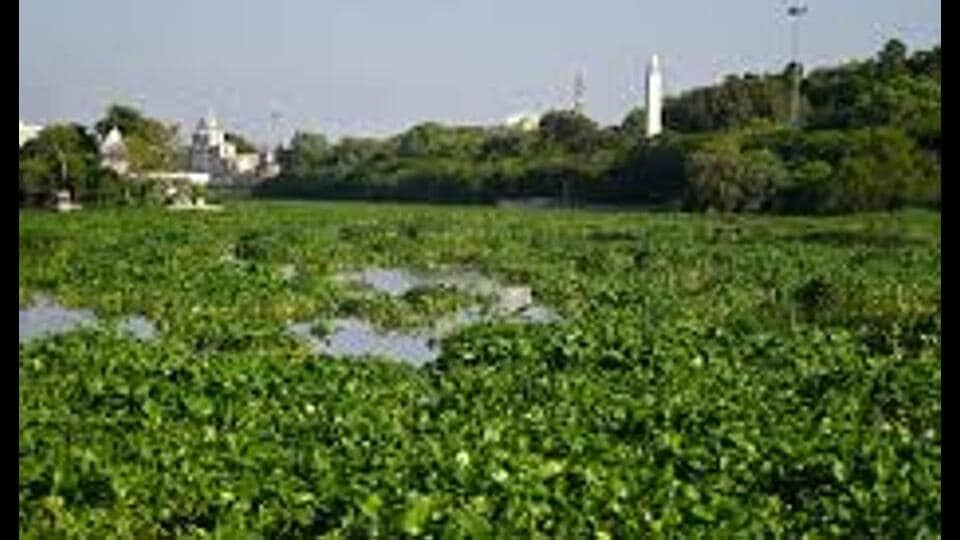
While actual on-ground progress remains uncertain, the Gomti, considered the lifeline of Lucknow, continues to suffer from alarming levels of pollution due to a lack of coordinated action between key government departments.
Besides, past initiatives to clean the river have failed to produce lasting results because of a fragmented approach.
Though irrigation department executive engineer Mukesh Kumar Vaishya said dredgers are expected to be deployed soon to remove silt buildup, particularly around the riverfront, an August report this year mentioned that the river water was highly polluted at key points.
Last year, the Dissolved Oxygen (DO) levels — a key indicator of water health, were dangerously low on November 5 (around the time of the Chhath Puja, which was celebrated from November 6-9, 2024). This year, Chhath Puja will be celebrated from October 25 to 28.
At the Gomti Barrage, DO was measured at just 1.63 mg/l on October 30, 1.90 mg/l on October 31, and only slightly improved to 2.32 mg/l by November 5, 2024. DO levels below 4 mg/l are insufficient to sustain aquatic organisms, meaning the river cannot support even basic forms of aquatic life.
The water quality in rivers is classified from ‘A’ to ‘E’. ‘A’ represents the cleanest water, suitable for drinking with minimal treatment and ‘E’ denotes highly polluted water, suitable only for industrial cooling, controlled waste disposal, or irrigation.
For the Gomti, most monitoring points — Kudiaghat, Mohan Meakins, Nishatganj Bridge, the Barrage, and Pipraghat — consistently report ‘E’ category water. Only at Gaughat, where the river enters the main city limits, does it marginally improve to ‘D’ category, which is still below safe levels.
Last year, officials from Jal Sansthan (Jal Kal), the Lucknow Municipal Corporation, and the district administration swung into action after Hindustan Times highlighted concerns about the poor quality of water at various ghats of the Gomti , where the Chhath festival was to be celebrated. The report indicated that the water quality at these ghats was classified in the ‘E’ category, signifying that it is unfit for bathing. This raised alarm among authorities, prompting immediate steps to address the issue.
But this year, too, the August report mentions that at Gaughat (upstream and downstream), the water quality of Gomti is ‘D’, but at Mohan Meakins (up and downstreams), the quality dips to ‘E’ and it remains E at Pipraghat (up and downstreams).
Just before Chhath last year, teams from Jal Sansthan began treating the water at key ghats, including Jhulelal Ghat, Lakshman Mela Sthal, and Kudia Ghat. The treatment involved the spraying of chemicals such as chlorine, sodium hypochlorite, and polyaluminum chloride (PAC), a well-known water purifier.
Lack of coordination
A senior official from the urban development department confirmed that following the chief minister’s directives issued on Sunday, key agencies, including the irrigation department, UP Jal Nigam, urban development department, municipal corporation and the Pollution Control Board, have been instructed to coordinate efforts and ensure the Gomti is cleaned and made fit for bathing ahead of Chhath Puja.
However, the officials admit that these departments often work in silos, with poor communication, overlapping mandates, and lack of a unified strategy.
For instance, while Jal Nigam is responsible for sewage management and setting up sewage treatment plants, the municipal corporation handles solid waste cleaning of ghat weeds, and the irrigation department oversees river flow and embankments. Without a central coordination mechanism, responsibilities blur and accountability weakens, the officials added.
Untreated sewage continues to flow into the Gomti, and encroachments along the riverbank remain unchecked. The Pollution Control Board has flagged violations repeatedly, but enforcement has been inconsistent.
With Chhath Puja just about fortnight away, the departments need to be brought onto a common platform with clear timelines, shared data and coordinated action for the Gomti to breathe again.
A KEY HURDLE
A key hurdle in cleaning the Gomti is the lack of sufficient and functional Sewage Treatment Plants (STPs). Many existing STPs are either under capacity or not operational, allowing untreated sewage to flow directly into the river. The situation is worsened by the delayed or absent diversion of city nullahs (drains), which continue to discharge domestic and industrial waste unchecked into the river.
Among the key functioning facilities are the 345 MLD Bharwara STP, the largest in the city, and two Daulatganj STPs with capacities of 42 MLD and 14 MLD respectively. Additionally, Vrindavan Yojna in Sector 10 houses a 37.5 MLD STP, along with a 6.5 MLD unit managed by the Jal Kal .
A 100 KLD co-treatment plant has also been established within the Bharwara STP to treat faecal sludge and septage, enhancing the city’s waste management capacity.
A 39 MLD STP is under construction at Daulatganj, and a 120 MLD plant is operational along the GH Canal. However, 13 major nullahs of the city continue to pour their effluents directly into the river till date. In all, only half of the sewage waste is getting treated in these plants.
Officials admit that while plans are in place, the implementation has been slow, citing issues such as funding constraints, delays in land acquisition for new STPs, and coordination gaps between multiple government departments.


