
 E-Paper



Can Parliament act against a judge who has resigned? The constitutional puzzle in justice Varma cash-at-home case
A parliamentary panel found all three charges against justice Yashwant Varma ‘proved’. But the judge had quit in April.

 Prefer HTon Google


A three-member committee’s report on allegations against former high court judge justice Yashwant Varma, tabled in Parliament on Wednesday, found him guilty and said the charges of possession of unexplained cash, disturbing evidence and evading explanations were “proven”.
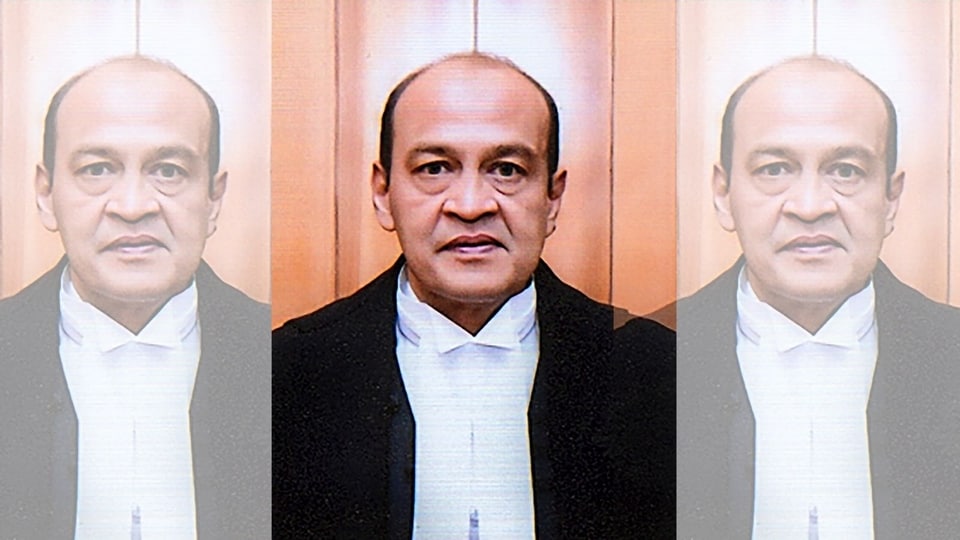
The tabling of the report once again pivots focus to a constitutional puzzle: If justice Varma is no longer a judge, can Parliament consider removing him through impeachment? And if he continues to hold judicial office — a prerequisite for impeachment — how can that constitutional position coexist with his restored eligibility to resume private legal practice and the surrender of virtually every privilege and responsibility attached to judicial office?
These twin questions lie at the heart of this paradox.
The inquiry against justice Varma traces its origins to allegations of unaccounted cash being discovered at his official residence in Lutyens’ Delhi in March 2025, when he was serving as a judge of the Delhi high court.
While the judge consistently denied any knowledge or ownership of the money, describing the allegations as a conspiracy to malign him and insisting that neither he nor any member of his family had placed cash at the site, an in-house inquiry panel of the Supreme Court found his explanation unsatisfactory, prompting then Chief Justice of India Sanjiv Khanna to recommend action to the executive.
This led to the initiation of removal proceedings in Parliament, with notices being moved in both Houses in July 2025. While the Lok Sabha admitted the motion and proceeded to constitute an inquiry committee, the Rajya Sabha declined to admit a parallel motion, citing procedural infirmities. Justice Varma, however, resigned in April this year while the inquiry was underway.
Also read: Justice Varma probe: ‘Charge proved’ with no finding of ownership
The paradox
The tabling of the report has reopened a legal debate that goes well beyond the fate of one judge. At stake is the constitutional architecture governing judicial resignations, parliamentary removal proceedings, and the extent to which one constitutional process can survive after another has apparently run its course.
Unlike previous impeachment proceedings against judges, Parliament now finds itself navigating uncharted constitutional terrain.
On one side is a 1978 Constitution bench judgment of the Supreme Court that treats the resignation of a high court judge as a unilateral constitutional act that does not require acceptance by any authority and becomes effective from the date chosen by the judge himself. On the other is the government’s apparent decision to continue with the parliamentary process, relying, among other things, on the fact that the judge’s resignation has not yet been formally acted upon by the executive.
All signs point to an exit
Yet, beyond the continuing appearance of his name on the roster of the Allahabad high court, where he was transferred following the controversy, virtually every objective indicator points in the opposite direction.
Justice Varma has not performed any function as a judge since his resignation. He has surrendered the official amenities, vehicles, and other facilities available to a sitting high court judge.
Internal correspondence within the Allahabad high court registry, accessed by Hindustan Times, shows that he has also been issued the necessary no-objection certificates following the relinquishment of official assets and benefits attached to judicial office.
Significantly, justice Varma has revived his enrolment with the Bar Council, thereby becoming eligible under the prevailing regulatory framework to resume private legal practice at any time — a position that appears fundamentally inconsistent with simultaneously continuing to hold constitutional office as a sitting high court judge.
At the same time, his salary has ceased. His pension has not commenced. His General Provident Fund and Group Insurance benefits remain undisbursed, reflecting an administrative position that is itself caught in a quandary.
The resulting picture presents the paradox. For all practical and institutional purposes, the judge appears to have demitted office. Yet Parliament is apparently preparing to consider whether the very office he appears to have vacated should be taken away through the extraordinary process of removal.
The constitutional backdrop only sharpens that contradiction.
Article 217 of the Constitution permits a high court judge to resign “by writing under his hand addressed to the President”. Unlike government servants, whose resignations ordinarily become effective upon acceptance by the competent authority, the Constitution does not contemplate acceptance of a high court judge’s resignation.
Also read: ‘For cheap publicity’: SC junks plea for criminal probe against Justice Varma
What the Constitution bench said
That distinction was authoritatively explained by a five-judge Constitution bench of the Supreme Court in Union of India Vs Gopal Chandra Misra (1978), a judgment that has occupied centre stage in discussions surrounding justice Varma’s resignation.
The five-judge bench held that a high court judge enjoys a “unilateral constitutional right” to resign and that ordinary principles governing service resignations have no application because a judge is not an employee of the executive but a constitutional functionary. The majority judgment specifically observed that where a judge resigns with immediate effect, the constitutional relationship is severed from the date chosen by the judge himself.
Acceptance by the President is not a constitutional requirement.
The judgment distinguished constitutional office from ordinary public employment, emphasising that the President performs a constitutional function in appointing judges and is not an employer in the conventional sense.
The decision arose in the context of a judge seeking to withdraw a prospective resignation before it became effective. The Constitution bench held that such a prospective resignation remains “inoperative” or “mute” until the date specified by the judge arrives, and can therefore be withdrawn before that date. But once that chosen date is reached, the resignation operates automatically because the judge has, by his own constitutional act, severed the link with office.
That constitutional formulation has assumed renewed significance because justice Varma's resignation letter expressly stated that it was being tendered “with immediate effect”.
The constitutional question that follows is straightforward, though its answer may not be.
Can a removal process survive resignation?
If the resignation became effective immediately under Article 217, can the mechanism established under Articles 124(4), 217(1)(b) and the Judges (Inquiry) Act, which exists solely to decide on the removal of a sitting judge, continue to operate after the judge has already ceased to hold office?
The scheme of the Judges (Inquiry) Act appears directed exclusively towards one constitutional consequence: removal.
The statute creates an elaborate fact-finding mechanism to determine whether Parliament should recommend removal of a judge on grounds of proved misbehaviour or incapacity. It does not contemplate disciplinary penalties short of removal, nor does it expressly provide for continuation of proceedings after the constitutional office itself has ceased to exist.
According to several judicial precedents, the constitutional expression “removal” necessarily presupposes the continued existence of the office sought to be vacated. Once resignation takes effect, the very subject matter of removal disappears because Parliament cannot remove a person from an office he no longer occupies.
Precedents tell a different story
When justice PD Dinakaran resigned in 2011 while impeachment proceedings were pending, the inquiry committee constituted under the Judges (Inquiry) Act was dissolved and no inquiry report was ultimately placed before Parliament.
Similarly, proceedings against justice Soumitra Sen effectively came to an end after his resignation as a judge of the Calcutta high court, notwithstanding that the Rajya Sabha had already adopted the motion recommending his removal.
Justice Varma's case, however, presents an important procedural distinction.
Unlike the earlier cases, the inquiry committee continued with its work even after the resignation and submitted its report — finding all three articles of charge against justice Varma proved — to the Lok Sabha Speaker. Whether Parliament, having now tabled that report, proceeds further with removal proceedings, could determine the constitutional significance.
Some government officials have described the issue as a legal "grey area", pointing to the fact that the resignation has not yet been formally processed.
Yet that position itself raises fresh constitutional questions.
If the absence of executive action is sufficient to postpone the legal consequences of resignation, does that sit comfortably with the Constitution Bench's conclusion that resignation under Article 217 is a unilateral constitutional act not dependent upon presidential acceptance?
Equally, if justice Varma continues to hold constitutional office despite his resignation, how does that square with the restoration of his enrolment as an advocate, which now enables him under the applicable regulatory framework to resume private legal practice at any time — a position ordinarily incompatible with simultaneously serving as a sitting high court judge?
The tabling of the report therefore does more than revive one inquiry. It has reopened unresolved questions about the constitutional meaning of resignation itself, the limits of parliamentary removal powers, and the point at which a judge truly ceases to occupy judicial office.
Should the House decide to move beyond having tabled the report and attempt to proceed with removal despite justice Varma’s resignation, India could witness the first authoritative judicial examination of whether Parliament's impeachment jurisdiction survives the constitutional exit of the judge it seeks to remove.
Until then, the tabling of a report leaves the country confronting an unusual constitutional spectacle — a judge who has relinquished his office in practice, but whose legal status remains the subject of one of the most consequential constitutional debates in recent years.
(The analysis was first reported by HT in July 2026. It has been updated with latest developments)



