Chief minister Yogi Adityanath on Wednesday said the younger generations, particularly Gen Z and Gen Alpha, needed to be made aware of the lawlessness, riots and insecurity that Uttar Pradesh witnessed during the previous Samajwadi Party government. He argued that those who had not experienced that period might not fully appreciate the state’s transformation.
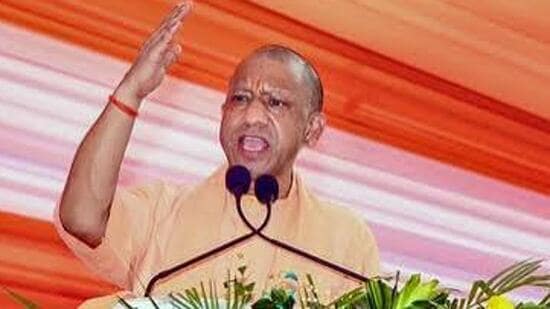
Speaking at a programme organised by a private news channel here, Adityanath defended his government’s emphasis on the slogan “Batoge toh Katoge”, saying it was not about polarisation but about remaining alert and cautious.
He said youngsters, particularly those in the 15-25 age group, should be reminded of the state’s past, including the series of communal riots, concerns over the “safety of daughters” and attacks on security establishments.
Having not witnessed those turbulent years themselves, the younger generation needed to understand the circumstances in which the state functioned before 2017, he added.
The chief minister said people who had experienced that period could better appreciate the changes brought about in the state over the past decade. He maintained that the present could be secured only by remembering the past and that a dignified future depended on improving the present.
Claiming that his government had corrected the mistakes of previous administrations, Adityanath said the responsibility of carrying forward the gains made by Uttar Pradesh now rested with the younger generation.
{{/usCountry}}Claiming that his government had corrected the mistakes of previous administrations, Adityanath said the responsibility of carrying forward the gains made by Uttar Pradesh now rested with the younger generation.
{{/usCountry}}Explaining the BJP’s much-debated 80:20 electoral formula, Adityanath said it did not represent a Hindu-Muslim divide but reflected a political divide between people supporting development, security and welfare and those opposing these priorities.
He said the 80% comprised the progressive section of society that supported development, security and welfare schemes, while the remaining 20% represented what he described as a destructive section opposed to development and supportive of rioters.
Clarifying his political formulation, the chief minister said the 80:20 division was not aimed at any particular community. He maintained that his government’s approach was based on the principle of “development for all and appeasement of none”.
Chief minister Yogi Adityanath on Wednesday exuded confidence in the BJP’s return to power in the 2027 assembly polls and defended the Special Intensive Revision (SIR) of electoral rolls.
On being asked whether the BJP-led NDA would cross its target of 320 of the 403 seats in the 2027 assembly elections, Adityanath expressed confidence that the party would receive public support, but stopped short of giving a direct numerical assurance.
Speaking at a programme organised by a private news channel, Adityanath described SIR as a welcome exercise to ensure the “purity” of voter lists, saying names of deceased persons and non-citizens should be removed while every eligible adult Indian citizen must be included. He said the BJP and its workers would contribute to ensuring that no eligible voter was left out and expressed confidence that the exercise would be conducted transparently.