Uttar Pradesh chief minister Yogi Adityanath’s claim that 1.27 crore Hindu voters’ names are missing from electoral rolls, along with his assertion that the number of Muslim voters has increased, and his repeated appeal for Hindu unity under the ‘Batenge toh Katenge’ narrative, have brought Hindutva back to the centre of politics in UP ahead of the 2027 assembly elections.
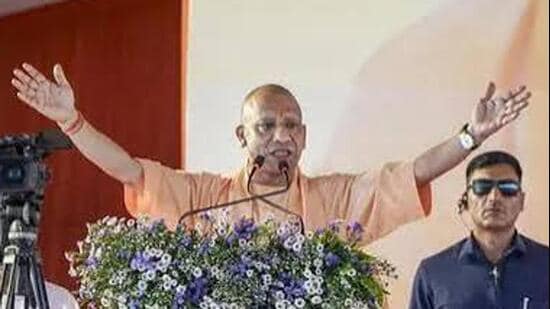
Coming alongside Samajwadi Party chief Akhilesh Yadav’s efforts to broaden his party’s Hindu appeal and recent statements by Congress leaders on the Babri mosque demolition and Diwali, these developments point to a renewed contest over issues revolving around religious identity in the state.
Adityanath reiterated his 80:20 formulation while talking to a private news channel in Ayodhya, projecting 80% of voters as supporters of the NDA’s agenda of governance and security and the remaining 20% as backing the Opposition’s PDA politics. He also described PDA as ‘Parivar Development Authority’.
Earlier, Adityanath invoked his ‘Batenge toh Katenge’ (divided, we will be cut) slogan, warning Hindus against divisions along caste lines. The slogan, which was perhaps first used during the 2024 Maharashtra assembly election campaign, has since become part of his broader appeal for Hindu unity.
The chief minister has sought to add another dimension to his political narrative by repeatedly raising the issue of the alleged deletion of Hindu voters from electoral rolls following the Special Intensive Revision (SIR).
{{/usCountry}}The chief minister has sought to add another dimension to his political narrative by repeatedly raising the issue of the alleged deletion of Hindu voters from electoral rolls following the Special Intensive Revision (SIR).
{{/usCountry}}Talking to a private channel, he claimed that 1.27 crore Hindu voters were missing from the assembly electoral rolls, even as the number of Muslim voters had increased by 1.65%.
Adityanath cited discrepancies between panchayat and assembly electoral rolls, claiming that 66 lakh voters listed in panchayat voter lists were missing from assembly rolls. He also referred to 55 lakh Hindu beneficiaries of government welfare schemes and 4.5 lakh voters in the 18-19 age group whose names, he claimed, were missing. He said the BJP had submitted a memorandum to the Election Commission seeking the inclusion of eligible voters left out of the rolls.
By repeatedly highlighting the religious identity of the allegedly missing voters and contrasting their numbers with the claimed increase in Muslim voters, Adityanath has brought an explicitly Hindu-Muslim dimension to what is essentially an electoral roll revision exercise.
“The deletion of a large number of Hindu voters is certainly a matter of concern for all of us. The CM was just giving vent to this common concern by urging party workers and office-bearers to keep a close watch on electoral rolls while addressing the state executive meeting here last month,” senior BJP leader Harish Chandra Srivastava said.
SP chief and former chief minister Akhilesh Yadav, meanwhile, appears to be making his own efforts to counter the BJP’s Hindutva narrative. His announcement that he would visit the Ram Temple in Ayodhya with his family on December 12 is seen as the latest indication of his attempt to shed the party’s anti-Hindu image. It will be his first visit to the temple since its consecration in January 2024.
The BJP, however, has sought to turn the announcement into a political test. Adityanath has asked Yadav to apologise to Ram devotees for the police firing on kar sevaks in 1990, when his father and SP founder Mulayam Singh Yadav was chief minister. Other BJP leaders have questioned the timing of the proposed visit, accusing the SP chief of seeking political mileage from the Ram Temple.
However, Uttar Pradesh Congress president Aradhana Mishra on Tuesday said the concern raised by CM Yogi Adityanath over the deletion of voters’ names in the state was an endorsement of what Rahul Gandhi had been saying.
Also Read | Akhilesh Yadav demands linking of electoral rolls with Aadhaar
“Though the chief minister has cited a figure of 1.27 crore, it is only half the actual number. By raising the concern, the UP chief minister has echoed the apprehensions Rahul Gandhi had expressed earlier,” Mishra said.
Meanwhile, certain statements by senior leaders of the Congress, another constituent of the INDIA bloc in Uttar Pradesh and the SP’s prospective poll ally, triggered a row.
Remarks related to Diwali by Congress national president Mallikarjun Kharge and UP Congress Committee working president Imran Masood were described as “anti-Hindu” by the BJP.
The BJP has seized upon these back-to-back developments to accuse the Congress of minority appeasement and question its approach towards Hindu religious traditions.
For the BJP, observers believe, the developments offer an opportunity to reinforce its Hindutva narrative by questioning the SP’s record on Ayodhya, targeting the Congress over its minority politics and placing the alleged deletion of Hindu voters’ names at the centre of the electoral discourse.
“The latest developments have provided the BJP a much-needed opportunity to steer the political discourse in the poll-bound state back to its familiar, tested and favourite terrain of Hindutva and Ayodhya. The BJP has got enough ammunition to target the Congress and the SP more aggressively in the days to come,” another senior BJP leader said.