NAVI MUMBAI: Interior designer Mithun Roy is not likely to fly out of Navi Mumbai International Airport (NMIA) any time soon. On the evening of June 5, he landed at the airport from Bengaluru “just to experience the new airport,” but it took him two-and-a-half hours to reach his home in Andheri West. On the other hand, it would have taken him 20-30 minutes from the Mumbai international airport.
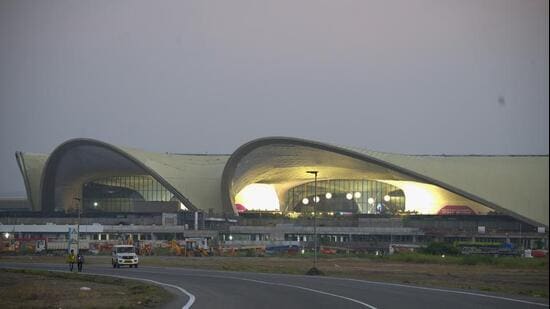
Roy is not the only one – many citizens like him are underwhelmed by the prospect of flying out of NMIA as they view the airport as an island devoid of smooth last-mile connectivity.
As Roy said: “The struggle began from booking a cab due to high cancellations. Once I boarded a cab, it looked like a never-ending journey, as my commute home was during the evening rush hours. The flight, which was an hour-and-a-half long, took off minutes after 7 pm, and by the time I reached home, it was midnight,” recalled the 43-year-old. “I wanted to see how the airport was constructed and the interiors. But given the travel time, traffic and inadequate transport facilities, I won’t opt for NMIA in the near future.”
NMIA was inaugurated on October 8, 2025, providing the Mumbai Metropolitan Region (MMR) with its highly anticipated second aviation hub. The airport launched domestic flights on December 25, 2025, and expanded to scheduled international operations on July 15, 2026.
{{/usCountry}}NMIA was inaugurated on October 8, 2025, providing the Mumbai Metropolitan Region (MMR) with its highly anticipated second aviation hub. The airport launched domestic flights on December 25, 2025, and expanded to scheduled international operations on July 15, 2026.
{{/usCountry}}In this duration, there have been 3 million passenger footfalls and 22,500 commercial flights. While the airport’s daily passenger traffic is around 20,000, it is expected to reach around 50,000 by December 2026, along with around 200 aircraft movements a day.
The crowning achievement is, however, undermined by many critical flaws such as connectivity by road and the absence of rail and metro services, especially for those travelling from Mumbai. While the eastern access links are nearing completion, major road, metro, rail and water projects are at various stages of development.
In fact, the anxiety of frequent fliers peaked early this week resulting in a furore on social media after Adani Airport Holdings Limited (AAHL) directed some airlines operating from Mumbai airport’s Terminal 1 (T1) to move to NMIA for the phased redevelopment of T1. The decision was deferred following a meeting with the ministry of civil aviation. However, on October 5, the airport operator announced a slew of new road transportation initiatives for the winter schedule from October 25 to March 27, 2027.
The plan and take-off
NMIA was conceived to ease capacity constraints at Chhatrapati Shivaji Maharaj International Airport (CSMIA) – the second busiest airport in India after the Indira Gandhi International Airport -- and provide a second option for the Mumbai region.
T C Benjamin, former bureaucrat who is currently serving as an independent monitor for CIDCO, shared that the early signs of congestion in Mumbai airport were noticed 15 years ago, with 1036 air traffic movements daily and many aircraft put on wait for 1 ½ hours to land. “It was a waste of time and fuel. The potential to develop CSMIA was limited. A second runway was not possible owing to space constraints due to slum encroachments,” said Benjamin.
Benjamin added that the government was looking at a new airport at a distance of 30-km radius. “Palghar was being considered as a possible site. But we wanted to serve urban agglomerations. Navi Mumbai was becoming a part of Mumbai, and therefore an ideal site despite environmental concerns.”
The project was taken forward by CIDCO after decades of planning, land acquisition and environmental clearances. CIDCO conducted the global bidding process and awarded the project to MIAL in October 2017. Navi Mumbai International Airport Private Limited (NMIAL) was subsequently formed as the special-purpose vehicle for developing, constructing, operating and maintaining the airport.
NMIAL is owned 74% by Mumbai International Airport Limited (MIAL) and 26% by CIDCO. MIAL is controlled by AAHL, which took management control of the project in 2021. Spread over around 1,160 hectares, NMIA is being developed under a public-private partnership. The masterplan envisages a capacity of 90 million passengers annually.
Today, IndiGo, Air India Express, Akasa Air and Fly91 are among the carriers operating scheduled passenger services from NMIA, connecting it to major metropolitan and tier-2 cities. International operations began on July 15 with an Air India Express service to Abu Dhabi. More international services are expected as airlines add routes and frequencies.
Benjamin, who has been involved with the project since its inception, acknowledged that NMIA’s poor connectivity remains a major flaw. He noted that while CIDCO had initially planned metro lines linking NMIA to Mankhurd and Belapur, a lack of coordination between MMRDA and CIDCO stalled the plans.
“The government must now complete the Metro from Mumbai airport to NMIA, on priority to make the maximum travel time between Sahar and Navi Mumbai 30 minutes,” said Benjamin.
The present road journey between the two airports takes around 75–120 minutes, and can exceed two hours during heavy traffic. The proposed Metro Line 8 will cover the 34.9-km CSMIA-NMIA airport-to-airport corridor. The project is expected to be completed around 2031. Commenting on the present connectivity, Benjamin added, “Introducing buses is not enough, as travel time is vulnerable due to congestion which often leads to travellers missing their flight.”
Former Air India executive director Kirti Rao said one of the biggest bottlenecks while travelling from Mumbai to Navi Mumbai is the T-junction at Mankhurd where a flyover is being constructed, and drivers who wish to avoid paying the ₹250 toll at Atal Setu get stuck here for at least 30 minutes.
“Commuting is a challenge for both passengers and the staff, especially the latter who reside in the western suburbs since accommodation has become expensive in Navi Mumbai,” said Rao. “Additionally, there is a need to increase illumination around the airport and on roads. There must also be increased police presence on long stretches which are isolated and deserted.”
Key (missing) links
While NMIA has been operational for nearly a year, road, rail, metro and water links planned to make it a fully connected airport are arriving in phases, with several key projects either nearing completion or years away from becoming operational. The connectivity gap assumes greater significance with Mumbai airport’s T1 redevelopment. While the proposed 265 weekly international flight cancellations have been temporarily deferred, the core demolition and redevelopment plans remain on track.
The first major improvement is now weeks away -- stilt bridge (SBR-9) and the separate bridges (BR-4 and BR-5) will provide an eastern approach to NMIA, improving connectivity from the Sion-Panvel Highway side towards the airport.
CIDCO managing director Ashwin Mudgal said the three projects are almost complete. “Once the project is completed, security clearance, road and traffic markings, signages, etc. will follow. We are expecting all this to happen in around 10 days,” he said.
Another major missing link is the Ulwe Coastal Road and 1.2-km Airport Link, comprising a 5.8-km six-lane road and an elevated link providing a direct connection from the Atal Setu side to NMIA. The present Atal Setu-to-airport journey through Chirle and Amra Marg takes around 30–40 minutes, while the completed direct connection is expected to reduce it to less than five minutes.
Mudgal attributed the project delays to four key factors: pending railway permissions, environmental approvals for mangroves, utility shifting for a gas pipeline and contractor liquidity constraints. “We are expecting it to be completed by December 31,” he said.
The ₹580 crore Kharghar-Turbhe Link Road will connect the airport region and northern Navi Mumbai, while the proposed six-lane 25–26-km Thane-NMIA Elevated Corridor is expected to reduce the present journey of about 90 minutes to around 30 minutes. The project has received in-principle approval, said Mudgal.
Airport traffic preparedness
Navi Mumbai is stepping up traffic and public transport preparations for a likely increase in airport-bound movement during the winter schedule. Currently, the traffic police are reviewing key routes while transport agencies are expanding bus, taxi and shuttle services to NMIA. Although the October 25 shift of international flights from Mumbai airport to NMIA is deferred, when it does take place, traffic police estimate around 50,000–53,000 light vehicles added to Navi Mumbai roads every day.
On Monday, Navi Mumbai police commissioner Milind Bharambe held a review meeting on traffic management measures. “The routes to the airport, the ongoing infrastructure works, their deadlines, vehicle movement arrangements and directional signs will be reviewed,” Bharambe said.
Additionally, NMIA is also expanding its ground transport network with more bus and shuttle options for the winter schedule (see box). “These services will strengthen NMIA’s links with MMR and neighbouring cities,” said Subhash Murikenchery, chief airport officer of NMIA.
Stay updated with all the Breaking News and Latest News from Mumbai. Click here for comprehensive coverage of top Cities including Bengaluru, Delhi, Hyderabad, and more across India along with Stay informed on the latest happenings in World News.
Stay updated with all the Breaking News and Latest News from Mumbai. Click here for comprehensive coverage of top Cities including Bengaluru, Delhi, Hyderabad, and more across India along with Stay informed on the latest happenings in World News.