
MUMBAI: With 87% of the state reeling under drought, the state government faces mounting financial pressure as drought mitigation measures are expected to consume a substantial portion of its ₹7.69 lakh crore budget for FY2026-27. Experts believe, the financial strain could also jeopardise the state’s ambition of becoming a $1 trillion economy by 2030.
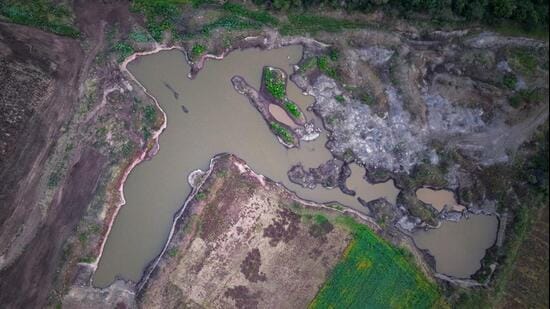
The drought mitigation expenditure is expected to exceed ₹40,000 crore—with a major share allocated to compensate crop losses, fodder generation, and water supply, among other measures. This is in addition to funds aimed at reviving water conservation schemes, such as Jalyukt Shivar and the Marathwada Water Grid, and completing pending water supply projects.
Although the state has sought ₹31,000 crore in financial aid from the Centre, historically the Centre has sanctioned only about 40% of the assistance Maharashtra requested. Consider this: Since 2014, the Centre has disbursed ₹11,051 crore against the state’s demand for ₹28,251 crore to compensate for crop losses and drought mitigation.
Should the Centre maintain this trajectory, the state might soon feel a pinch in its purse.
“Spending over ₹30,000 crore in a financial year from its own kitty, where the state’s estimated revenue receipts are ₹6.16 lakh crore, is a huge burden on the exchequer. This will leave the government with two options – divert funds from other development heads or raise additional debt beyond the amount projected for the fiscal,” said an official from the finance department.
{{/usCountry}}“Spending over ₹30,000 crore in a financial year from its own kitty, where the state’s estimated revenue receipts are ₹6.16 lakh crore, is a huge burden on the exchequer. This will leave the government with two options – divert funds from other development heads or raise additional debt beyond the amount projected for the fiscal,” said an official from the finance department.
{{/usCountry}}The state’s debt burden is expected to rise to ₹11.03 lakh crore in FY2026-27 from ₹9.74 lakh crore in the previous financial year, accounting for 20.38% of its Gross State Domestic Product (GSDP). Officials said that although the government has estimated additional borrowings of ₹1.29 lakh crore during the current fiscal, it may end up borrowing more – which would further push the projected fiscal deficit of ₹1.50 lakh crore and revenue deficit of ₹40,552 crore upwards.
Impact on projects by funds diversion
With an already staggering gap between revenue receipts and expenditure, the unexpected drought-related spending could further widen the fiscal deficit. Therefore, to keep its debt stock within prescribed limits, the government is likely to prioritise cuts in development sectors and divert funds toward drought mitigation. (See box)
Outstanding payments of over ₹75,000 crore for infrastructure works—including roads, bridges, tourism projects, water supply and irrigation—have already brought several ongoing projects to a halt.
“These works were awarded to contractors across the state by various departments, including public works, rural development, tourism, water supply and water resources, ahead of the 2024 Assembly elections. The work orders issued were three to four times their annual budgetary allocations. Consequently, several departments are now unable to issue fresh work orders, as their priority is to clear pending bills,” an official from the revenue department said.
For instance, he underscored, the public works department (PWD) awarded works worth over ₹64,000 crore in 2024, against its annual budgetary allocation of ₹15,000 crore. As a result, the PWD will take the next three years to clear liabilities arising from work orders issued two years ago.
The outstanding payments include around ₹15,000 crore under the rural development department’s road construction scheme, ₹12,000 crore for tribal development works, including the development of hamlets, ₹38,000 crore under the Jal Jeevan Mission, ₹2,500 crore for tourism projects and ₹7,500 crore for irrigation works. The PWD alone has pending bills estimated at ₹17,000 crore.
Milind Bhosale, president of the Maharashtra State Contractors Federation, said the reduction in expenditure on asset creation would adversely affect the state’s GDP growth. “The construction industry is the second-largest contributor to the state’s GDP after agriculture. Any reduction in funding for the sector will have a direct bearing on economic growth. More than two lakh contractors in the state generate business and employment for millions of people directly or indirectly associated with the industry,” he said.
According to experts, the 15-20% expenditure cuts initiated by the state government will ultimately affect development works.
“The state spends around 55% of its ₹6.16 lakh crore revenue on salaries, pensions and interest payments. While the remaining revenue is available for development, capital expenditure and welfare schemes, the government generally ends up spending 15-20% less than the budgetary estimates. Such expenditure cuts, which are usually announced in the second week of January every year, have been introduced as early as October this time, in view of the drought. The cumulative expenditure by all departments as of November 22 stands at 36% of the budgetary outlay. With priorities changing, development expenditure is likely to take a severe hit,” an official said.
Rupesh Keer of Samarthan, an NGO that studies the state budget, said that despite early warning signs of a possible drought, there was little clarity on the government’s preparedness. “The provision of ₹31,000 crore for farmers will not be sufficient. Drought management requires both economic and social planning, but there is no visible comprehensive strategy in place. This will result in the social sector bearing the brunt,” he said.
$1 trillion target under threat
Given this scenario—funds diversion and a gap between revenue and expenditure -- economists and experts have expressed doubts over the state government’s target of making Maharashtra a $1-trillion economy by 2030. Officials in the finance department have also acknowledged that a decline in agricultural GDP growth, due to lower production and productivity, could significantly affect the state’s economic growth in the current fiscal year.
“The target was already pushed back by two years, from 2028 to 2030. Now, it seems like a distant dream – it may take another couple of years to achieve. The state’s GSDP is projected to reach ₹54.09 lakh crore in FY 2026-27, up from ₹51.01 lakh crore last year. To become a $1-trillion economy, Maharashtra needs to sustain a nominal growth rate of over 13.5% and add more than ₹35 lakh crore to its economy over the next four years. At the current exchange rate, the GSDP would have to cross ₹90 lakh crore to achieve the target,” said an official from the finance department.
Neeraj Hatekar, economist and independent researcher, said achieving the $1-trillion economy target by 2030 was technically possible if Maharashtra managed a nominal growth rate of around 13%, comprising real growth of 7% and inflation of 6-7%. Rising agricultural commodity prices, including jowar, could also push up nominal growth.
“However, achieving the target does not necessarily mean that people’s lives will improve. The more important question is whether this growth will improve farmers’ conditions, generate employment, revive small industries and improve access to education and healthcare,” he said, adding an excessive importance to the $1-trillion target was unnecessary, arguing that what mattered was whether economic growth translated into better livelihoods, stable employment, improved healthcare and education, and environmental sustainability. “The widening rich-poor divide and educated unemployment remain serious concerns. These are the issues that directly affect people’s lives,” he said.
He also cautioned that Maharashtra’s economic growth could take a hit because of the drought, adding that the state needed to focus on the quality and inclusiveness of growth rather than merely the size of its economy.
ABOUT THE AUTHOR
Surendra P. Gangan is an Associate Editor with the Mumbai Edition of the Hindustan Times, covering politics, social and economic issues, and Maharashtra affairs. With more than three decades of experience in journalism, he has reported extensively on Maharashtra’s political landscape, its evolving power equations and the issues that shape public life in the state. A firm believer in the value of ground reporting, he enjoyes pursuing stories that generate conversation and make an impact beyond the newsroom. Outside journalism, he was university-level cricketer during his college days and remains an amateur swimmer and an enthusiastic trekker.
Stay updated with all the Breaking News and Latest News from Mumbai. Click here for comprehensive coverage of top Cities including Bengaluru, Delhi, Hyderabad, and more across India along with Stay informed on the latest happenings in World News.
Stay updated with all the Breaking News and Latest News from Mumbai. Click here for comprehensive coverage of top Cities including Bengaluru, Delhi, Hyderabad, and more across India along with Stay informed on the latest happenings in World News.