Mumbai: A visit to the Elephanta Caves near Mumbai left Irish author Paul Waters questioning the ticketing system at the UNESCO World Heritage Site after he found that foreign tourists could not book tickets online using international mobile numbers and were instead offered tickets by guards in exchange for cash.
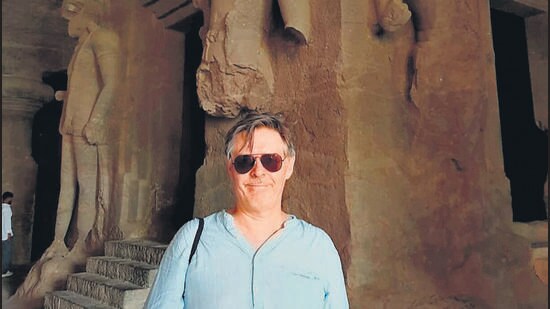
Waters, who was recently in Mumbai to attend the Godrej Literature Festival, visited the Elephanta Caves during his trip to the city. The caves are known for their ancient rock-cut temples and sculptures dating back to the mid-5th to 6th centuries CE. Waters later shared his experience in an Instagram post, raising questions about the online ticketing system and the difficulties faced by foreign visitors.
“Scam or no scam? I visited the glorious Elephanta Caves on an island off the coast of Mumbai yesterday — OR DID I?” he wrote. “If you check the records of the Archaeological Society of India... you’ll find no data.”
According to Waters, the ticket counters at the cave entrance were closed, leaving online booking as the only option. However, the Archaeological Survey of India (ASI) website does not process ticket purchases using a foreign mobile number, even if visitors have an e-SIM. “That works if you are on a guided tour (the guide buys the tickets) or if you’re Indian. But not for visitors with a foreign cellphone,” he wrote.
Waters alleged that guards offered to buy tickets on their personal mobile phones in exchange for cash, sometimes even offering a discount. “It works like this. You pay the guard in cash. He displays on his phone screen a ticket someone bought earlier. You photograph the ticket with your phone. Then you show this to the ticket checker, and in you go,” he wrote.
{{/usCountry}}Waters alleged that guards offered to buy tickets on their personal mobile phones in exchange for cash, sometimes even offering a discount. “It works like this. You pay the guard in cash. He displays on his phone screen a ticket someone bought earlier. You photograph the ticket with your phone. Then you show this to the ticket checker, and in you go,” he wrote.
{{/usCountry}}The experience prompted Waters to question whether the ticketing system was properly recording the number of foreign visitors and whether all ticket payments were reaching the authorities. “Does the cash ever reach the Archaeological Society of India? If significant numbers of foreigners are admitted on what is effectively a single ticket, then are the ASI statistics wrong?” he wrote.
Speaking to Hindustan Times, Waters said he did not want to blame anyone but hoped the authorities would make the ticket booking process easier for international tourists.
“I am in love with India. I fell in love with India when I fell in love with my wife, Aneysha, who is from Delhi. She encouraged me to set my stories in India because we spend so much time in her homeland,” he said.
Waters added that his intention was to highlight a problem that could be addressed through a more user-friendly system. He suggested that the authorities introduce a website that accepts international mobile numbers and allows foreign visitors to book tickets without depending on guards or tour guides. This simple change, he said, could make the experience easier for tourists visiting one of the region’s important heritage sites.
Responding to the complaint, Abhijit Ambekar, the in-charge superintendent archaeologist for the Mumbai region, said that the ASI had discontinued offline ticket sales to ensure transparency.
“All sales are now conducted online. To facilitate this, we have implemented a QR code system. Occasionally, issues may arise when booking tickets for foreign nationals, such as when the required information is incomplete, which can prevent the ticket from being issued. We will investigate the specific circumstances of this case, address the complaint, and take appropriate action,” he said.
Ambekar added that QR codes would be installed at the jetty, where visitors board boats for the island, within the next 10 days. This would allow tourists to access the booking system from any location with mobile network coverage and book tickets before boarding the ferry.
Stay updated with all the Breaking News and Latest News from Mumbai. Click here for comprehensive coverage of top Cities including Bengaluru, Delhi, Hyderabad, and more across India along with Stay informed on the latest happenings in World News.
Stay updated with all the Breaking News and Latest News from Mumbai. Click here for comprehensive coverage of top Cities including Bengaluru, Delhi, Hyderabad, and more across India along with Stay informed on the latest happenings in World News.