
 E-Paper



Will IPL’s digital tryst alter TV as we know it?
JioCinema said it broke all records as the concurrent viewership (people watching at the same time) for the match between Chennai Super Kings and Rajasthan Royals on April 12 touched 2.2 crore. This was way higher than what Disney+ Hotstar achieved when it owned the digital rights for IPL, it said

 Prefer HTon Google


Strap: Today, consumers spend 7-8 hours daily on their mobile screens watching WhatsApp videos, Instagram Reels or YouTube Shorts. Penetration of home broadband, growth of 5G, better and bigger handsets and Connected TVs (internet-enabled) will drive adoption of digital streaming, media experts say
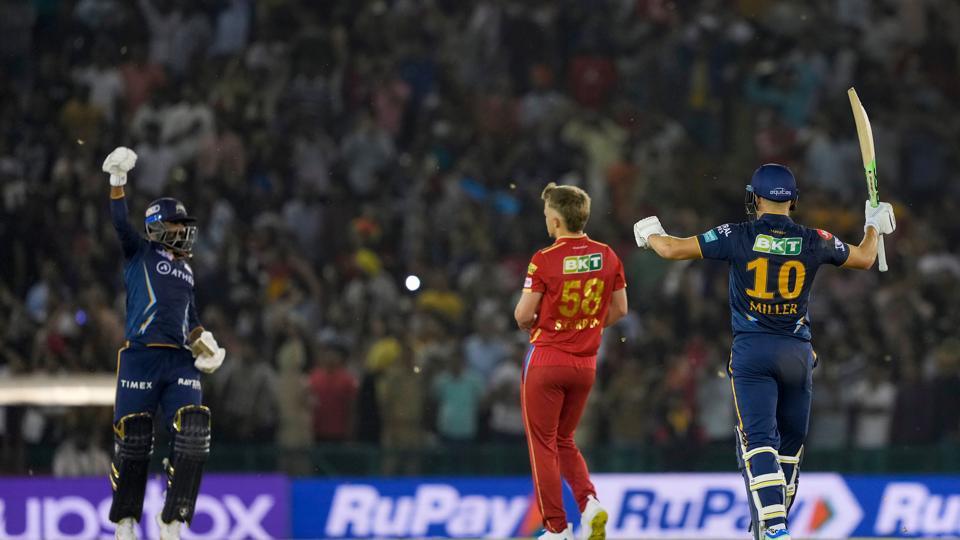
The intense numbers’ duel between Viacom18’s JioCinema, the digital streaming partner for the Indian Premier League (IPL) and Disney Star, the television broadcast partner, will, perhaps, continue up until the end of the tournament on May 28. JioCinema said it broke all records as the concurrent viewership (people watching at the same time) for the match between Chennai Super Kings and Rajasthan Royals on April 12 touched 2.2 crore. This was way higher than what Disney+ Hotstar achieved when it owned the digital rights for IPL, it said. Disney Star quoted Broadcast Audience Research Council (BARC) data to say that with a cumulative reach of 30.7 crore viewers for the first 10 matches, the broadcaster has garnered 23% more viewers compared to IPL’s previous edition.
To understand the shape of things to come, it would help to disregard these statistics for a bit. For starters, let’s look at what’s working in favour of IPL on JioCinema and its impact on streaming’s long-term future. IPL on JioCinema has garnered more than 550 crore views up until now. A view, however, is counted every time you turn on the app on your mobile and it does not indicate the time spent or reach.
Manish Gupta, senior director, CRISIL Ratings, says Indians are consuming media differently in the post-pandemic world. “Availability of high-speed internet connectivity coupled with growing proliferation of over-the-top (OTT) platforms with curated fresh content is driving people’s attention towards digital platforms compared to television (TV),” he says. Some of these pandemic induced habits are causing a paradigm shift in India’s pay TV market where people are cord-cutting.
India’s pay TV homes have dropped from 120 million to 110 million in the last few years. Of the country’s 200 million TV homes, nearly 50 million are DD Free Dish users who watch only free-to-air channels. It’s not clear how many of these unaccounted 40 million homes are cord cutters. “What is clear is that the number is growing and eating into the pay TV market,” says Anuj Gandhi, former CEO at DEN Networks and Indiacast.
Add to this the “cord Nevers” --- youngsters who set up nuclear families or move out of homes to live in hostels and will never buy a cable or DTH (direct-to-home) connection. These people consume entertainment on the mobile.
Advocates of the traditional TV business say that of India’s 300 million households, only 200 million own a TV, leaving enormous headroom for growth in TV homes. Media analysts ditch the theory as the gap of 100 million between the two sets of households hasn’t been bridged in the last many years. That market has already gone to mobile streaming since these households could not afford a TV and they are watching free YouTube content.
Today, consumers spend 7-8 hours daily on their mobile screens watching WhatsApp videos, Instagram Reels or YouTube Shorts. Penetration of home broadband, growth of 5G, better and bigger handsets and Connected TVs (internet-enabled) will drive adoption of digital streaming, media experts say.
But it’s not as ominous for linear TV as it sounds. Linear TV is still the cheapest form of entertainment in the country. India largely remains a single television household country on account of the size of our dwellings and affordability. “Which is why TV programming is still family-friendly. For individual viewing of edgy content, you go to OTT. So, we will remain an ‘and’ country – where streaming and TV co-exist -- for the foreseeable future,” says head of media practice at a management consultancy.
Not just that. While TV growth rates may plateau in the next 5-6 years, the idiot box – with its 110 million pay TV homes – still commands nearly ₹30,000 crore in advertising and another ₹30,000 crore in subscription. Even if this number declines to 80 million, it’ll still be a sizeable and attractive market.
However, in Gandhi’s view, the real threat to linear TV will be if the majority of consumers move to Connected TVs as then the likelihood of them watching linear television is very little. Today the Connected TV universe is 20-25 million. If it crosses the threshold of 50-60 million, then it will start making sense for advertisers.
Whether that fundamental shift in advertising to Connected TVs starts happening at 50 million or 70 million, it remains to be seen, says Gandhi.
But with that, streaming will become genuinely big.


