
 E-Paper



Metro 3 scouts for another communications agency for mobile connectivity
Until Friday, subscribers of BSNL and Vodafone Idea had mobile connectivity along the first two stretches, Aarey–JVLR to Bandra Kurla Complex (BKC), and BKC to Acharya Atre Chowk, covering 22 km of the 33.5-km corridor

 Prefer HTon Google


Mumbai: Within 48 hours of switching off cellular services along Mumbai Metro 3 also known as the Aqua Line, its operator, Mumbai Metro Rail Corporation (MMRC), has floated a Request for Proposal (RFP) to appoint a new agency to provide the telecom infrastructure along the route.
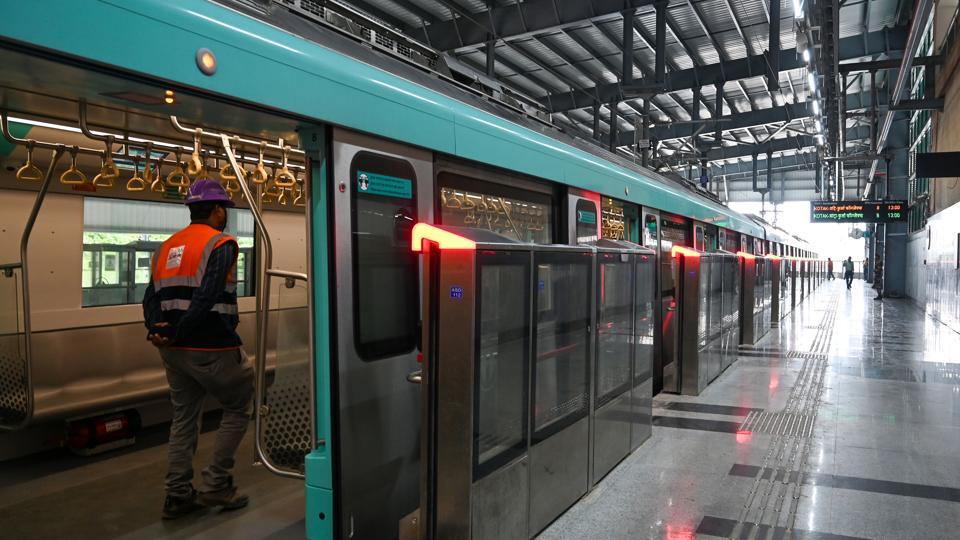
Operations on the Aqua Line began in phases starting from October 2024. Until Friday, subscribers of BSNL and Vodafone Idea had mobile connectivity along the first two stretches, Aarey–JVLR to Bandra Kurla Complex (BKC), and BKC to Acharya Atre Chowk, covering 22 km of the 33.5-km corridor.
On Saturday, MMRC issued a fresh RFP to install infrastructure for cellular coverage across all Metro 3 stations, buildings and the underground corridor, where there is currently no mobile connectivity. Earlier this month, MMRC terminated its contract with ACES India, a subsidiary of Saudi Arabia-based ACES, despite having spent ₹120 crore on setting up neutral telecom infrastructure.
According to the RFP, the new agency will be responsible for installing “common, neutral infrastructure” to support “in-building connectivity”. “Individual infrastructure for each TSP (telecom service provider) is not allowed to be installed due to space constraints within tunnels and stations,” the document read.
The way it has been so far, in the latest proposal to onboard a new agency as well, all telecom companies will not be permitted to set up their own equipment. Telecom operators had been arguing for over a year that the charges demanded by ACES were too high and that they could build the infrastructure more cost-effectively themselves. The dispute dates back to before the first phase of the line became operational in October 2024.
Under the new plan, the selected firm will build, operate and maintain the shared telecom infrastructure, and earn revenue by charging telecom operators for access to provide services to their subscribers. Currently, it is unclear if the equipment already installed by ACES will be passed on to the next agency to allow the company to recover their investments.
While HT reached out to MMRC, Airtel, Vodafone Idea, Cellular Operators Association of India and ACES for their perspective on the development, none of them responded.


Stay updated with all the Breaking News and Latest News from Mumbai. Click here for comprehensive coverage of top Cities including Bengaluru, Delhi, Hyderabad, and more across India along with Stay informed on the latest happenings in World News.


