
 E-Paper



Pallonji Mistry - The man who shaped Mumbai’s skyline
It was under Pallonji Mistry’s visionary leadership that the real estate and construction conglomerate consolidated and grew beyond India.

 Prefer HTon Google


Pallonji Mistry, patriarch of the Shapoorji Pallonji family, who died on Tuesday at 93, gave shape to Bombay’s skyline having built some of the city’s most iconic buildings including the old Reserve Bank of India, the stock exchange, Brabourne stadium and the Taj Mahal Hotel among others.
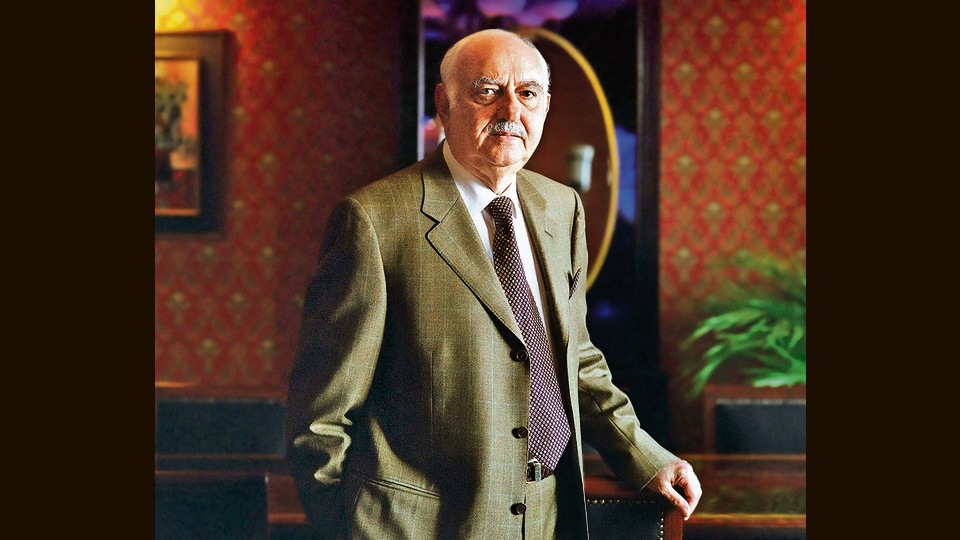
Though it was his father who founded the 157-year-old Shapoorji Pallonji group, it was under Pallonji Mistry’s visionary leadership that the real estate and construction conglomerate consolidated and grew beyond India. Among the group’s landmark projects overseas is the blue-and-gold Al Alam palace of the Sultan of Oman. Pallonji Mistry was often referred to as the ‘Phantom of Bombay House’ for the quiet influence he enjoyed at the Tata Sons headquarter as the single-largest private shareholder. The ties with the Tatas extended to family too-- Pallonji’s daughter Aloo is married to Ratan Tata’s half-brother, Noel Tata. But the family’s ties with the Tatas soured in the epic legal battle that followed his son Cyrus’s ouster as chairman of the Tata group in 2016. The high-decibel public feud continues to dog the SP Group’s fortunes.
Pallonji Mistry himself remained one of Mumbai’s most low-profile billionaires. In 2003, Pallonji gave up his Indian citizenship to become an Irish citizen becoming, for a time that country’s wealthiest man. The family’s interest in Ireland is ascribed, in part, to their love of horses.
Despite his enormous wealth and success in business, Pallonji seth as he was called by his associates, lived unostentatiously by the ethics of his Zoroastrian faith. This writer remembers seeing him on more than one occasion dressed in his uniform of simple white shirt and white trousers, standing unobtrusively in a corner at the Iranshah fire temple at Udwada and praying before the Holy Fire, with a Khordeh Avesta (the prayer book of the Parsis) in hand. A few years ago, the Pallonji Mistry family had also undertaken the herculean task of renovating the 130-year-old building that houses the oldest and holiest Zoroastrian consecrated Fire at Udwada.
Pallonji was a silent philanthropist, a trait that both his sons Shapoor and Cyrus have inherited. His philanthropic interests ranged from care for senior citizens to supporting education and research. In 2017 the family gave a grant of 5 million pounds to the School of Oriental and African Studies (SOAS) at London University to set up the Shapoorji Pallonji Institute of Zoroastrian Studies, now an enormously valuable resource dedicated to enhancing the research, learning and teaching of one of the world’s oldest religions.
Recently, a generous donation from one of the Group companies has enabled Masina Hospital to set up a modern dialysis facility for its patients. The family also has an abiding interest in arts and culture. One of Hindi cinema’s best-loved classics, Mughal-e-Azam (1960), was produced by Pallonji’s father and was re-released by the family after it was digitally coloured in 2004. A few years ago, the NCPA had run the stage version of this epic which was made possible by Pallonji Mistry’s munificence.
He is survived by his wife Patsy and 4 children, sons Shapoor and Cyrus and two daughters Laila and Aloo. Pallonji Mistry was awarded the Padma Bhushan in January 2016 for his contributions to the field of trade and industry. His funeral ceremony will be held at Doongerwadi on Wednesday.
The writer is a Zoroastrian scholar and columnist for Parsi Times


