MUMBAI: The BJP-led Mahayuti government recently amended the Maharashtra Cooperative Societies Act to primarily tighten its control over cooperative institutions. It took this step during the election to the six-decade-old Gokul Dairy -- the country’s second-largest dairy cooperative after Amul -- triggering political backlash and the potential for long-term repercussions in the cooperative sector.
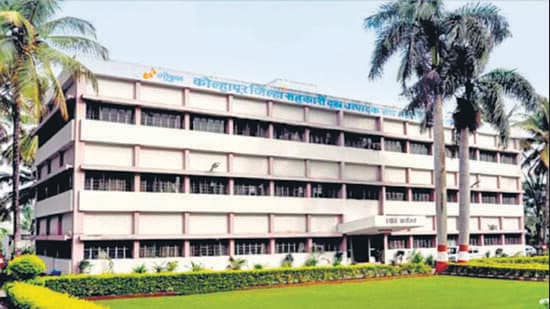
In the election to the Kolhapur District Cooperative Milk Producers’ Union, popularly known as Gokul, held on October 18, the Congress-backed Rajarshi Shahu Shetkari Samvichari Aghadi (RSSSA) led by Satej Patil won 13 of the 25 seats, restricting the Mahayuti to 12 seats despite an aggressive campaign led by three state ministers, two MPs and 10 MLAs. Four heavyweight former directors and chairmen were among those defeated.
The Mahayuti subsequently asked its 12 elected members to abstain from the meeting convened to elect the chairman, leading to a lack of quorum. The Bombay high court’s Kolhapur bench termed the move unwarranted and directed the administration to hold the election on November 10. The government then amended the Act, empowering itself to appoint four nominated directors from the cooperative sector with voting rights in the chairman’s election.
Interestingly, before the amendment, when the state government sought the opinion of former Chief Justice of India BR Gavai on November 3, the latter argued against it, saying that granting voting rights to government-nominated directors for key office-bearer posts would effectively undermine the mandate of the elected majority. The former CJI also argued that such an amendment would be vulnerable to judicial scrutiny on the grounds of its arbitrariness.
{{/usCountry}}Interestingly, before the amendment, when the state government sought the opinion of former Chief Justice of India BR Gavai on November 3, the latter argued against it, saying that granting voting rights to government-nominated directors for key office-bearer posts would effectively undermine the mandate of the elected majority. The former CJI also argued that such an amendment would be vulnerable to judicial scrutiny on the grounds of its arbitrariness.
{{/usCountry}}Political backlash
The government’s move triggered political backlash, with Congress announcing a protest in Kolhapur on November 9. Lok Sabha Leader of Opposition Rahul Gandhi accused the BJP of stealing milk producers’ votes, while Shiv Sena (UBT) and NCP (SP) backed Congress.
The opposition also portrayed the election as an attempt by the BJP government to merge Gokul with Amul, citing the transfers of Madhya Pradesh’s Sanchi and Maharashtra’s Mahananda to NDDB, and the proposed merger of Karnataka’s Nandini. This narrative became a key part of the RSSSA’s recent election campaign.
“The central government wants to retain just two brands -- Amul and NDDB -- through which the daily collection of 6.5 million litres in 20 states will be controlled by Gujarat-based entities. The launch of the Sardar Patel Milk Federation in June 2025 was intended to facilitate this move. The attempt is to grab Gokul by hook or crook and sell it to Amul, but the people of Kolhapur will never let this happen,” Satej Patil said.
This narrative played a key role in the election, with voters turning against the ruling alliance. A Congress leader, who did not wish to be named, stated, “People were so opposed to the ruling alliance that voters from Kagal, the stronghold of medical education minister and NCP leader Hasan Mushrif, did not vote for his son, Naved Mushrif, who was the chairman of Gokul. The Mahayuti alliance attempted to grab control of Gokul through questionable tactics, including technical disqualification bids and boycotting the October 29 meeting for the chairman election to deliberately stall proceedings by preventing the required 14-member quorum.”
Terming the action as “satta chori” Satej Patil said: “It is an insult to the 5.5 lakh milk-producing farmers who elected 13 members from our panel to run Gokul. The government will soon witness the consequence of its attempt to suppress our voice. We have planned a massive morcha on November 9, where Kolhapur’s strength will be displayed.”
He alleged that the ruling alliance had kept its 12 elected members at a hotel in Udaipur after moving them through Goa and Surat.
Reacting to the backlash, BJP leader Pravin Darekar said the move behind the amendment was positive. “There was a deadlock because of the lack of quorum during the first meeting of Gokul. By inducting five government-appointed directors, experts from the sector will be brought on the board to help the institution progress. I do not see any substance in allegations levelled by Congress leader Satej Patil,” he said.
The legacy of Gokul
Gokul is a powerful economic, political and social institution that distributes over ₹100 crore every 10 days towards payments to milk suppliers. Control over the institution translates into influence over an extensive network of milk producers, cooperative societies and the region’s cooperative politics.
Gokul’s annual turnover is ₹4,185 crore, with daily milk collection over 16.24 lakh litres and over five lakh milk-producing farmers associated with 8,461 cooperative milk societies. Apart from this, the cooperative sector in Kolhapur holds the key in the politics of the district where 10 Assembly and 2 Lok Sabha seats are at stake. It also has political bearing on the neighbouring districts of Sangli and Satara – the stronghold of Congress and NCP, and the epicentre of the cooperative sector.
Political observers opined the recent uproar could prove costly for the Mahayuti, as its successive steps in the Gokul election have been perceived as attempts to override the people’s mandate. In fact, ruling alliance partner Shiv Sena was reportedly critical of the decision to amend the law.
“There were three state ministers, two sitting MPs and 10 MLAs from the district leading the campaign for the Gokul election, which had become political for the first time. Despite this, the Mahayuti could not secure a majority. Instead of introspecting and accepting the mandate, we are trying to overturn it. This has given the opposition alliance another opportunity to take the battle to the streets. This will cost us,” said a Shiv Sena leader on condition of anonymity.
Dilip Londhe, a Kolhapur-based political analyst, said, “This is a war to reap the political and financial benefits of a dairy with a turnover of ₹4,000 crore. The dairy, which flourished during Operation Flood in 1970, has faced many corruption charges in the past. The entire episode has given Satej Patil and Congress an opportunity to revive themselves, and subsequently the Opposition may gain an edge from the issue.”
Stay updated with all the Breaking News and Latest News from Mumbai. Click here for comprehensive coverage of top Cities including Bengaluru, Delhi, Hyderabad, and more across India along with Stay informed on the latest happenings in World News.
Stay updated with all the Breaking News and Latest News from Mumbai. Click here for comprehensive coverage of top Cities including Bengaluru, Delhi, Hyderabad, and more across India along with Stay informed on the latest happenings in World News.