MUMBAI: The Ministry of Civil Aviation on Wednesday said after putting curbs on flights the traffic congestion at Mumbai Airport improved a lot with less delay in flight arrivals.
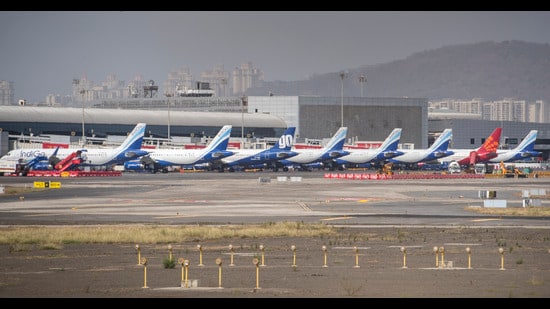
The Chhatrapati Shivaji Maharaj International Airport (CSMIA), one of the busiest airports, has been experiencing frequent congestion for the past few months leading to aircraft hovering overhead for a significant duration causing inconvenience due to passenger delay, wastage of fuel and environmental pollution, the press note said.
After many complaints the civil aviation ministry directed the Airport operator; Mumbai International Airport Limited (MIAL) and the Airport Authority of India (AAI) on January 2 to mitigate congestion by restricting the movements of non-scheduled flights (General Aviation) during peak hours (8-11 am, 5 pm and 8 pm and 9.15 pm and 11.15 pm)
Just 4% of arrivals were delayed over 30 minutes in the 16-24 February period compared to more than 26% during 11 November-10 December, the aviation ministry said. Similarly, 57% of flights arrived with a delay of 0-15 minutes and 26% with a delay of 15-30 minutes in the February stretch, against 25% and 14% in November-December.
CSMIA has two intersecting runways which cannot be operated simultaneously resulting in single runway operations with a peak hour declared capacity of 46 aircraft movement (arrival or departure) in an hour, during High-Intensity Runway Operations (HIRO) and 44 aircraft movement per hour (during NON-HIRO) period.
An analysis conducted by AAI pointed to excessive slot allocation and poor slot adherence as a major contributor to the traffic congestion witnessed. On February 15, after reviewing the existing situation, the Ministry directed MIAL, in addition to earlier measures to reduce their flight operations from 46 to 44 per hour during the HIRO period and from 44 to 42 aircraft movement per hour during the remaining period with the provision of two slots for General Aviation aircraft. MIAL in coordination with airlines has implemented the directions effective since February 20.
{{/usCountry}}An analysis conducted by AAI pointed to excessive slot allocation and poor slot adherence as a major contributor to the traffic congestion witnessed. On February 15, after reviewing the existing situation, the Ministry directed MIAL, in addition to earlier measures to reduce their flight operations from 46 to 44 per hour during the HIRO period and from 44 to 42 aircraft movement per hour during the remaining period with the provision of two slots for General Aviation aircraft. MIAL in coordination with airlines has implemented the directions effective since February 20.
{{/usCountry}}All the Domestic airline operators were also advised to strictly adhere to the slots allocated by MIAL to avoid air congestion and most of them have reduced flights.
The Air traffic situation at Mumbai post above initiatives is being monitored and has shown improvement from February 19 onwards.
The press note said that aircraft operating earlier than the approved slot (marked as before schedule in the data) lead to congestion and delay for other aircraft adhering to the schedule, which in turn, will have a cascading effect on the other schedule movements. The note said these movements were also targeted for improvements and airlines asked to adhere to the allotted slots.
Stay updated with all the Breaking News and Latest News from Mumbai. Click here for comprehensive coverage of top Cities including Bengaluru, Delhi, Hyderabad, and more across India along with Stay informed on the latest happenings in World News.
Stay updated with all the Breaking News and Latest News from Mumbai. Click here for comprehensive coverage of top Cities including Bengaluru, Delhi, Hyderabad, and more across India along with Stay informed on the latest happenings in World News.