
 E-Paper



NGT pulls up G Noida authority over sewage disposal by villages
The NGT bench said discharge of untreated sewage on land, river or stream is completely prohibited and non-compliance thereof is an offence

 Prefer HTon Google


GREATER NOIDA: The National Green Tribunal (NGT), while hearing the submission report entered by the Greater Noida Industrial Development Authority (GNIDA) on March 19 over the alleged disposal of sewage by villages under the authority’s ambit, said that it was very “unfortunate” of GNIDA to be “helpless” in the matter of governance.
The remarks came as the GNIDA in its response, on February 2, 2024, had submitted that it was facing several “challenges” as villagers were reluctant to get sewer connections besides other hindrances, including digging of access road for laying sewer line through densely populated areas with narrow lanes citing the work would be an obstruction to access and movement.
The NGT, hence, observed that the authority as well as Uttar Pradesh Pollution Control Board (UPPCB) were responsible for not taking adequate action, and “directed member secretary, UPPCB, to look into the matter and take appropriate action including against the persons responsible for inaction”.
Hearing the case on March 19, an NGT bench comprising judicial member -- Justice Sudhir Agarwal, and expert member -- A Senthil Vel, said, “It is very unfortunate that in the matter of governance, the statutory body is showing helplessness or inability to get the work done, though it is its responsibility.”
The NGT bench said discharge of untreated sewage or polluting material on land, river or stream is completely prohibited by Section 24 of Water Act, 1974 and non-compliance thereof is an offence under Section 43 of the Act, for which, criminal prosecution can be initiated against the violators.
“Section 47 of the Water Act, 1974, further says in respect of company or statutory bodies, persons responsible for day-to-day function of the body shall be deemed to be guilty of the offence,” it said.
If an effective action to stop discharge of untreated sewage on the land or river or stream is not undertaken, the officials of GNIDA are responsible, and “they are in fact committing an offence under the provisions of Water Act, 1974, for which action is required to be taken”, the bench said.
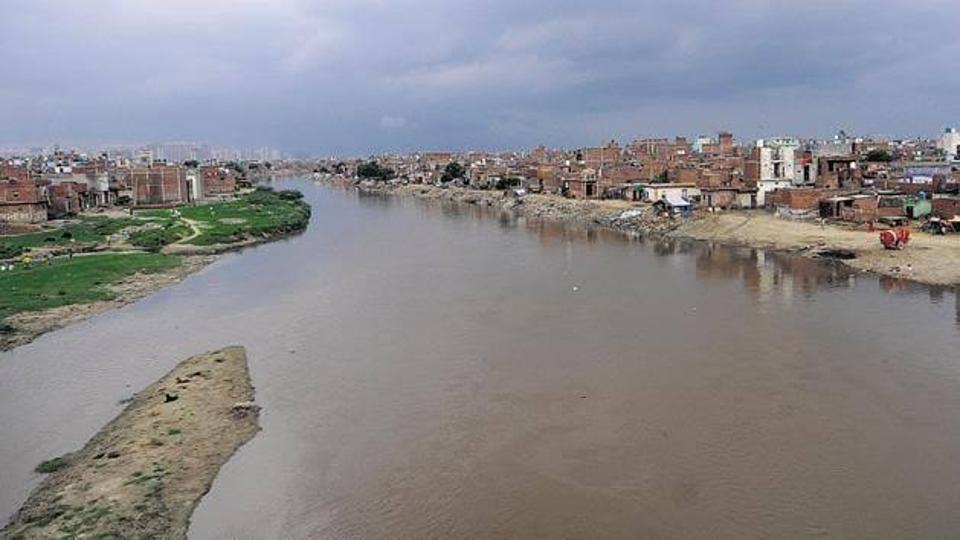
According to regional officer of the UPPCB (Greater Noida) Deo K Gupta, most of the villages developed in the floodplains of Hindon are responsible for discharging untreated sewage in the water bodies, thereby polluting them.
“It is primarily the responsibility of the district administration, GNIDA to ensure that these illegally developed houses are removed from the floodplains. Any unauthorised land-use has to be checked by these government bodies and so far, even demarcation of these illegal villages/establishments couldn’t be completed,” the official said.
“Pollution board is being named here just for the fact that it is an environment-concerning matter. If an establishment constructed in floodplain seeks for an NOC for sewage treatment plant (STP), we won’t approve of it,” the officer added.
The NGT bench, based on the response submitted by GNIDA, observed that only minor details were given in the submitted report. It pointed out that of the total 115 villages (a revised figure following corrections by GNIDA on previously stated123 villages) under GNIDA’s ambit, only 39 villages have been connected with STPs as on December, 2023.
Details of the volume of sewage being generated by these villages, bifurcation as to how much quantity sewage separately is being supplied to STPs for treatment and whether STPs are functioning as per the prescribed standards, were missing in the report.
The GNIDA has now sought time from the tribunal to work on the laxities and provide missing details in the report.
According to Vinod Sharma, senior manager (in-charge sewer), GNIDA, the authority is taking up adequate steps to address the issues and working constantly for building a sewage network.
Villagers, however, are reluctant in getting sewer connections even though it is free of cost, as they entail it would lead to breakage or construction in their houses, he said, adding that they are also apprehensive that they might be charged for it in future.
“There are other hindrances as well including challenges in digging of access road for laying sewer lines from individual houses to manholes. The villages are densely-populated and these are the facts that were included in the report. However, we have sought for some extra time,” the official further added.
In January, 2024, the GNIDA submitted that there were 31 villages that had to be connected with STP by 2027-end (post approval of land use master plan).
Of the total 11,152 households in these villages, 7,280 have sewer connections whereas the process to provide sewer connection to 3,874 households was underway, it added.
“Despite several issues at hand, appropriate measures are being taken. A three-tier approach has been adopted, involving hiring of supervisors and other services to monitor sewer issues in the villages. Services of other departments, including Jal Nigam, shall also be roped in to expedite the process of connecting remaining villages to STPs. By 2024-end, 45 more villages will be connected to the network”, the official said.
The NGT has sought for further progress report from GNIDA showing status as on June 30, 2024, by July 15, 2024, including details of total sewage generated, bifurcation of discharge of sewage in STPs, treatment standards and parameters. An action taken report has also been sought by the UPPCB.
The matter has been posted on July 19, 2024 for further proceedings.


