
 E-Paper



‘Fake call centre’ scams spread web in Delhi-NCR
In Delhi alone, over 300 people have been arrested in the last two months for running at least 10 bogus BPOs in south, west, outer and eastern parts of the city — all swindling US citizens of millions of dollars.

 Prefer HTon Google


Back in 2016, when the world was talking about the massive ‘Thane call centre scam’ in which an organised gang of crooks posing as American Internal Revenue Service officials defrauded over 15,000 Americans of over ₹2,040 crore over two years, people in Delhi-NCR only started waking up to a new threat.
At that time, similar scammers in the Capital and around it ran fake call centres to dupe gullible people by promising lucrative jobs or lottery sweepstakes. But when the true extent of the Thane scam became known, especially after the extradition from Dubai and later arrest of the 24-year-old mastermind, Sagar Thakkar alias Shaggy, by Mumbai Police, crooks here had a unique crime model to learn from.
The stakes were high. Thakkar accumulated a lot of wealth in a very short time and others wanted to be like him, said senior Delhi and Gurugram police officers who have been involved in various crackdowns on fake call centres.
But since then, such operations have become increasingly prevalent. Over the last seven to eight months, several fake call centres have been busted in Delhi-NCR and hundreds of scammers have been put behind bars for targeting gullible Americans and extorting money by posing as US law enforcement officials or as executives of private companies like Amazon and Microsoft.
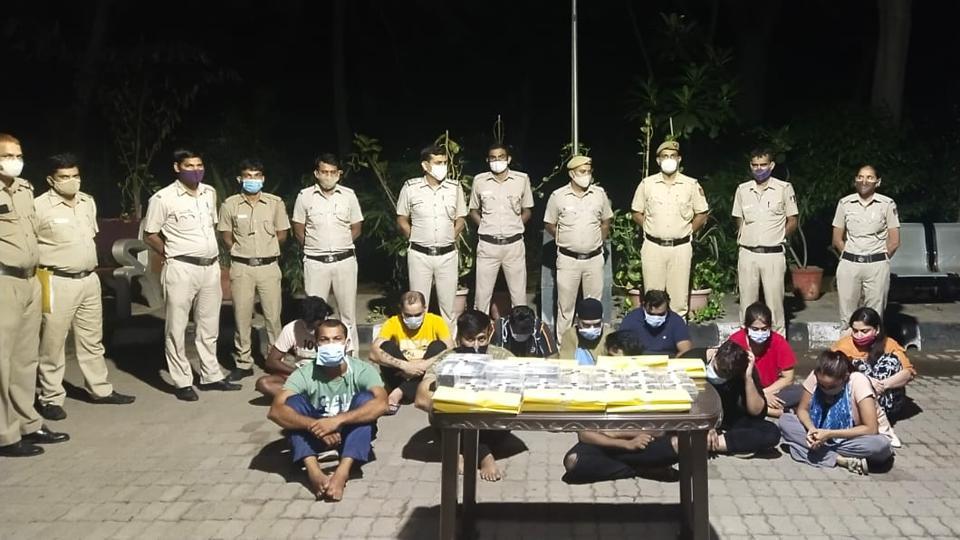
In Delhi alone, over 300 people have been arrested in the last two months for running at least 10 bogus BPOs in south, west, outer and eastern parts of the city — all swindling US citizens of millions of dollars.
The modus operandi
As a first step, the scammers take on rent space in any residential or commercial neighbourhood. They then arrange for computers having fast internet connections and encrypted internet voice calling applications installed in them and some gadgets for internet calling that bypass international long-distance calling gateways. After that, a mix of experienced and untrained tele-callers fluent in English are hired and a database of Americans is procured through data thieves over the internet. That’s all that is needed to set up a fake call centre.
“The kingpins of all these BPOs are mainly people who have earlier worked in call centres (usually the bogus ones) and earned expertise in how to run the illegal business of cheating and extorting unsuspecting foreigners,” said deputy commissioner of police (cyber cell, CyPAD) Anyesh Roy.
Chandan Kumar, who was arrested by Gurugram Police for allegedly running some unauthorised call centres but is presently out on bail, said that one can start the illegal operation with just ₹2 lakh as an investment.
“I took a small office on rent in an industrial area, arranged two laptops and two workstations and started making calls. After earning some money by conning three targets, I changed the office and hired six employees,” Kumar said.
Nexus of realtors, crooks
“We have learnt that many property dealers have also joined hands with these scammers. Their role is to provide an ideal property where police visits are least expected... The realtors get hefty commission money from the scammers, who rent these properties on double or triple the actual monthly rent,” said a police inspector whose team busted at least three such call centres between June and July.
Staffers are then hired from social networking sites or placement agencies.
“Fluency in speaking English with a foreign accent and having basic knowledge in using computers or laptops are the only criteria that they look for in the applicants. It is the reason that scammers mostly look for men and women from northeastern states for hiring them as tele-callers,” said deputy commissioner of police (Shahdara) R Sathiyasundaram.
After obtaining lists of job-seekers interested in working in call centres from the placement agencies, the scammers invite them for job interviews held online and offline. During the interview, the applicants are tested for their English speaking fluency and computer knowledge.
Sumit Sharma from Haryana’s Rohtak, who was arrested in 2019, said that setting up a call centre is still easy but training freshers and convincing them for participating in the scam is a tough task.
“We pay huge amounts to voice and accent trainers to set up the operations. To operate illegal processes we need untrained people. Young staff take at least six months to understand the illegalities and by then we change the team to evade police action,” said Sharma.
The training ranges from three days for experienced tele-callers and one week for freshers.
The real deal
After the training comes the most important chapter of the operation — calling up targets in countries like the United States.
The scam typically begins with a pre-recorded threatening robocall claiming to be from the US law enforcement and telling the US citizen that his social security number (SSN) will be suspended soon because of some illegal money transactions or activities detected by the government. To avoid any legal action, the citizen is persuaded to connect with the department concerned by pressing 1 on the interactive voice response (IVR). As the victim presses 1, the call gets connected to one of the tele-callers sitting in India.
“The tele-caller impersonates an official of the social security department, intimidates the person further, and tricks him/her into buying e-gift cards of various companies such as Target, Nike, Walmart, Gpay, Macy’s, Best Buy, etc. Thereafter, the person is asked to share the gift card’s number and its PIN as a security deposit and payment for not pursuing legal action. As the gift card’s details are obtained, the tele-caller disconnects the call. As the number used by the tele-caller is a spoofed VoIP number, the victim cannot call back,” said Gurugram’s assistant commissioner of police (cyber cell) Karan Goel.
The gift card details are shared with the blockers who redeem them and send the payment in cash through hawala channels after deducting their commission amounts. On average, two to three US citizens are duped every day by each call centre, said many police officers who have been part of the operations against fake call centres in Delhi-NCR.
“We bust call centres, arrest scammers and register cases mainly on suo-motu cognisance. As the victims are foreigners, it becomes difficult to bring them on board for filing their complaints or help us in our investigation. This makes our cases weak. The scammers are aware of these hurdles the police face and take advantage of the situation,” said a Delhi Police cyber cell officer.


