
 E-Paper



RSS wing seeks bans, boycott of US firms for tariffs over Russian oil purchase
The SJM’s statement came weeks ahead of RSS chief Mohan Bhagwat’s visit to the US and Canada as part of an international outreach

 Prefer HTon Google


Swadeshi Jagaran Manch (SJM), the economic wing of the ruling Bharatiya Janata Party (BJP)’s ideological fount, the Rashtriya Swayamsevak Sangh (RSS), criticised the US Senate legislation authorising US President Donald Trump to impose tariffs of up to 100% on countries making significant purchases of Russian oil and urged the Indian government to stand firm on purchasing it. It asked people to boycott US companies and the government to “impose a unilateral ban” on US tech and social media firms.
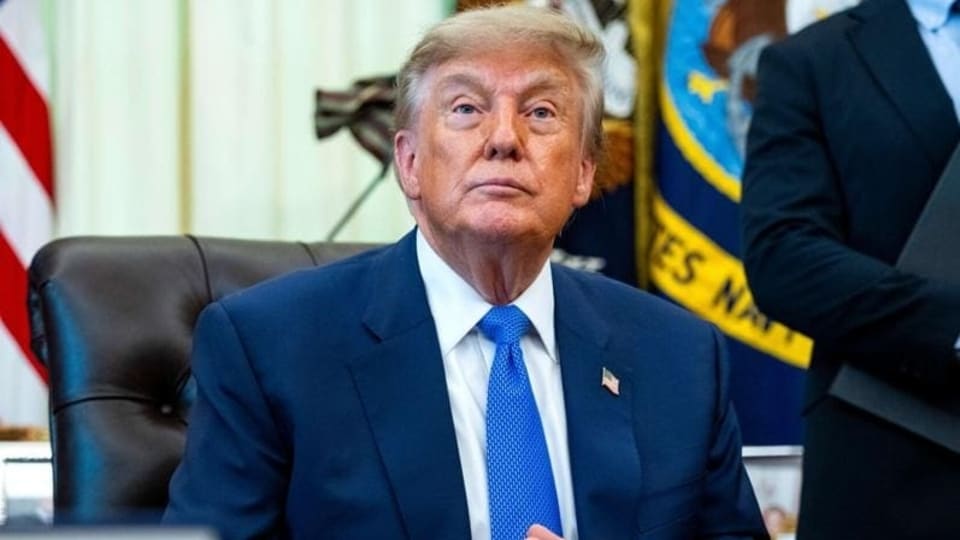
India was named as one of five target economies by the bill’s sponsors as the US Senate on Friday approved by 86 votes to 11 the bill. The bill spares US allies in Europe for similar purchases of Russian oil, gas and other exports.
The SJM’s statement came weeks ahead of RSS chief Mohan Bhagwat’s visit to the US and Canada as part of the organisation’s international outreach. “India has time and again made it clear that our sovereign right to purchase energy from legitimate international markets cannot be dictated by any third country…” said SJM national co-convener Ashwani Mahajan in the statement.
Deep Dive

He added that India’s decision to buy crude oil from Russia is based on considerations of energy security, availability, price, diversification of supplies and the interests of Indian consumers. He added that if the US has differences with Russia, it is entitled to pursue its own foreign-policy objectives. “However, those objectives should not be converted into unilateral economic coercion against sovereign countries such as India; and tariffs cannot become an instrument of geopolitical coercion,” he said.
The statement said that while US legislation has yet to complete the full process and that tariffs would not be imposed automatically, it clearly poses a serious threat to the principles of free and fair international trade and to the sovereign right of nations to determine their energy policies.
The SJM, which has campaigned for indigenisation and opposed foreign direct investment in key sectors and strategic disinvestment, pointed out that this is not the first time there have been threats to impose unfair tariffs. It added that such threats have persisted since the beginning of Trump’s second term.
Steep tariffs on Indian goods entering the US will significantly impact exports. India is among the largest buyers of Russian oil, and the quantum of purchase has increased since the Iran-US war.
SJM referred to the previous tariffs and said they have been labelled in various ways, ranging from reciprocal tariffs and national security tariffs to Section 301 tariffs, Section 232 tariffs, punitive tariffs (for purchasing Russian oil), trade deficit tariffs, and forced labour tariffs. It said the list is never-ending. “India has clearly stated that its purchase of crude oil from Russia is based on considerations of energy security, availability, pricing, supply diversification, and the interests of Indian consumers.”
SJM expressed concern over what is described as unethical use of tariffs as an instrument of foreign policy. It labelled the Russia-Ukraine war as nothing but a power tussle between NATO, a bloc of western countries, and the Commonwealth of Independent States, an intergovernmental association formed in 1991 after the dissolution of the USSR. SJM added that Western nations are trying to push Ukraine to join NATO. It said sanctions on oil purchases from Russia are only a pressure tactic being used to give effect to its designs.
SJM called on India to remain uncompromising on the issue of energy security. “India’s energy policy must therefore be determined by India’s national interest, and not by external political pressure.”
“The US India trade negotiations cannot be conducted on gunpoint…The latest US legislation assumes particular significance because India and the United States are simultaneously engaged in negotiations on a bilateral trade agreement. The SJM believes that trade negotiations between two sovereign countries must take place on the basis of mutual respect, reciprocity and equality, and not through threats of punitive tariffs,” Mahajan said.
SJM urged the government to withdraw the notification allowing FDI in e-commerce entities, such as Amazon, Flipkart-Walmart, and to hold inventories for exports. It sought the withholding of the bill passed in the Lok Sabha, permitting banks and other electronic service providers to impose Merchant Discount Rate.
SJM demanded that Visa and Mastercard be forbidden to regain a foothold in India and unequivocally rejected any attempt to use US tariffs to dictate India’s oil purchases.


