New Delhi: Chief Minister Rekha Gupta on Sunday joined thousands of devotees who gathered across 1,400 ghats across Delhi to celebrate the third day of Chhath Puja, offering the ‘Sandhya Arghya’ to the setting Sun.
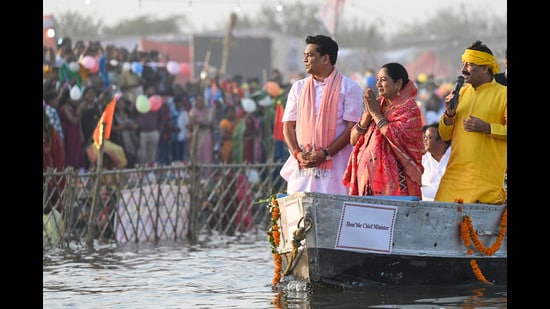
Gupta, who offered prayers at a Sonia Vihar ghat along the Yamuna, said that the tradition of worshipping both the setting and rising sun conveys a message of gratitude for every phase of life.
“Delhi is home to people from every part of the country, and the Purvanchali community has made a significant contribution to the development and growth of the Capital through their hard work and dedication. During Chhath, not just families but the entire community comes together for prayers and rituals. Our government is committed to ensuring devotees have access to better ghats and all necessary facilities,” she added.
The four-day Chhath Puja is a key festival of people of eastern Uttar Pradesh and Bihar, who form a substantial part of Delhi’s population.
Gupta took a boat ride with northeast Delhi BJP MP Manoj Tiwari and inspected the Chhath ghats along the Yamuna.
{{/usCountry}}Gupta took a boat ride with northeast Delhi BJP MP Manoj Tiwari and inspected the Chhath ghats along the Yamuna.
{{/usCountry}}Several ghats featured cultural performances, traditional folk songs, and dances, with MLAs, MPs, and ministers from across the city participating.
According to the Delhi government, 24 model ghats have been set up along the Yamuna and over 1,435 across the Capital.
Gupta said special buses have been arranged between Delhi and Bihar for Chhath. The Irrigation and Flood Control Department also set up prefabricated large tanks as Chhath ghats at over 100 sites, which can be reused during festivals.
At one such site, at his official residence at Windsor Place, I&FC minister Parvesh Verma joined the celebrations. “The festival reflects the values of discipline, dedication, cleanliness and collective harmony. The devotion and commitment of Chhath devotees make this festival a unique and cherished part of India’s cultural heritage,” he said.
Delhi BJP president and Union Minister of State Harsh Malhotra inaugurated the Chhath Puja ghat at Namo Railway Station, in New Ashok Nagar, east Delhi – his parliamentary constituency. To facilitate the movement of devotees for the auspicious dawn offering (Usha Arghya) on the final day of Chhath Puja, Delhi Metro train services will commence operations early at 4:30 am on Monday.
Aam Aadmi Party (AAP) Delhi president Saurabh Bharadwaj visited the Kondli Chhath ghat and offered “Arghya”. He credited the previous AAP government for initiating the construction of artificial ghats and providing financial support for Chhath Puja. “Please exercise caution near areas with polluted water—especially along the Yamuna—and ensure that the water is not used for achaman (ritual sipping/purification), as it could cause children to fall ill,” said Bharadwaj.
With an estimated over four million constituents in Delhi, Poorvanchalis have emerged as a major cultural and political community in the city during the last decade. The observance of the Chhath festival — six days after Diwali — in public places has also grown proportionally.