New Delhi: Amid worsening air quality in the Capital and neighbouring states, Union environment minister Bhupender Yadav on Saturday held a joint review meeting of Delhi, Haryana, Uttar Pradesh and Rajasthan, calling them to make use of real-time monitoring through Integrated Command and Control Centres (ICCCs) and hold officials accountable for anti-air pollution violations on the ground.
The minister also directed the nomination of secretary-level officials for seven cities in Haryana, four cities in UP and four in Rajasthan, and Delhi, tasking them with on-ground implementation of measures, alongside field visits.
“This data will have to be reported to the Commission for Air Quality Management (CAQM) on a weekly basis. CAQM has been requested to issue notices to non-performing officers,” said Yadav, as quoted in an official release.
The meeting was attended by state environment ministers – Manjinder Singh Sirsa of Delhi, Rao Narbir Singh of Haryana and Arun Kumar Saxena of UP – and state pollution control board officials.
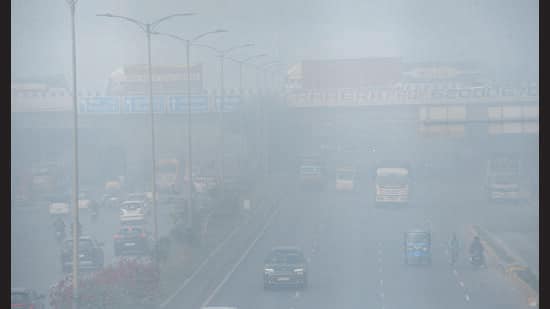
As winter begins, air quality in Delhi-NCR and other northern states worsens because cold air traps vehicle emissions, construction dust, and smoke from crop-waste burning.
Yadav said air pollution does not recognise state boundaries, calling for coordinated implementation of pollution control measures across NCR.
{{/usCountry}}Yadav said air pollution does not recognise state boundaries, calling for coordinated implementation of pollution control measures across NCR.
{{/usCountry}}He also emphasised that Delhi and NCR states must install Automatic Number-Plate Recognition (ANPR), failing which CAQM will take action.
“All agencies must ensure strict implementation of Graded Response Action Plan (Grap) and need to adopt Delhi’s hotspot-focused winter action plan, covering traffic management, work-from-home measures, construction restrictions and prevention of open burning,” said Yadav.
He called for strict implementation of the ban on construction and demolition activities from November 5-20 across Delhi-NCR.
Road-owning agencies have been asked to prioritise pothole repairs, damaged footpaths, central verges, and end-to-end paving under the CAQM framework, along with AI-based videographic surveys.
“Mechanical road sweeping machines must be fully utilised and operated in double shifts, with digital tracking and AI-based monitoring,” Yadav said.
He called for states to focus on expediting the PARIVARTAN scheme – replacing pre-BS-6 trucks and buses with BS-6, CNG and electric vehicles by 2028. BS (I-VI) refers to vehicle emission standards, with BS-VI vehicles meeting the most stringent standards.