E-Paper



New species of gecko found in Gujarat named after Vindhya hills
The Palearctic naked-toed geckos of the genus Cyrtopodion are a group of gekkonid lizards distributed across the arid regions of north Africa, Arabia, and Central Asia to northwestern India. The taxonomic history of the genus Cyrtopodion has been unstable, and 23 species are currently recognized, with the diversity concentrated in Pakistan and Iran

 Prefer HTon Google


A new species of naked-toed gecko (Cyrtopodion) has been discovered in Dahod and Panchmahals districts in Gujarat, according to the findings by wildlife researchers Harshil Patel, Tejas Thackeray, Zeeshan A Mirza and Raju Vyas.
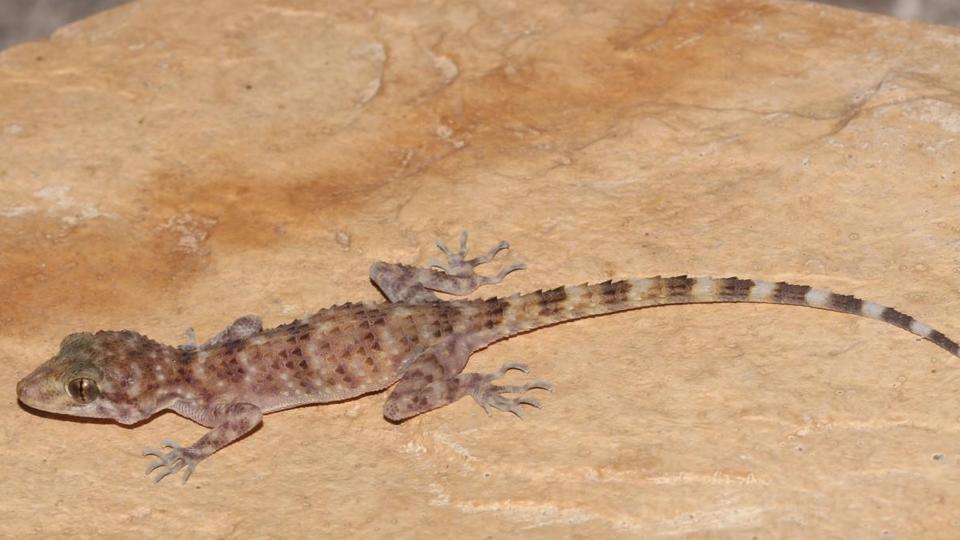
The findings, which were published in the international journal Zootaxa (Magnolia Press) earlier this month, has been named ‘Cyrtopodion Vindhya’ and it is the fifth endemic species of reptile described in the last fifteen years from the state of Gujarat.
“There are 23 known species of genus Cyrtopodion genus of the Gecko family. We have discovered the twenty-fourth one. I saw it for the first time in 2017 and we started our research to ascertain if it’s a new species,” said 33-year-old Patel, who is a scientist at Mumbai-based Thackeray Wildlife Foundation with expertise in diversity documentation of reptiles.
Also Read: Critically-endangered Asian king vulture sighted in Dudhwa
He has discovered 11 new reptile species in the country, including four snakes, one skink and four geckos.
Patel said the new species is named after the Vindhya hill ranges in the westernmost part of Gujarat from where the researchers collected the first reptile samples.
“There has been a lot of conservation efforts and research going on in western ghats and north-east India. In comparison, the Vindhya ranges are less explored and need to be studied more carefully and closely,” said Patel.
The researchers first found the new species at Udhal Mahuda in the Dahod district. The species was also observed at several other locations, especially in the hilly areas of Dahod district (Ratanmahal Wildlife Sanctuary, Pipargota, Devgadh Baria, Dhanpur), Panchmahal district (Jambughoda Wildlife Sanctuary, Pavagadh, Richhya, Shivrajpur), and Chhota Udepur district (Kundal, Raypur, Makhaniyo Parvat, Pavijetpur).
It is likely to occur in the neighbouring state of Madhya Pradesh (Alirajpur district), which shares a similar biotope in its bordering region with Gujarat, as per the study.
The Palearctic naked-toed geckos of the genus Cyrtopodion are a group of gekkonid lizards distributed across the arid regions of north Africa, Arabia, and Central Asia to northwestern India. The taxonomic history of the genus Cyrtopodion has been unstable, and 23 species are currently recognized, with the diversity concentrated in Pakistan and Iran.
Indian members of the genus Cyrtopodion are among the most poorly-known gekkonid lizards of the country. There are now six recognised species of the genus in India.
Also Read: 17 exotic wildlife species, smuggled through Myanmar, rescued in Mizoram: Police
The newly discovered reptile is a nocturnal species, associated with granite boulders. “Individuals emerge from the crevices and cracks in the rocks just after dusk and will retreat with the slightest disturbance. Mostly rupicolous in its habits but can be found on the ground as well,” as per the research study.
India has emerged as a hotspot of gecko diversity with more than half of the geckos reported/described from the country in the past three decades. From about 61 geckos from India in 1996, the number grew to 136 by the end of 2019.
Gujarat is very rich in habitat diversity and supports unique and diverse fauna, but the reptilian diversity of Gujarat needs to be documented. “This is changing with increasing studies describing new species, new species records, and taxonomic revisions in recent years that have contributed greatly to the understanding of the reptilian diversity of Gujarat,” said Patel.